
How Long Does Gut Take to Recover After Antibiotics? A Realistic Timeline
If you've just finished a course of antibiotics, you've probably noticed something's off. Maybe it's bloating, looser stools, unusual fatigue, or a appetite that's gone quiet. You're not imagining it, and you're also not alone in wondering: how long until my gut feels normal again?
The honest answer is "it depends" — but that's not a cop-out. There's real science behind the variability, and real steps you can take to support your gut back toward balance. As a physician who has spent years thinking about recovery nutrition, I want to walk you through what's actually happening inside your digestive tract, what the research says about timelines, and what meaningfully helps.
What Actually Happens to Your Gut When You Take Antibiotics
Antibiotics are remarkable drugs. They clear infections that could otherwise be dangerous, and in many situations they are genuinely life-saving. But they aren't precision tools — they don't distinguish between the harmful bacteria causing your infection and the trillions of beneficial microbes quietly living in your intestines.
Your gut is home to an enormously complex community of bacteria, yeasts, and other microorganisms collectively called the gut microbiome. These organisms help digest fiber, produce certain vitamins, train your immune system, and even influence your mood through the gut-brain connection. When antibiotics sweep through your system, they reduce the diversity and total number of these organisms, sometimes dramatically.
Why This Matters Beyond Digestion
A disrupted microbiome isn't just about an upset stomach. Reduced microbial diversity has been linked to weakened immune responses, increased susceptibility to certain infections (including antibiotic-resistant ones), and temporary dips in nutrient absorption. This is one reason appetite and energy often dip during and after a course of antibiotics.
For people already managing illness, surgery recovery, or age-related appetite loss, this disruption can compound existing struggles with eating enough and gaining or maintaining healthy weight. That's part of why gut recovery deserves more attention than it usually gets.
So, How Long Does Gut Recovery Actually Take?
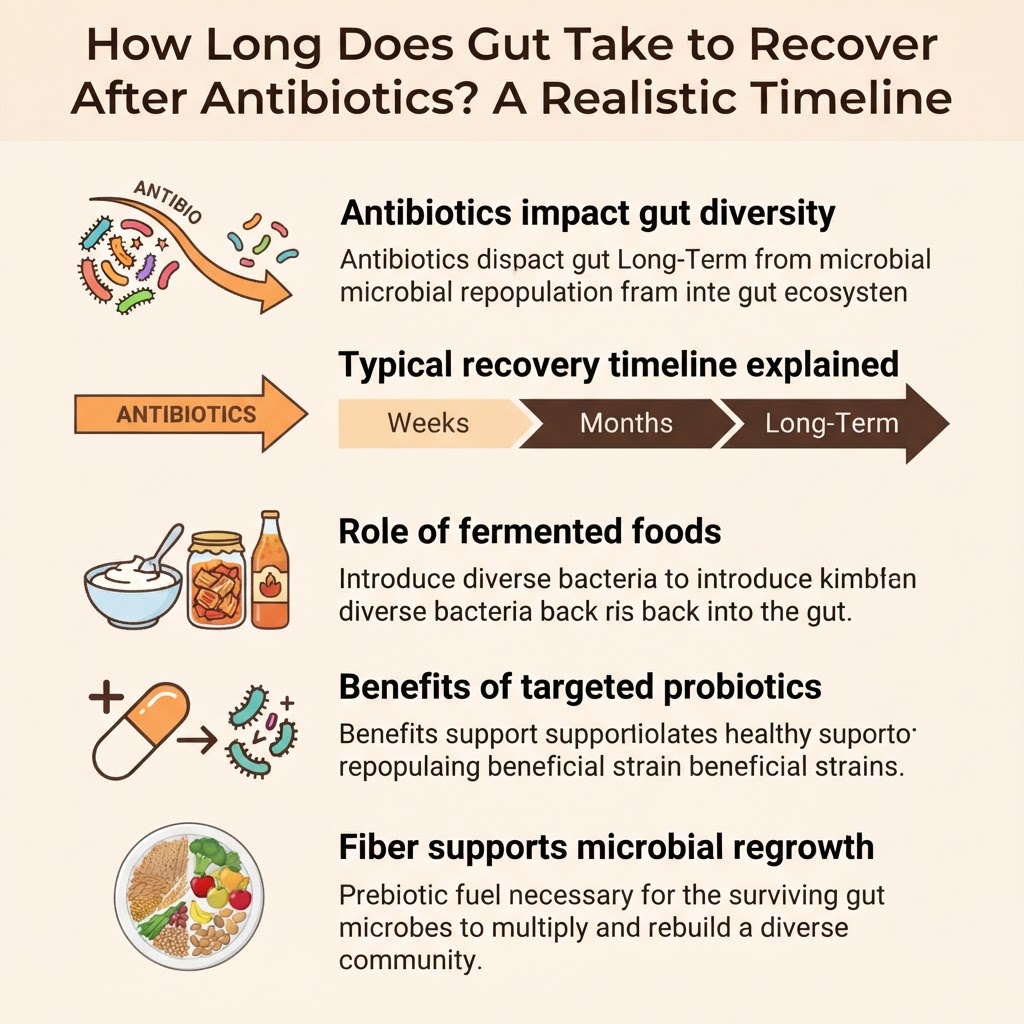
Here's where most people want a single number — "10 days," "two weeks," "a month." Unfortunately, the research tells a more nuanced story, because gut recovery happens in layers, not as a single switch flipping back on.
The Short-Term Layer: Days to Weeks
For many people, basic digestive symptoms like bloating, mild diarrhea, or stomach discomfort begin easing within one to two weeks after finishing antibiotics. This is often the fastest-recovering layer, as the most opportunistic, fast-growing organisms (including unwanted ones) tend to repopulate quickly once the antibiotic pressure is removed.
The Mid-Term Layer: Weeks to a Few Months
Microbial diversity — the actual variety of bacterial species living in your gut — tends to take considerably longer to bounce back. One frequently cited study tracking healthy adults after a short course of antibiotics found that most bacterial species returned to near-baseline levels within about 1.5 to 4 months, though not identical in composition to before.
"The gut microbiota of most subjects returned to near-baseline composition within 1.5 months… however, several species did not return to baseline levels even after six months." — Palleja et al., Nature Microbiology, 2018 (PMID: 29335005)
This matters because "recovery" isn't all-or-nothing. You might feel digestively normal while your microbiome is still quietly rebuilding its full diversity in the background.
The Long-Term Layer: Months, Sometimes Longer
In some cases — particularly after repeated antibiotic courses, broad-spectrum antibiotics, or in older adults — certain beneficial bacterial strains may not fully return to pre-antibiotic levels even after six months to a year. This doesn't mean your gut stays "broken," but it does mean resilience and support matter over a longer window than most people expect.
"Antibiotics can affect the type and number of bacteria that are normally present in the human gut, and this disruption can persist for months in some individuals." — Mayo Clinic, Probiotics and Antibiotics FAQ
If you want a deeper, step-by-step breakdown of this rebuilding process, our guide on how to restore your gut after antibiotics walks through the practical sequence many clinicians recommend.
Factors That Influence Your Personal Recovery Timeline
No two guts recover identically. Several variables shape whether you're looking at a two-week bounce-back or a slower, multi-month process.
Type and Duration of Antibiotic
- Narrow-spectrum antibiotics (targeting specific bacteria) tend to cause less disruption than broad-spectrum options.
- Longer courses generally cause deeper, longer-lasting shifts in gut bacteria than short ones.
- Repeated courses within a short period compound the disruption, giving the microbiome less time to rebuild between rounds.
Age
Older adults often have less diverse gut microbiomes to begin with, and that diversity can be slower to rebuild after disruption. This is one reason antibiotic recovery deserves special attention in seniors, a topic we explore further in our guide to nutrition for elderly parents at home.
Diet Before, During, and After Treatment
A fiber-rich, varied diet going into antibiotic treatment tends to support a sturdier microbial community that can rebound more readily. Conversely, a diet low in fiber and high in processed foods gives beneficial bacteria less to work with during the rebuilding phase.
Underlying Health Conditions
People recovering from surgery, managing chronic illness, or dealing with reduced appetite often have additional strain on their digestive and immune systems. This can slow the pace at which gut bacteria re-establish, which is part of why our article on recovery after surgery nutrition emphasizes gut-supportive eating as part of the broader healing picture.
Stress and Sleep
It's easy to overlook, but chronic stress and poor sleep are associated with altered gut bacterial composition. During a recovery window when your microbiome is already working to rebalance, added stress doesn't help the process along.
Signs Your Gut Is Still Out of Balance
Knowing what to watch for helps you gauge where you are in the recovery arc, rather than guessing blindly.
Common signs your gut may still be rebuilding include:
- Persistent bloating or gas beyond two to three weeks post-treatment
- Irregular bowel habits — alternating between loose stools and constipation
- Unusual fatigue or "brain fog" that doesn't match your activity level
- Reduced appetite or feeling full quickly
- New food sensitivities that weren't present before
- Recurring minor infections (such as oral thrush or vaginal yeast infections), which can signal a shift in your microbial balance
None of these symptoms are cause for panic on their own. But if several persist together for more than a few weeks, it's worth paying closer attention to your gut-supportive habits — and, if symptoms are significant, discussing them with your doctor.
It's also worth noting that appetite changes following antibiotics can contribute to unintended weight loss, particularly in older adults. If this sounds familiar, our article on weight loss in elderly: causes and what helps covers this overlap in more depth.
What You Can Do to Support Faster Gut Recovery
While you can't force your microbiome to rebuild overnight, there's meaningful evidence that certain habits support the process.
Prioritize Fiber Diversity, Not Just Quantity
Different bacterial species thrive on different types of fiber. Eating a wide variety of plant foods — vegetables, legumes, whole grains, fruits, nuts — gives a broader range of beneficial bacteria the fuel they need to re-establish.
A simple way to think about it: aim for variety across the week rather than repeating the same few vegetables daily.
Include Fermented Foods Where Appropriate
Fermented foods like yogurt with live cultures, kefir, sauerkraut, and kimchi introduce beneficial live organisms that may help support microbial diversity during recovery. They're not a substitute for a varied diet, but they can be a helpful addition for many people.
Consider Targeted Probiotic Support
For some people — particularly those recovering from illness, surgery, or multiple antibiotic courses — a well-formulated probiotic supplement can offer more consistent support than diet changes alone, especially if appetite is still recovering and food variety is limited.
This is exactly the gap our BioGain™ probiotic meal replacement was formulated to help bridge: combining targeted probiotic strains with easy-to-digest, calorie-dense nutrition for people whose appetite and gut balance need support at the same time. If you're curious how real users have experienced this approach, our BioGain reviews article shares both user feedback and the supporting science.
"Probiotics may help restore the gut microbiota to its state prior to a disruptive event such as antibiotic treatment, although effects vary by strain and individual." — World Health Organization / FAO Joint Working Group Guidelines on Probiotics
Don't Neglect Protein and Overall Nutrition
Gut lining repair and immune recovery both depend on adequate protein intake, not just probiotic bacteria. If appetite has dropped post-antibiotics, smaller, more frequent, nutrient-dense meals are often easier to manage than three large ones.
Gentle Movement Can Help Too
Light physical activity supports digestive motility and may help ease bloating and sluggishness during recovery. If you're also recovering from a procedure, our gentle exercise protocols for post-operative patients offers safe starting points.
Mind the Gut-Brain Connection
It's worth remembering that gut recovery and mood often move together. If you've noticed irritability or low mood alongside digestive symptoms, that overlap is well documented — our deeper dive into the gut-brain axis explains why that connection exists and what tends to help both at once.
Special Considerations for Seniors and Caregivers
Age changes the recovery equation in a few important ways, and caregivers often notice this before the senior in their care does.
Slower Baseline Recovery
Older adults generally have less resilient and less diverse gut microbiomes to start with, partly due to decades of dietary patterns, medication use, and natural age-related shifts in digestion. This means recovery windows can stretch longer than the general population averages cited in research.
Appetite and Weight Risks
A senior who already eats smaller portions is more vulnerable to the appetite dip that often follows antibiotic treatment. Left unaddressed, this can tip into unintended weight loss, which is harder to reverse in older age than in younger adults.
Medication Interactions
Many seniors are on multiple medications, some of which can further affect gut motility or nutrient absorption. This is one more reason caregivers should watch closely during the weeks following any antibiotic course, not just during the illness itself.
For caregivers navigating this, our practical guide on nutrition for elderly parents at home offers concrete meal strategies, and for those noticing more serious appetite or weight changes, our guide on gaining weight healthily when underweight outlines a safe, structured approach.
When to See a Doctor
Most post-antibiotic digestive symptoms are mild and self-resolving. But certain signs warrant medical attention rather than home management alone:
- Watery diarrhea that is severe, bloody, or lasts more than a few days
- Fever alongside digestive symptoms
- Significant, unintentional weight loss
- Severe abdominal pain
- Symptoms that worsen rather than gradually improve over two to three weeks
These can occasionally signal complications such as Clostridioides difficile infection, a known risk after antibiotic use that requires prompt medical evaluation. The World Health Organization's resources on antibiotic use are a useful starting point if you want to understand broader context around antibiotic risks and responsible use.
Your Simplest First Step Back to Gut Balance
If there's one thing I hope you take from this article, it's that gut recovery after antibiotics is a process measured in weeks and months, not days — and that's completely normal. The goal isn't to rush it, but to support it consistently with the right food, fiber variety, and, where helpful, targeted probiotic nutrition.
The simplest first step? Start with one consistent, gut-supportive meal a day rather than overhauling everything at once. For many of our readers — especially those also managing low appetite or unintended weight loss during recovery — that looks like replacing one meal with the BioGain™ probiotic meal replacement, which pairs practical calorie support with targeted probiotic strains in one easy step.
If you're in South Africa and want to make sure you're getting the authentic product, our guide on where to buy BioGain in South Africa walks through safe purchasing options.
And if you'd like more practical, no-nonsense guidance like this delivered straight to you, consider subscribing to the BioGain newsletter — it's a simple way to stay supported through every stage of recovery.
Get gut-smart, one email at a time
Science made simple, practical tips and member-only offers from BioGain. No spam, unsubscribe anytime.
By subscribing you agree to receive emails from BioGain (Velobiotics). Unsubscribe in one click.