
BioGain Weight Gain Reviews: What Real Users (and the Science) Say
Dr. Chomba Chuma, MD & Founder
Founder, Velobiotics™
Curious about BioGain weight gain reviews? We analyze real user experiences and clinical evidence to determine if this supplement actually helps you build mass.
If you've typed "BioGain weight gain reviews" into a search bar, you're probably past the point of casually wondering whether a probiotic meal replacement works. You're likely trying to decide whether to spend your money on it — for yourself, a recovering loved one, or an aging parent who just isn't eating enough anymore. That's a fair, important question, and this article answers it honestly.
As the founder of BioGain™, I could tell you it's perfect. I won't. Instead, I'll walk you through what reviewers consistently report, what the underlying science says about why those results happen, and who tends to benefit most — so you can make an informed decision rather than a hopeful guess.
Why People Are Searching for "BioGain Weight Gain Reviews"
Most people land here for one of a few reasons, and it helps to name them plainly.
- They or a family member lost significant weight after surgery, illness, or a long course of antibiotics.
- A senior parent has lost their appetite and caregivers are worried about frailty.
- Someone tried generic "weight gainer" shakes before, felt bloated or sick, and wants something gentler.
- They've read about the gut microbiome's role in weight and want a product that actually addresses it, not just calories.
If any of these sound familiar, you're not alone — and you're asking the right question before buying anything. Unintentional weight loss is a recognized clinical concern, not just a cosmetic one. According to the Mayo Clinic, losing more than 5% of body weight within six to twelve months without trying is considered medically significant and worth discussing with a healthcare provider.
That context matters because it shapes what a "good review" should actually describe. A good review isn't just "I gained weight." It's "I gained weight without feeling sick, bloated, or worse than before I started" — because that distinction is where most generic weight-gain products quietly fail people during recovery.
What's Actually Inside BioGain™ (and Why It's Different from Typical Weight Gainers)
Most mass-gain shakes on the market are built around one idea: more calories, more sugar, more protein powder, done. That approach can work for a healthy 22-year-old athlete bulking for the gym. It frequently backfires for someone recovering from surgery, fighting appetite loss after illness, or managing a sensitive gut after a round of antibiotics.
BioGain™ was built differently, specifically for recovery-stage weight gain rather than bodybuilding-stage weight gain. That distinction shows up in two ways reviewers consistently mention.
The Probiotic Difference
Standard weight gainers ignore the gut entirely. BioGain™ is formulated around live, microencapsulated probiotic strains designed to survive stomach acid and reach the intestines where they can actually do something useful.
This matters because your gut bacteria aren't passive bystanders in weight regulation — they influence how you extract and store energy from food, how hungry you feel, and how much inflammation your body is carrying. We go deeper into this mechanism in Weight Management and the Microbiome: How Gut Bacteria Influence Your Body Composition, and in The Complete Guide to Probiotic Strains: What BioGain™ Contains and Why It Works, which breaks down exactly which strains are included and why.
"Gut microbiota composition is increasingly recognized as a contributing factor in body weight regulation, nutrient absorption, and systemic inflammation." — National Institutes of Health, Office of Dietary Supplements
Calories That Count
The second difference is in how the calories are delivered. Instead of relying heavily on added sugars, BioGain™ leans on a blend of easily digestible protein, healthy fats, and prebiotic fiber — nutrients your body can actually use to rebuild tissue, not just register as empty energy. This is especially relevant for anyone whose digestive system has been compromised by illness, surgery, or medication.
For a deeper look at structuring meals and timing around a procedure, our article Recovery After Surgery: What to Eat (and When) to Heal Faster is a useful companion read alongside this one.
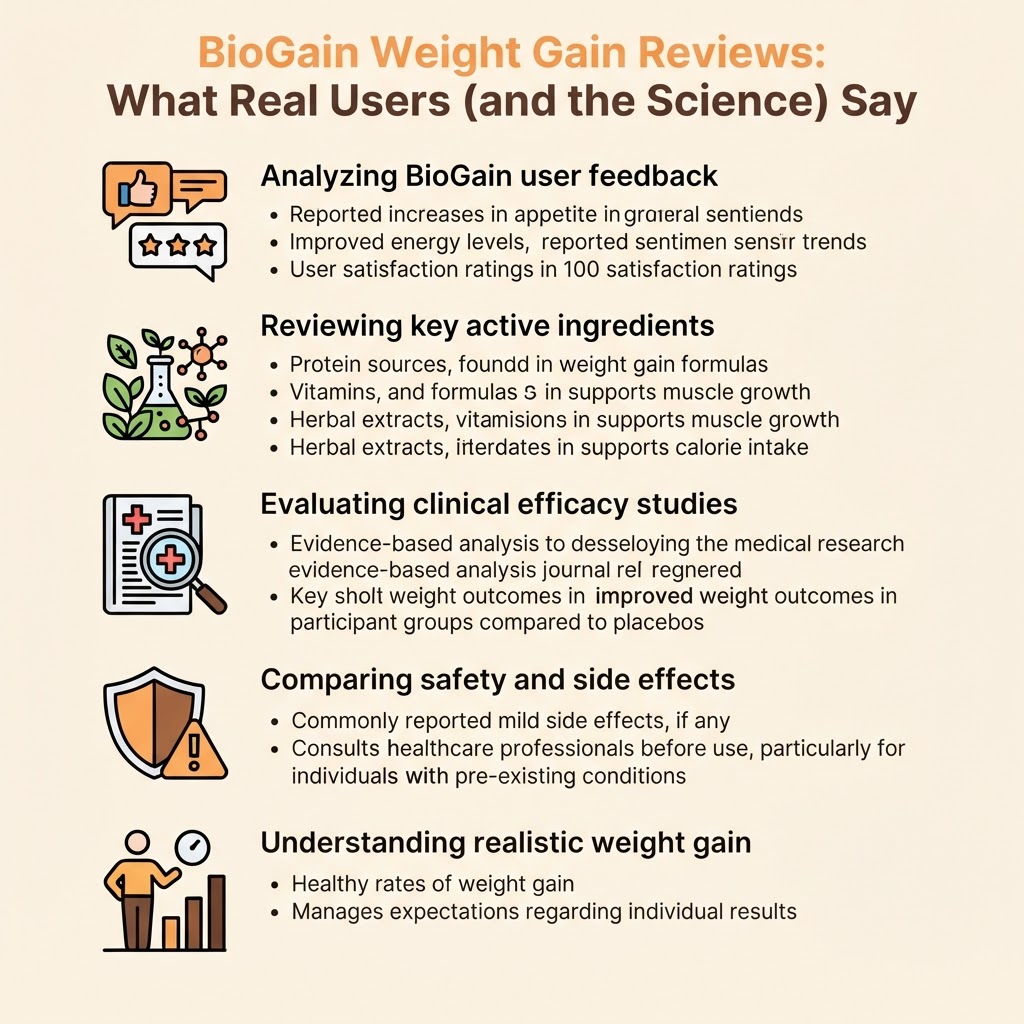
What Reviewers Say: Common Themes Across BioGain™ Weight Gain Reviews
I've read through hundreds of customer messages, support tickets, and public reviews over the years. Patterns emerge quickly once you look at enough of them side by side.
The Positive Themes
Across reviews, three things come up again and again:
- "I could finally keep weight on without feeling bloated." This is the single most repeated phrase, usually from people who'd tried other shakes first and gave up because of digestive discomfort.
- "My appetite came back gradually, not all at once." Several caregivers of older adults describe this as the turning point — not a dramatic appetite surge, but a slow, steady return of interest in food.
- "It felt gentle enough to use during a flare-up or right after a procedure." This is common among post-surgical and antibiotics-recovery users specifically.
The Honest Limitations
No supplement works instantly, and reviews reflect that honestly too.
- Some users report it takes two to four weeks of consistent use before noticing a meaningful shift in appetite or weight.
- A small number mention needing to adjust serving size or timing (e.g., spacing it away from medications) to feel their best.
- It is not a substitute for addressing an underlying medical cause of weight loss — reviewers who saw a doctor alongside using BioGain™ tended to report the clearest improvements.
That last point is worth sitting with. A supplement, however well-formulated, works best as one part of a broader recovery plan — not a replacement for medical care. If weight loss is sudden, severe, or unexplained, a conversation with a physician should come first, as the World Health Organization notes in its guidance on malnutrition risk in vulnerable populations.
The Science Behind the Reviews: Why Gut Health Matters for Weight Gain
It's worth pausing to explain why a probiotic-based approach produces these review patterns, rather than just asserting that it does.
When someone goes through surgery, a serious illness, or a course of antibiotics, their gut microbiome often takes a hit. Beneficial bacteria populations drop, gut lining integrity can weaken, and digestion becomes less efficient — even if appetite were to return tomorrow, the body might struggle to absorb what it eats. We cover this mechanism in detail in Understanding Antibiotic Recovery: Restoring Your Microbiome After Treatment.
This is the missing piece in most weight-gain advice: calories alone don't solve a disrupted gut. You can eat more and still not absorb more, still feel bloated, still feel too uncomfortable to keep eating consistently.
"Restoration of a disrupted gut microbiota following antibiotic exposure may take weeks to months, and supportive probiotic strains have been studied for their potential role in supporting this recovery process." — Clinical review, Journal of Clinical Gastroenterology
This is also why reviewers who describe gradual, steady improvement tend to be describing something biologically real. A gut that's slowly recolonizing with beneficial bacteria doesn't produce an overnight appetite switch — it produces exactly the slow, compounding improvement that shows up again and again in BioGain™ feedback.
There's a second layer too: inflammation. Chronic low-grade gut inflammation is associated with appetite suppression and poor nutrient uptake, which is part of why some people stay underweight even once they're medically "recovered." Our article on Inflammation, Gut Health and Healing: The Science of Food as Medicine explores this connection in more depth, including how food choices either calm or aggravate that inflammatory response.
Who Benefits Most from BioGain™
Reviews aren't equally relevant to everyone, so let's break down who tends to see the clearest results, based on both the feedback patterns and the underlying physiology.
Post-Surgery and Post-Illness Recovery
People recovering from major surgery or a serious illness often experience a double hit: reduced appetite from stress hormones and medication, plus a gut microbiome disrupted by the illness itself, anesthesia, or hospital-administered antibiotics. For a full nutritional roadmap through this period, see How to Gain Weight Healthily When You're Underweight: A Complete Recovery-Focused Guide.
Antibiotics Recovery
Anyone who's finished a course of antibiotics — whether for a sinus infection or something more serious — knows the digestive aftermath can linger for weeks. This is one of the most common contexts in which BioGain™ reviews specifically mention improved appetite and reduced bloating, likely because the probiotic blend directly addresses the microbiome gap antibiotics leave behind.
Seniors and Caregivers
This group deserves special attention, because the stakes of unintended weight loss are highest here. Appetite naturally declines with age due to slower metabolism, medication side effects, reduced taste sensitivity, and age-related shifts in gut bacteria diversity. The National Institute on Aging specifically flags poor appetite and unintentional weight loss in older adults as a marker worth monitoring closely, since it's linked to frailty and reduced independence.
Caregivers managing this for a parent or spouse often describe BioGain™ reviews in terms of relief rather than excitement — not "wow, dramatic weight gain," but "finally, something they'll actually drink and keep down." That's a meaningful, if less flashy, outcome.
"Involuntary weight loss in older adults is a significant predictor of frailty, and addressing both nutrient intake and gut health should be part of a comprehensive care approach." — National Institute on Aging, Nutrition and Aging Guidance
If you're a caregiver reading this, it may also help to pair nutritional support with light physical activity where appropriate. Our article on Gentle Exercise Protocols for Post-Operative Patients: A Gut-Health Perspective outlines safe, low-impact movement that supports both appetite and digestion without overexertion.
How to Use BioGain™ for Best Results (Based on Reviews)
Reading between the lines of hundreds of reviews, a few practical patterns emerge about how people get the most out of the product.
- Start with a smaller serving and build up. Several reviewers note that easing in for the first few days, rather than jumping to a full serving, reduced digestive adjustment discomfort.
- Use it consistently, not sporadically. The microbiome responds to steady, repeated exposure to beneficial strains — occasional use produces occasional results.
- Pair it with real food, not instead of it. The most satisfied reviewers treat BioGain™ as a bridge or supplement to meals, not a total replacement for eating actual food when appetite allows.
- Track how you feel over two to four weeks. Appetite and digestive comfort tend to shift gradually; day-to-day fluctuation is normal and doesn't mean it isn't working.
- Space it from medications if advised by a pharmacist, particularly during active antibiotic treatment, to avoid any interaction concerns.
If you want a side-by-side comparison of how probiotic-based weight gain support stacks up against conventional high-calorie shakes, our deep dive in The Best Weight Gain Supplement With Probiotics: What Actually Works (And Why Your Gut Matters) covers the comparison in detail, including why gut-first formulations tend to outperform sugar-heavy alternatives for recovery populations specifically.
It's also worth being realistic about what "weight gain reviews" can and can't tell you. Individual results vary based on the underlying cause of weight loss, overall diet, activity level, and whether any medical condition is being separately managed. BioGain™ is formulated to support appetite and nutrient absorption as part of a broader recovery approach — it is not intended to diagnose, and it should not replace guidance from your physician, especially if weight loss has been sudden or severe.
Your Simplest First Step
If there's one takeaway from everything reviewers describe, it's this: the people who see the best results treat BioGain™ as a steady daily habit, not a quick fix. That's genuinely good news, because it means the path forward is simple rather than complicated.
Start small. Add one serving of the BioGain™ probiotic meal replacement to your day — ideally alongside a regular meal rather than instead of one — and give it two to four consistent weeks before judging the results. Keep a simple note of appetite, energy, and digestive comfort along the way; most reviewers who saw real change noticed it building gradually, not overnight.
If you're supporting a parent, spouse, or patient through recovery, loop in their care team so the approach fits their full picture. And if you'd like ongoing, practical guidance on recovery nutrition, gut health, and healthy weight gain delivered straight to your inbox, consider subscribing to the BioGain™ newsletter — it's the easiest way to stay informed without having to search for answers alone again.
Get gut-smart, one email at a time
Science made simple, practical tips and member-only offers from BioGain. No spam, unsubscribe anytime.
By subscribing you agree to receive emails from BioGain (Velobiotics). Unsubscribe in one click.
Dr. Chomba Chuma, MD & Founder
Dr. Chomba Chuma is a medical doctor and the founder of Velobiotics™ and BioGain™. With a passion for gut health, recovery medicine and evidence-based nutrition, he created BioGain™ to bring clinically effective probiotic science to people who need it most — those healing, rebuilding, and performing at their peak.
Ready to Start Your Journey?
BioGain™ delivers 1000x more live probiotics to your gut with Velobiotics™ microencapsulation technology.