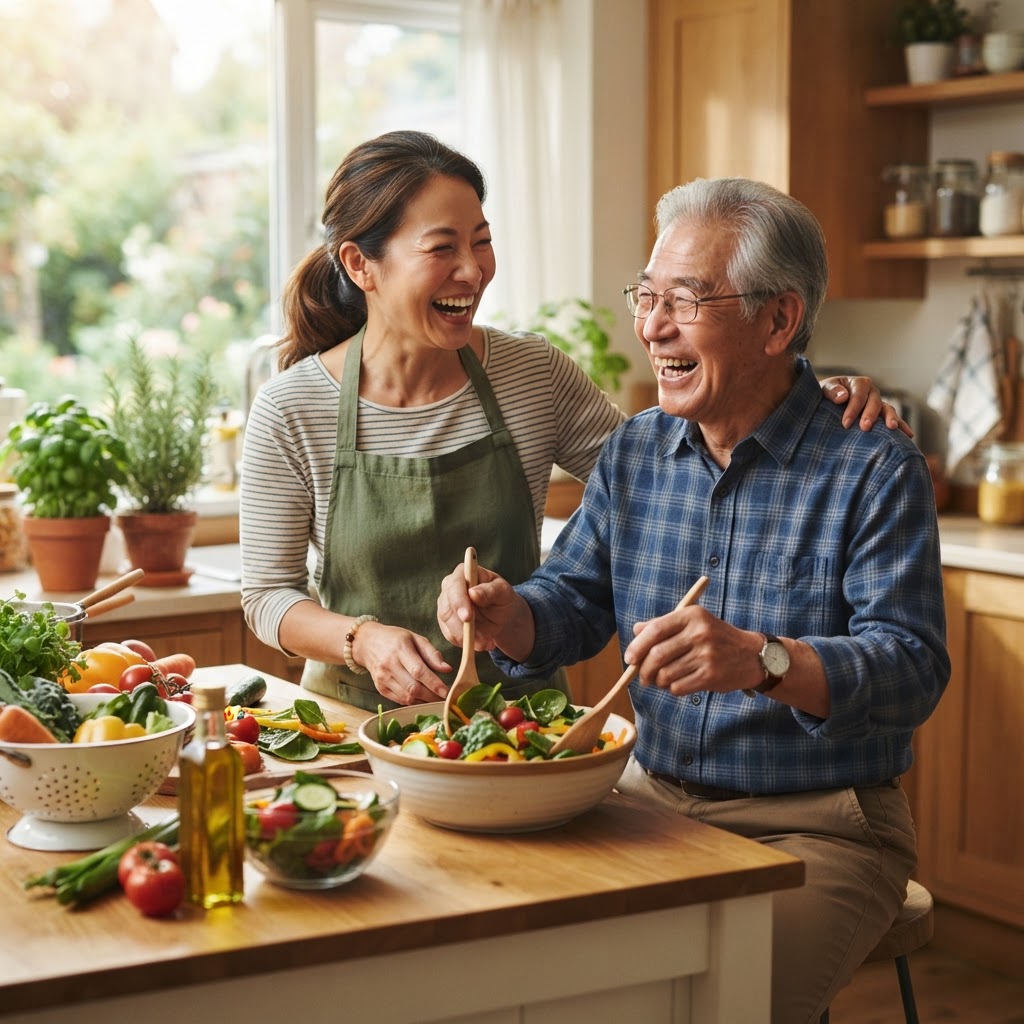
Nutrition for Elderly Parents at Home: A Caregiver's Practical Guide
Dr. Chomba Chuma, MD & Founder
Founder, Velobiotics™
Discover practical tips for nutrition for elderly parents at home. Learn how to plan balanced meals, manage dietary needs, and support healthy aging daily.
Caring for an aging parent at home is one of the most meaningful things you can do — and one of the most quietly exhausting. Among the daily worries, nutrition often sits at the top of the list. You notice the plate coming back half-eaten, the weight slowly dropping, the energy fading, and you wonder: is this just aging, or is something more serious going on?
This guide walks through what's actually happening nutritionally as parents age, the warning signs worth watching, and practical, doable steps you can take at home — without turning every meal into a battle or every day into a science project.
Why Nutrition Changes So Much in Later Life
Aging bodies don't process food the same way they did at 40 or even 60. Appetite regulation changes, taste and smell dull, and the digestive system slows down. None of this means your parent is doing anything wrong — it's biology shifting the rules.
The Hidden Causes of Appetite Loss
Several overlapping factors quietly chip away at appetite in older adults:
- Reduced sense of taste and smell, making food less appealing
- Medications that cause nausea, dry mouth, or altered taste
- Dental issues that make chewing painful or tiring
- Depression, loneliness, or grief, especially after losing a spouse
- Slower gastric emptying, which creates early fullness
- Chronic conditions like diabetes, heart failure, or kidney disease
Each of these alone might seem minor. Together, they can quietly add up to serious under-eating over several months.
Why "Eating Less" Isn't Always Normal Aging
There's a common myth that elderly people simply need less food. Some reduction in calorie needs is normal, but a significant, sustained drop in intake is not something to wave away. According to the National Institute on Aging, unintentional weight loss and poor appetite in older adults deserve attention rather than assumption.
"Older adults are at increased risk of malnutrition due to physiological, social, and economic factors that often occur together rather than in isolation." — World Health Organization, Malnutrition Fact Sheet
This matters because malnutrition in seniors doesn't just mean weight loss. It's linked to weaker immunity, slower wound healing, increased falls, and longer hospital stays. If you've already noticed changes, our article on weight loss in elderly: causes and what helps goes deeper into the specific mechanisms behind this.
Spotting the Warning Signs Early
Most caregivers don't catch nutritional decline early because it happens gradually — a smaller lunch here, a skipped breakfast there. Training your eye to notice the pattern, not just the single meal, is key.
Watch for these signs over a two-to-four week window:
- Clothes, rings, or dentures suddenly fitting more loosely
- Consistently leaving more than a quarter of meals unfinished
- New fatigue, irritability, or confusion
- Skin that looks thinner, drier, or bruises more easily
- Slower healing from minor cuts or scrapes
- Reduced interest in favorite foods or mealtimes altogether
- More frequent colds, infections, or slow recovery from minor illness
If you spot two or more of these consistently, it's worth tracking intake for a week and mentioning it to a doctor. Early action is almost always easier than reversing a deeper decline later. A simple notebook or phone note logging meals, mood, and energy can reveal patterns you'd otherwise miss.
Building a Daily Nutrition Plan at Home
You don't need a dietitian's degree to meaningfully improve your parent's nutrition. A few consistent habits, applied daily, go further than any single "superfood" ever could.
Protein First
Muscle naturally declines with age — a process called sarcopenia — and adequate protein is one of the few tools that meaningfully slows it. Older adults generally need more protein per kilogram of body weight than younger adults, not less, to maintain muscle and strength.
"Older people need more, not less, dietary protein to support good health, promote recovery from illness, and maintain functionality." — PROT-AGE Study Group, Journal of the American Medical Directors Association
Practical ways to boost protein without a big production:
- Add a spoon of nut butter to porridge or toast
- Stir a scoop of plain Greek yogurt into soups
- Offer eggs at any time of day, not just breakfast
- Keep tinned fish (sardines, tuna) on hand for easy protein
- Consider a gentle, easy-to-digest option like a BioGain™ probiotic meal replacement on low-appetite days, when a full plate feels like too much
Small, Frequent Meals
Three large meals a day can feel overwhelming for someone with a reduced appetite or early fullness. Five or six smaller "mini-meals" spread across the day are often far more manageable.
This might look like:
- Breakfast: soft scrambled eggs with toast
- Mid-morning: a smoothie or fortified yogurt
- Lunch: soup with bread and cheese
- Afternoon: a handful of nuts or a boiled egg
- Dinner: a small portion of fish, rice, and vegetables
- Evening: warm milk or a light dessert with protein
Each "meal" doesn't need to be large — it just needs to show up consistently.
Hydration Matters Too
Thirst sensation declines with age, meaning many elderly parents are mildly dehydrated without realizing it. Dehydration alone can cause confusion, constipation, and fatigue that gets mistaken for "just getting older." Offering fluids on a schedule, rather than waiting for thirst cues, helps enormously.
Simple reminders — a filled water bottle by their chair, herbal tea at set times, or a glass of water with every medication dose — build the habit without nagging.
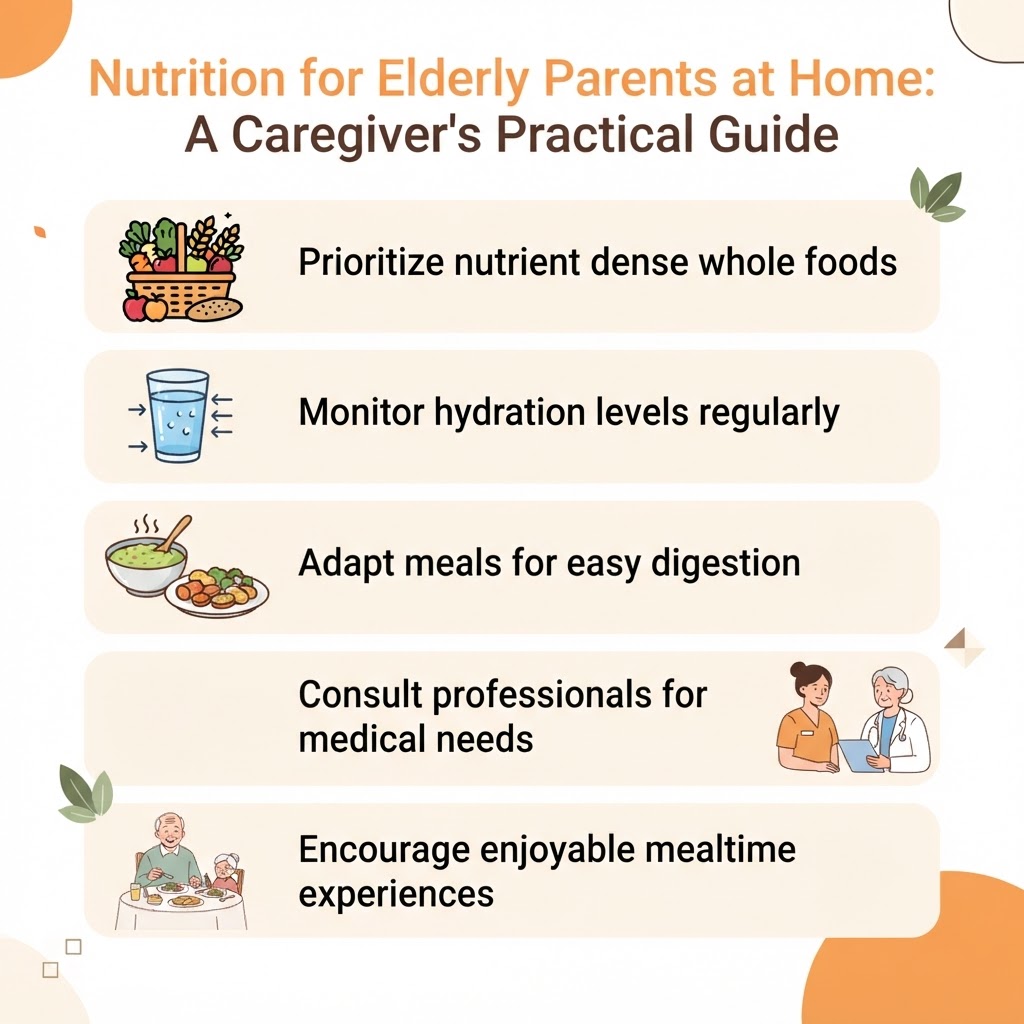
The Gut-Health Connection Caregivers Often Miss
Digestive health is rarely the first thing caregivers think about, yet it shapes almost everything else — appetite, nutrient absorption, immunity, and even mood. As people age, the diversity and balance of gut bacteria naturally shift, often becoming less resilient.
This matters practically because a struggling gut can make a parent feel full faster, bloated, or simply uninterested in food. It can also mean that even when meals are eaten, fewer nutrients are actually absorbed. If your parent has recently finished a course of antibiotics, this effect is often magnified — our guide on how to restore your gut after antibiotics explains the step-by-step process in more detail.
Supporting gut health at home doesn't require anything dramatic:
- Include yogurt, kefir, or other fermented foods a few times a week
- Add fiber gradually from vegetables, oats, and fruit
- Avoid over-reliance on highly processed, low-fiber "convenience" foods
- Discuss with a doctor whether a targeted probiotic approach makes sense
Products designed with both nutrition and gut support in mind — like those explored in the best weight gain supplement with probiotics — can be a useful bridge for parents who struggle with regular meals but still need calories, protein, and digestive support in one place.
Supporting Recovery After Illness, Surgery, or Antibiotics
Nutrition needs shift dramatically after a hospital stay, surgery, or a course of antibiotics. This is often when caregivers feel the most pressure — and when the body's needs are genuinely highest.
Why Recovery Periods Demand More, Not Less
The body uses extra energy and protein to repair tissue, fight residual infection, and rebuild strength after any major illness or procedure. At exactly the moment appetite tends to drop, nutritional need goes up. This mismatch is one of the most under-recognized challenges in elderly home care.
"Malnutrition during and after acute illness is associated with longer recovery time, reduced muscle strength, and higher risk of complications in older patients." — Mayo Clinic, Senior Health Nutrition Guidance
If your parent has recently had surgery, our detailed guide on recovery after surgery: what to eat and when to heal faster breaks down timing and food choices stage by stage. For those recovering specifically from a course of antibiotics, understanding antibiotic recovery and restoring your microbiome covers why gut-focused nutrition matters just as much as calorie intake during this window.
A Gentle, Realistic Recovery Approach
During recovery, the goal isn't to force large meals — it's to make every bite count:
- Prioritize protein-rich, easy-to-digest foods (eggs, soft fish, yogurt, soups)
- Offer smaller portions more frequently rather than three big meals
- Reintroduce fiber gradually to avoid digestive discomfort
- Pair light movement, where appropriate, with meals to support appetite — our piece on gentle exercise protocols for post-operative patients explains how light activity and digestion are connected
Many caregivers find a structured, nutrient-dense option helpful during this period precisely because it reduces decision fatigue — one scoop or sachet replacing the mental load of planning another meal from scratch.
Practical Meal Ideas and Caregiver Tips
Knowing the theory is one thing; getting food into your parent on a Tuesday afternoon is another. These small, real-world adjustments tend to make the biggest difference.
Make Food Easier to Eat
- Cut food into smaller, manageable pieces
- Offer soft textures if chewing or swallowing is difficult
- Warm meals slightly more than usual — reduced taste sensitivity often responds better to warmth and aroma
- Serve smaller portions on smaller plates to avoid overwhelming the eye
Make Mealtime Something to Look Forward To
- Eat together when possible — shared meals genuinely increase intake in older adults
- Play familiar music or sit by a window during meals
- Rotate 2–3 favorite dishes weekly instead of always introducing something new
- Celebrate small wins, like finishing a full plate, without making it a big deal
Keep a Simple Nutrition Log
A basic daily note — what was eaten, how much, and energy levels afterward — helps you and any doctor spot patterns quickly. It doesn't need to be detailed; even "ate half breakfast, skipped lunch, tired by 3pm" is useful data. Over a few weeks, this log becomes one of the most valuable tools in your caregiving toolkit.
Support, Don't Replace, Real Meals
Nutritional supplements and meal replacements are genuinely useful tools for low-appetite days, travel, or recovery periods — but they work best alongside real food, not instead of it entirely. Reviews from families using options like BioGain™ often highlight exactly this: it fills gaps on hard days rather than becoming the whole diet. The goal is always flexible support, not rigid reliance.
When to Loop In a Doctor or Dietitian
Some situations genuinely need professional input rather than home adjustments alone. It's not a failure to ask for help — it's good caregiving.
Reach out to a healthcare provider if you notice:
- Weight loss of more than 5% of body weight in a month
- Persistent refusal to eat for more than two to three days
- Difficulty swallowing, choking, or coughing during meals
- Signs of dehydration — dark urine, dizziness, confusion
- Ongoing diarrhea or constipation lasting more than a few days
- Recovery that seems stalled weeks after surgery or antibiotics
A registered dietitian can tailor recommendations around specific conditions like diabetes, kidney disease, or swallowing difficulties — something general guidance can't safely cover. The NIA's resources on nutrition for older adults are a solid starting point before any appointment, helping you arrive with informed questions.
Your Simplest First Step Starts Today
You don't need to overhaul your parent's entire diet overnight. Pick one thing from this guide — smaller, more frequent meals, a glass of water with each medication, or a protein-rich snack added to their afternoon — and build from there this week.
If appetite loss or recovery nutrition feels like the bigger hurdle right now, explore the BioGain™ probiotic meal replacement as a gentle, nutrient-dense option designed to support both appetite and gut health on harder days. It's one tool among many — but for many families, it's the one that finally eases the daily pressure of "did they eat enough today?"
For ongoing, practical guidance on caregiving nutrition, recovery, and gut health, subscribe to the BioGain™ newsletter — a simple way to keep useful, science-backed support arriving in your inbox as your parent's needs change over time.
Get gut-smart, one email at a time
Science made simple, practical tips and member-only offers from BioGain. No spam, unsubscribe anytime.
By subscribing you agree to receive emails from BioGain (Velobiotics). Unsubscribe in one click.
Dr. Chomba Chuma, MD & Founder
Dr. Chomba Chuma is a medical doctor and the founder of Velobiotics™ and BioGain™. With a passion for gut health, recovery medicine and evidence-based nutrition, he created BioGain™ to bring clinically effective probiotic science to people who need it most — those healing, rebuilding, and performing at their peak.
Ready to Start Your Journey?
BioGain™ delivers 1000x more live probiotics to your gut with Velobiotics™ microencapsulation technology.