
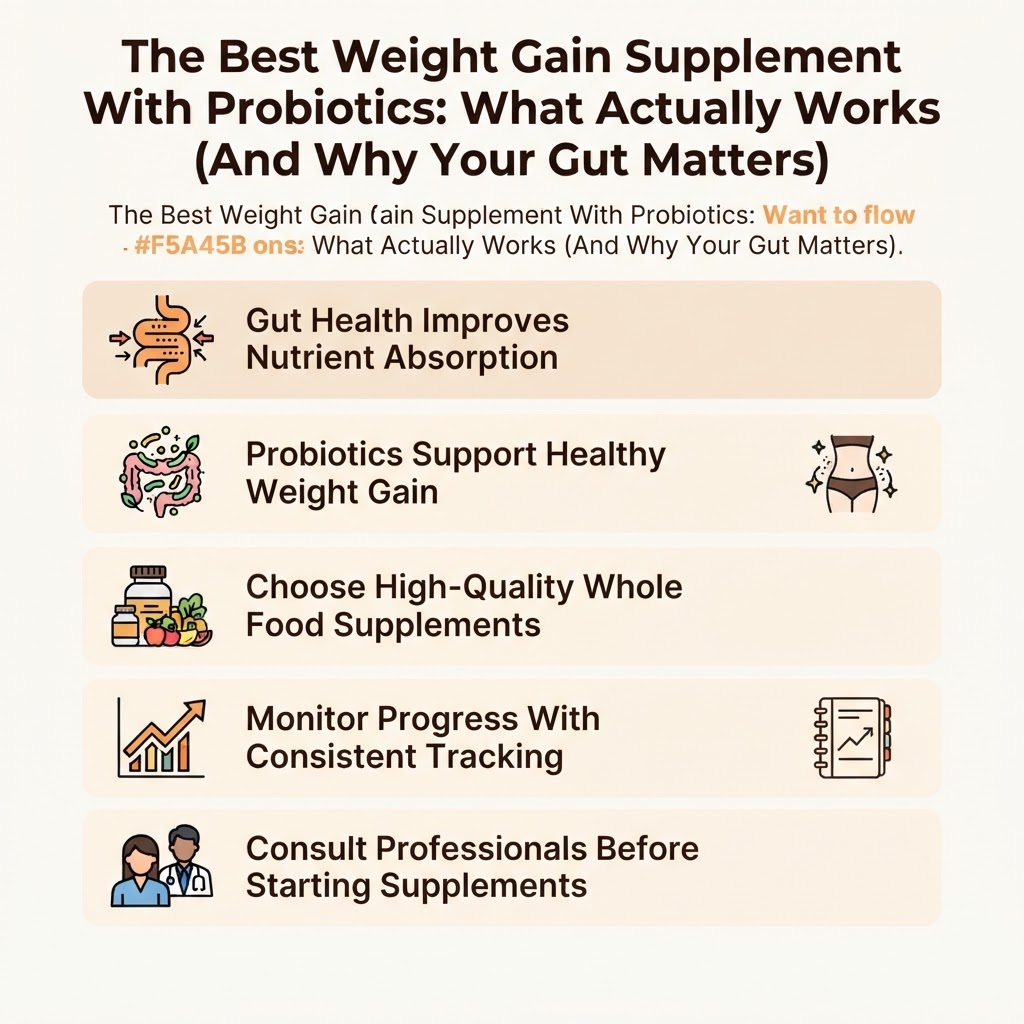
The Best Weight Gain Supplement With Probiotics: What Actually Works (And Why Your Gut Matters)
If you've typed "weight gain supplement with probiotics" into a search bar at 2 a.m., you're probably not chasing bulk for the gym. You're more likely recovering from surgery, finishing a course of antibiotics, caring for an aging parent who's stopped eating, or simply watching the number on the scale drop despite your best efforts. I'm Dr. Chomba Chuma, and after years of treating patients who struggled to regain weight the "normal" way — more calories, more shakes, more frustration — I founded BioGain™ because I kept seeing the same missing piece: the gut.
This article walks through what a weight gain supplement with probiotics actually does, who it's for, what separates a well-formulated one from a sugar-and-whey shake with a probiotic sticker slapped on, and how to choose wisely. No miracle claims — just the science, explained simply.
Why Calories Alone Rarely Fix Unintentional Weight Loss
Most people assume weight loss is simple math: eat more calories than you burn, and the scale moves up. For healthy, well-nourished individuals, that's often true. But for someone recovering from illness, surgery, or a round of antibiotics, the math breaks down in ways that calorie-counting alone can't fix.
Here's what typically happens behind the scenes:
- Appetite suppression. Inflammation, pain, and certain medications blunt hunger signals, so "just eat more" is easier said than done.
- Malabsorption. A disrupted gut lining or depleted microbiome means fewer nutrients from food actually get absorbed, even if you're eating plenty.
- Muscle loss over fat gain. Many weight gain attempts add fat without rebuilding lean muscle, which matters enormously for strength and recovery.
- Digestive discomfort. Bloating, cramping, or irregular bowel movements make people eat less, not more, creating a frustrating cycle.
This is why our related guide, How to Gain Weight Healthily When You're Underweight, emphasizes quality over quantity — and why the gut has to be part of the conversation.
"Malnutrition is not simply a matter of too few calories; it reflects a complex interaction between intake, absorption, and the body's metabolic and immune responses." — World Health Organization, Malnutrition Fact Sheet
The Appetite-Gut Loop
Your appetite isn't just controlled by willpower or hunger pangs in your stomach. It's heavily influenced by signals sent from your gut to your brain, a relationship we explore in depth in The Gut-Brain Axis Explained.
When the gut lining is inflamed or the microbial balance is disrupted — common after antibiotics, surgery, or prolonged illness — those appetite signals can get scrambled. People report feeling full after a few bites, or simply having no interest in food at all. Restoring gut balance is often a necessary first step before appetite normalizes.
The Overlooked Role of Gut Bacteria in Healthy Weight Gain
Here's the part that surprises most people: your gut bacteria influence how many calories you extract from food, how your body stores fat versus muscle, and how much inflammation circulates through your system. This isn't fringe theory — it's an active area of clinical research.
Specific bacterial populations, like certain Firmicutes and Bacteroidetes strains, affect how efficiently your gut breaks down carbohydrates and fats. Our article Weight Management and the Microbiome goes deeper into this relationship, but the short version matters here: an imbalanced microbiome can work against your weight gain efforts even when your diet is technically "good enough."
Three Ways Gut Bacteria Influence Weight
- Nutrient extraction — a diverse, balanced microbiome helps break down fiber and complex nutrients into usable energy and building blocks.
- Inflammation control — certain bacterial strains help regulate gut inflammation, which otherwise interferes with nutrient absorption. We cover this connection in Inflammation, Gut Health and Healing.
- Appetite hormone signaling — gut bacteria produce metabolites that interact with hormones like ghrelin and leptin, which govern hunger and satiety.
"Emerging evidence suggests gut microbiota composition may influence host energy harvest and metabolic phenotype, independent of diet alone." — National Institutes of Health, Office of Dietary Supplements, Probiotics Fact Sheet
This is precisely why a plain protein shake, however calorie-dense, often underdelivers for people recovering from a health setback. It adds fuel but doesn't necessarily repair the system that's supposed to use that fuel efficiently.
What Makes a Weight Gain Supplement With Probiotics Different
Not all products marketed this way are built the same. Some simply add a generic probiotic strain to a standard mass-gainer formula as a marketing checkbox. A genuinely effective formulation does more — it's designed around the recovery process itself, not just calorie delivery.
Core Components to Look For
- Clinically studied probiotic strains — not just "probiotics" on the label, but named strains (e.g., Lactobacillus rhamnosus, Bifidobacterium lactis) with published research behind them.
- Protection against stomach acid — many probiotics die before reaching the intestines unless they're protected. Microencapsulation technology, which we detail in our strain guide, can dramatically improve survival rates.
- Easily digestible protein — whey isolate, collagen peptides, or plant-based blends that don't strain a recovering digestive system.
- Prebiotic fiber — the "food" that feeds beneficial bacteria once they arrive; without it, probiotics have little to sustain their growth.
- Moderate, balanced calories — enough to support gain without overwhelming a reduced appetite or sluggish digestion.
- Low added sugar — excess sugar can actually feed less-helpful bacterial strains and worsen bloating.
For a full breakdown of exactly which strains matter and why, see The Complete Guide to Probiotic Strains.
Why Survivability Matters More Than Strain Count
A product boasting "20 billion CFU" sounds impressive, but if those organisms are destroyed by stomach acid before reaching the intestines, the number is meaningless. This is one of the most common gaps in commercial probiotic supplements, and it's why delivery technology deserves as much attention as the strain list itself.
Who Actually Benefits From This Kind of Supplement
A weight gain supplement with probiotics isn't a general-purpose bulking product. It's most useful for specific situations where both nutrition and gut health have been disrupted together.
Post-Surgery Recovery
Surgery, anesthesia, and the resulting inactivity all slow digestion and appetite. Our detailed guide on Recovery After Surgery: What to Eat (and When) explains the timeline for reintroducing solid foods, but a gentle, probiotic-supported liquid meal can bridge the gap when regular meals still feel like too much. Pairing nutrition with movement also matters — our piece on Gentle Exercise Protocols for Post-Operative Patients explains how light activity supports both digestion and muscle retention during this window.
Antibiotic Recovery
Antibiotics are often lifesaving, but they don't discriminate between harmful bacteria and the beneficial ones that help you digest and absorb food. This frequently leads to a temporary dip in appetite and nutrient absorption right when your body needs fuel most to recover. Our article, Understanding Antibiotic Recovery, explains why rebuilding the microbiome afterward is so important, and a probiotic-supported shake can be an easy, low-effort way to start that process alongside food.
Seniors Facing Unintentional Weight Loss
Age-related appetite decline, medication side effects, and slower digestion are common and often underestimated. Caregivers frequently tell me their biggest challenge isn't finding food their loved one will eat — it's finding something nutrient-dense enough to matter in small portions.
A probiotic-enhanced meal replacement can offer:
- A manageable serving size for someone with limited appetite
- Protein and calories in an easy-to-digest liquid or powder form
- Gut-supportive ingredients that may ease the constipation and bloating common with reduced mobility and certain medications
Caregivers Managing Multiple Needs
If you're caring for someone recovering from illness, tracking nutrition on top of medications, appointments, and daily tasks is exhausting. A single supplement that combines protein, calories, and probiotic support simplifies decision-making during an already overwhelming time, which is often half the battle in sticking to any recovery plan.
How to Choose the Right Product: A Practical Checklist
With dozens of products claiming to be "the best" weight gain supplement with probiotics, it helps to have a simple filter. Here's what I recommend asking before buying anything.
Ingredient Transparency
- Does the label name specific probiotic strains and CFU counts at the time of manufacture (not just at the time of production, which can be misleading)?
- Is there a prebiotic fiber source listed, or just protein and sugar?
- Are artificial sweeteners or excessive added sugars present? These can work against gut balance and cause bloating.
Delivery Technology
- Is there any mention of acid-resistant capsules, delayed-release technology, or microencapsulation?
- Without this, a large percentage of probiotic organisms may not survive the trip through stomach acid at all.
Digestive Tolerability
- Does the company mention a "start low, go slow" approach for sensitive stomachs?
- Are there reviews or clinical notes about bloating, gas, or GI discomfort during the adjustment period?
Caloric and Protein Density
- Does one serving offer meaningful calories (ideally 300+) and protein (20g+) for someone who struggles to eat large meals?
- Is it designed to supplement meals, not just add empty calories?
"Protein needs increase substantially during recovery from illness or surgery, and inadequate intake is one of the most common contributors to delayed healing." — Mayo Clinic, Nutrition and Healthy Eating Guidance
This is a core reason protein quality matters as much as probiotic content — the two work together, not separately, during recovery.
How BioGain™ Fits Into a Recovery-Focused Routine
I built BioGain™ specifically to close the gap between "eating enough calories" and "actually recovering well." The BioGain™ probiotic meal replacement combines easily digestible protein, moderate calories, and microencapsulated probiotic strains designed to survive stomach acid at significantly higher rates than standard capsules.
It's not meant to replace real food entirely. Instead, think of it as a bridge — something to use:
- Between meals when appetite is low but your body still needs fuel
- During the first week or two after a course of antibiotics, alongside the steps outlined in our antibiotic recovery guide
- As a gentle, nutrient-dense option for seniors who struggle with large meals
- Alongside light movement, as described in our gentle exercise protocols for post-operative patients, to help preserve muscle rather than only adding fat
A Simple Way to Start
If you're new to probiotic-supported nutrition, start with one serving per day, ideally with food, and give your gut one to two weeks to adjust. Mild bloating in the first few days is common and typically settles as your microbiome adapts. If digestive discomfort continues beyond two weeks, check in with your doctor, particularly if you're recovering from surgery or managing another health condition.
Your Next Simple Step
You don't need to overhaul your entire diet overnight, and you definitely don't need ten different supplements lined up on your counter. The simplest first step is choosing one well-formulated product that addresses both sides of the equation — nutrition and gut health — rather than piecing together separate protein powders and probiotic capsules.
If unintentional weight loss, post-surgical recovery, antibiotic aftermath, or caring for an aging loved one brought you here, start by looking closely at what's actually in your supplement, not just the calorie count on the front of the label. The BioGain™ probiotic meal replacement was built around exactly this principle, and it remains the easiest first step I recommend to my own patients and their caregivers.
Want more practical, no-nonsense guidance on recovery nutrition, gut health, and healthy weight gain delivered straight to your inbox? Subscribe to the BioGain™ newsletter and get our latest research breakdowns before anyone else.
Get gut-smart, one email at a time
Science made simple, practical tips and member-only offers from BioGain. No spam, unsubscribe anytime.
By subscribing you agree to receive emails from BioGain (Velobiotics). Unsubscribe in one click.