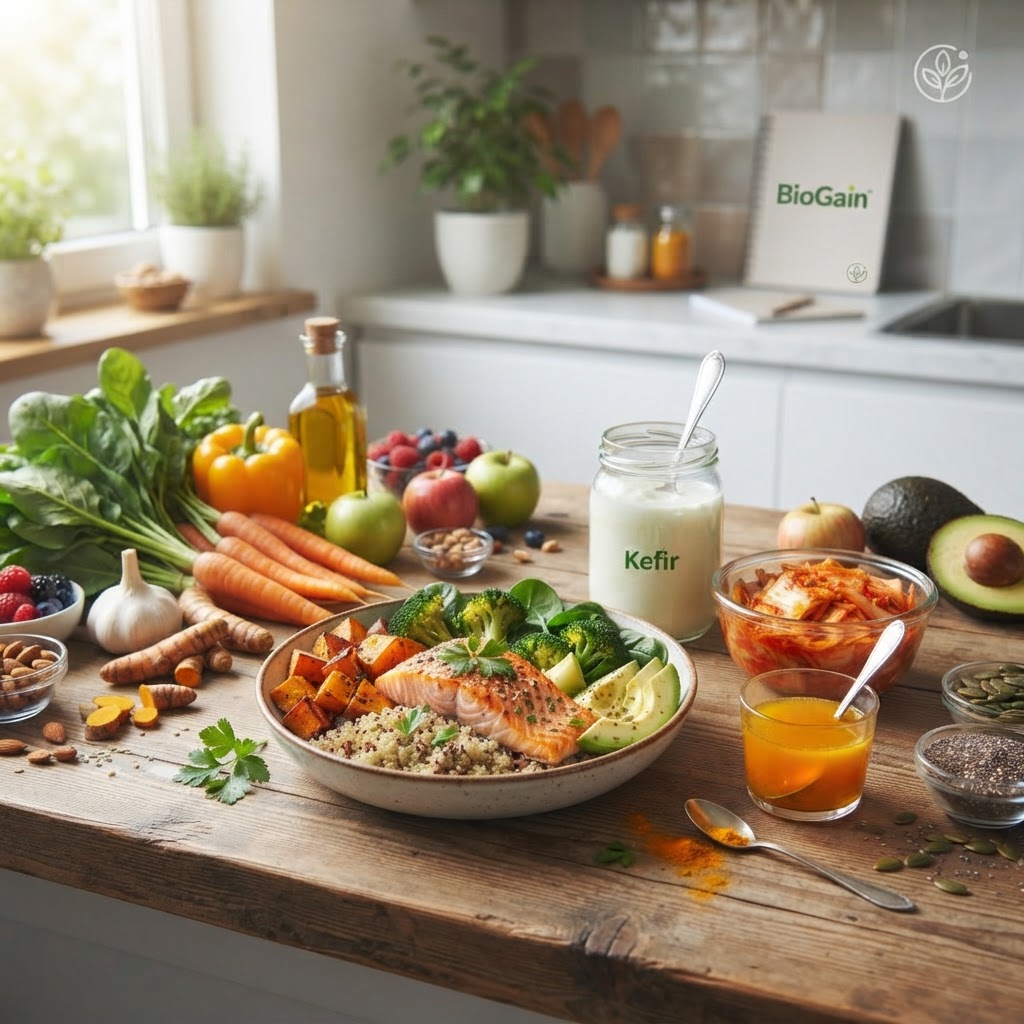
Inflammation, Gut Health and Healing: The Science of Food as Medicine
Dr. Chomba Chuma, MD & Founder
Founder, Velobiotics™
Unlock the transformative power of your plate by understanding how targeted nutrition can silence chronic inflammation and restore your body’s natural vitality from the inside out. Discover the cutting-edge science behind gut health and learn how to harness food as your most potent medicine.
By Dr. Chomba Chuma, MD | Founder, BioGain™ & Velobiotics™
Chronic inflammation is one of the most misunderstood forces in modern medicine. It quietly underpins some of the world's most debilitating conditions — from autoimmune disorders and metabolic syndrome to cardiovascular disease and depression. Yet for all its complexity, one of the most powerful tools to address it sits right on your plate.
As a physician and the founder of Velobiotics™, I have spent years exploring the intersection of nutritional science, microbiome research, and clinical recovery. What I keep returning to, again and again, is this: food is not just fuel — it is medicine. And nowhere is that more evident than in the relationship between what we eat, the health of our gut, and the inflammatory processes that either protect us or destroy us.
In this article, I want to take you deep into the science of anti-inflammatory nutrition, explain why gut health inflammation is central to almost every chronic disease, and give you practical, evidence-backed strategies for building a healing diet that works from the inside out.
What Is Inflammation, Really?
Before we can discuss how to fight inflammation, we need to understand what it actually is.
Acute inflammation is a survival mechanism. When you cut your finger or catch a virus, your immune system mounts a rapid response — blood flow increases, white blood cells flood the area, and tissue repair begins. This is healthy, necessary, and time-limited.
Chronic inflammation, however, is a different animal entirely. This is a persistent, low-grade immune activation that never fully switches off. It does not cause obvious pain or swelling. Instead, it silently damages tissues, disrupts hormonal signalling, and accelerates cellular ageing.
Research published in Nature Medicine has described chronic inflammation as a key driver of the most prevalent non-communicable diseases of our time, including type 2 diabetes, Alzheimer's disease, atherosclerosis, and certain cancers. You can explore this landmark research here.
The question that matters most clinically is: what triggers chronic inflammation in the first place? And increasingly, the answer points directly to the gut.
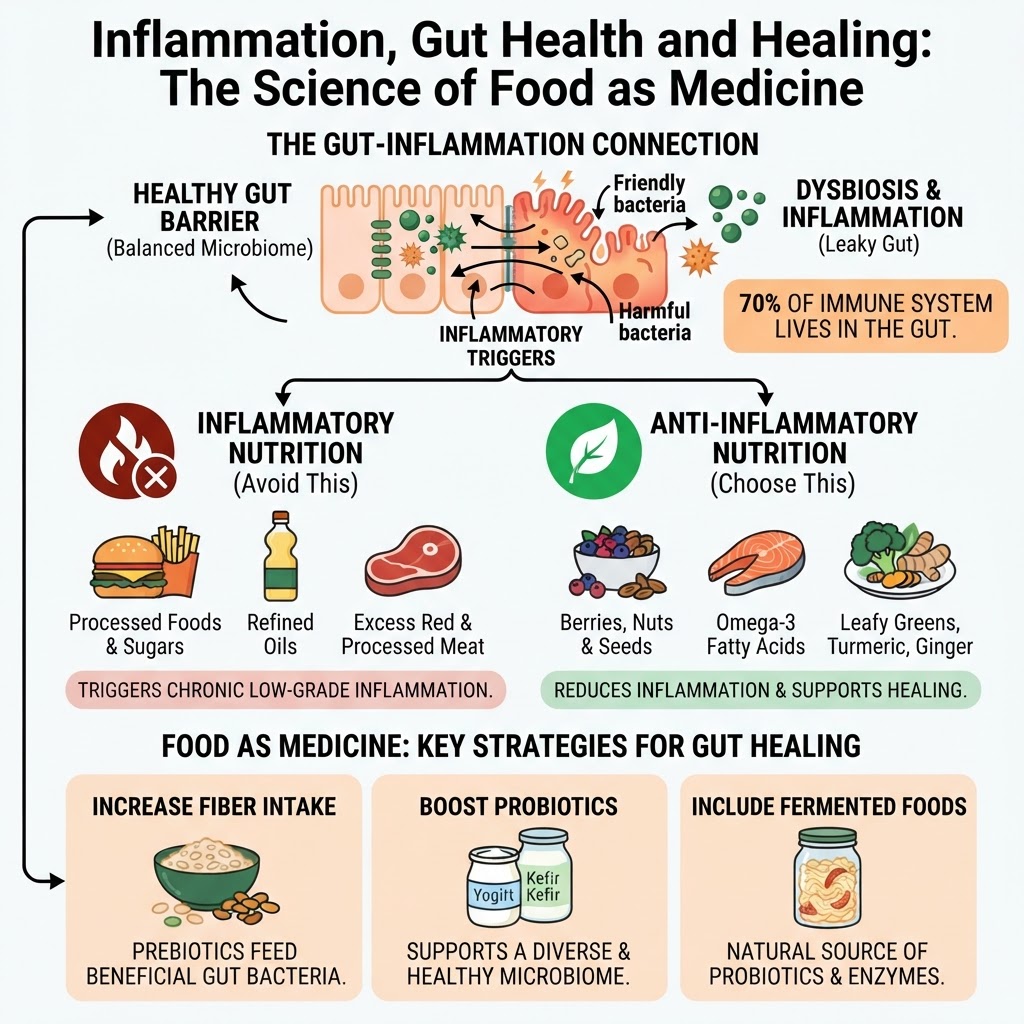
The Gut-Inflammation Connection
Your gastrointestinal tract is home to approximately 38 trillion microorganisms — bacteria, fungi, archaea, and viruses — that collectively form your gut microbiome. This ecosystem is not a passive passenger. It actively regulates immune function, produces neurotransmitters, synthesises vitamins, and controls the integrity of your intestinal lining.
When the microbiome is balanced and diverse, it helps downregulate inflammatory pathways. When it is disrupted — a state called dysbiosis — the consequences are profound.
How Dysbiosis Fuels Systemic Inflammation
A disrupted microbiome leads to increased intestinal permeability, often referred to as "leaky gut." When tight junctions in the intestinal lining break down, bacterial fragments called lipopolysaccharides (LPS) can cross into the bloodstream. LPS are potent inflammatory triggers. Once in circulation, they activate immune receptors and sustain the kind of chronic, low-grade gut health inflammation associated with insulin resistance, neuroinflammation, and inflammatory bowel conditions.
A systematic review published via the NIH National Library of Medicine confirmed that elevated circulating LPS — termed metabolic endotoxaemia — is significantly associated with obesity, type 2 diabetes, and cardiovascular risk.
This is the mechanism that makes the microbiome so central to inflammation. And it is also why what you eat determines far more than your waistline.
Food as Medicine: The Anti-Inflammatory Diet Framework
The concept of food as medicine is ancient — Hippocrates famously instructed us to let food be our medicine. But today we have the molecular biology to explain why certain foods heal and others harm.
Foods That Drive Inflammation
Before we focus on solutions, it is worth naming the primary dietary culprits:
- Ultra-processed foods — high in refined sugars, seed oils, and artificial additives that disrupt the microbiome and elevate inflammatory cytokines
- Trans fats and refined vegetable oils — associated with increased levels of C-reactive protein (CRP), a key inflammatory marker
- Excess alcohol — damages intestinal lining integrity and alters microbial composition
- Artificial sweeteners — emerging evidence suggests they negatively alter gut microbial diversity
- Refined carbohydrates — rapidly spike blood glucose, triggering oxidative stress and inflammatory cascades
Foods That Fight Inflammation
A genuinely healing diet is built around foods that support microbial diversity, nourish the gut lining, and provide phytonutrients with proven anti-inflammatory properties:
- Fatty fish (salmon, mackerel, sardines) — rich in omega-3 fatty acids EPA and DHA, which directly inhibit pro-inflammatory eicosanoid synthesis
- Extra virgin olive oil — contains oleocanthal, a natural compound that works similarly to ibuprofen in blocking inflammatory enzymes
- Leafy greens (spinach, kale, chard) — high in vitamin K, folate, and antioxidants that neutralise free radicals
- Berries — packed with anthocyanins, which suppress NF-κB, a master regulator of inflammatory gene expression
- Turmeric — curcumin, its active compound, has been shown in numerous trials to reduce CRP and interleukin-6 levels
- Fermented foods (kefir, kimchi, yoghurt, sauerkraut) — introduce beneficial bacteria and short-chain fatty acids (SCFAs) that reinforce gut barrier function
- Legumes and whole grains — prebiotic fibres that feed beneficial microbes and support SCFA production
- Nuts and seeds — particularly walnuts and flaxseeds, which provide anti-inflammatory alpha-linolenic acid
The convergence of evidence strongly supports the Mediterranean dietary pattern as among the most effective anti-inflammatory nutrition frameworks available. A comprehensive meta-analysis in the journal Gut demonstrated that adherence to the Mediterranean diet is inversely associated with systemic inflammation markers and significantly reduces risk of IBD and colorectal cancer.
Probiotics and Anti-Inflammation: The Science Behind Live Cultures
One of the most exciting and fastest-moving areas of nutritional science concerns the role of probiotic anti-inflammation — the capacity of specific beneficial bacteria to modulate immune responses and reduce inflammatory burden.
Probiotics work through several intersecting mechanisms:
- Competitive exclusion of pathogenic bacteria
- Strengthening tight junction proteins to reduce intestinal permeability
- Stimulating regulatory T-cells that suppress excessive immune activation
- Producing SCFAs like butyrate, propionate, and acetate that directly nourish colonocytes and reduce inflammatory signalling
- Modulating cytokine profiles — reducing pro-inflammatory IL-6 and TNF-alpha while increasing anti-inflammatory IL-10
The clinical evidence is growing rapidly. Strains such as Lactobacillus rhamnosus, Bifidobacterium longum, and Lactobacillus plantarum have demonstrated measurable anti-inflammatory effects in randomised controlled trials across conditions including IBD, rheumatoid arthritis, and metabolic syndrome.
The Survival Problem Most Probiotics Cannot Solve
Here is something few supplement brands will tell you directly: the majority of probiotic bacteria in standard supplements do not survive the journey to your gut. Stomach acid, bile salts, and enzymatic activity in the upper GI tract destroy most live cultures before they reach the large intestine — where they are actually needed.
This is the core scientific challenge that Velobiotics™ set out to solve with BioGain™. Using microencapsulation technology, BioGain™ wraps each probiotic cell in a protective matrix that shields it from gastric acid degradation. Independent testing has shown that this approach results in up to 1000 times more live bacteria surviving to the gut compared to unencapsulated probiotic supplements.
For anyone using BioGain inflammation support as part of a healing diet, this distinction is clinically meaningful — because delivery determines efficacy. A probiotic that does not survive gastric transit simply cannot deliver its anti-inflammatory benefits.
Healing Diet Strategies for Specific Health Goals
For Post-Surgery and Injury Recovery
Surgical procedures and significant injuries create a substantial inflammatory burden. The body's healing response — while essential — can become prolonged and counterproductive without proper nutritional support.
Key priorities in a recovery-focused healing diet include:
- Adequate protein (1.5–2.0g per kg body weight) to support tissue regeneration
- Vitamin C and zinc for collagen synthesis and immune function
- Omega-3 supplementation to modulate post-operative inflammation
- Probiotic support to counteract the microbiome disruption often caused by antibiotics and surgical stress
For patients navigating surgical recovery, our free Recovery App provides daily wellness tracking, nutrition guidance, and supplement timing reminders — all structured around evidence-based recovery protocols. It is designed to make the complexity of healing manageable and measurable.
For Muscle Building with a Gut-Health Focus
There is a persistent myth in fitness culture that building muscle requires eating in ways that compromise gut health — excessive red meat, processed protein bars, and ignoring digestive symptoms in favour of caloric surplus.
The reality is quite the opposite. A healthy microbiome actively supports muscle protein synthesis, recovery from training, and hormonal balance. Chronic gut inflammation impairs nutrient absorption, disrupts sleep quality, and elevates cortisol — all of which work directly against muscle development.
Our Bulk-Up Plan is a 30-day, AI-powered muscle gain programme that integrates gut health as a non-negotiable foundation. Every meal plan balances muscle-building macronutrients with prebiotic fibre, fermented foods, and anti-inflammatory nutrition principles.
Practical Tips: Building Your Anti-Inflammatory Lifestyle
Understanding the science matters. But application is everything. Here are actionable steps you can implement immediately:
Daily Nutritional Practices
- Eat the rainbow — aim for 30 different plant foods per week to maximise microbial diversity
- Prioritise fibre — target 30–35g of dietary fibre daily from whole food sources
- Include a fermented food daily — even a small serving of live yoghurt or kimchi meaningfully supports microbiome composition
- Replace refined seed oils with extra virgin olive oil or avocado oil for cooking
- Limit ultra-processed food to less than 20% of your total dietary intake
- Hydrate adequately — dehydration concentrates inflammatory compounds and impairs mucosal gut lining function
Lifestyle Factors That Amplify Dietary Interventions
Anti-inflammatory nutrition is most effective when combined with supportive lifestyle practices:
- Sleep 7–9 hours nightly — sleep deprivation elevates IL-6 and TNF-alpha acutely and measurably
- Manage chronic stress — cortisol directly increases intestinal permeability and disrupts microbial balance
- Exercise regularly but not excessively — moderate aerobic activity reduces CRP; over-training without adequate recovery increases it
- Spend time outdoors — emerging research supports the role of microbial diversity in outdoor environments in enriching the gut microbiome
Supplement Wisely
The supplement industry is oversaturated with products of questionable efficacy. When selecting supplements to support a healing diet, prioritise:
- Delivery-verified probiotics — look specifically for microencapsulation technology, as standard capsules offer limited gut survival rates
- Omega-3s in triglyceride form for superior bioavailability
- Vitamin D3 with K2 — deficiency is widespread and deeply connected to immune dysregulation
- Magnesium glycinate — involved in over 300 enzymatic reactions, many of which modulate inflammatory pathways
You can explore the science behind Velobiotics™ microencapsulation technology to understand why delivery mechanism is the single most important factor when evaluating probiotic supplements.
The Emerging Science: Psychobiotics and Neuroinflammation
One of the most fascinating frontiers in this field concerns the gut-brain axis — the bidirectional communication network linking the gastrointestinal system to the central nervous system via the vagus nerve, immune signalling, and microbial metabolites.
Research is now demonstrating that gut dysbiosis and associated neuroinflammation play significant roles in depression, anxiety, and cognitive decline. The term psychobiotics has been coined to describe probiotic and prebiotic interventions specifically targeted at mental health outcomes through gut modulation.
A landmark study published in Frontiers in Psychiatry found that probiotic supplementation produced measurable reductions in depression symptom scores, with proposed mechanisms including reduced systemic inflammation, normalised HPA axis activity, and increased serotonin precursor availability.
This is not alternative medicine. This is molecular biology meeting clinical psychiatry — and the therapeutic implications are profound.
The gut is increasingly understood not as a digestive afterthought, but as the foundation of systemic health. Protecting it through a thoughtful healing diet and evidence-based probiotic support is among the most impactful health decisions any individual can make.
Understanding Your Inflammatory Markers
If you are serious about using food as medicine, I recommend working with your GP or a functional medicine practitioner to monitor key inflammatory biomarkers:
- High-sensitivity CRP (hs-CRP) — the most accessible and clinically validated marker of systemic inflammation
- Interleukin-6 (IL-6) — a pro-inflammatory cytokine elevated in chronic disease states
- Homocysteine — linked to endothelial inflammation and cardiovascular risk
- HbA1c and fasting insulin — indicators of metabolic inflammation
- Zonulin — an emerging marker of intestinal permeability, now available through specialist testing
Tracking these markers over time as you implement dietary and lifestyle changes transforms subjective wellbeing into objective, measurable data. It is the clinical approach I advocate for all patients using nutrition-based interventions — and it is something our Recovery App is designed to help users monitor and understand.
Conclusion: Your Fork Is Your Most Powerful Clinical Tool
The evidence is overwhelming, the mechanisms are increasingly well understood, and the clinical results speak for themselves. Food as medicine is not a metaphor — it is molecular reality.
Chronic inflammation is not inevitable. Gut health inflammation can be reversed. A healing diet, built on anti-inflammatory nutrition principles and supported by evidence-based probiotics, can meaningfully reduce inflammatory burden, restore microbiome diversity, strengthen gut barrier integrity, and improve outcomes across a staggering range of conditions.
This is the vision I built Velobiotics™ and BioGain™ to support — not to replace medical care, but to place genuinely effective nutritional science in the hands of people who need it. Whether you are recovering from surgery, managing a chronic inflammatory condition, optimising athletic performance, or simply choosing to invest in long-term health, the principles in this article provide a science-backed roadmap.
Your next step starts today.
If you are ready to take gut health and anti-inflammatory nutrition seriously, I encourage you to explore BioGain™ — designed specifically to deliver clinically meaningful probiotic support with the microencapsulation technology that makes the difference between a supplement that works and one that does not.
Download our free Recovery App to begin tracking your wellness journey with structure and scientific intent. Or if muscle building with a gut-health foundation is your goal, explore our Bulk-Up Plan to see what 30 days of AI-powered, inflammation-aware nutrition can do.
Your gut is listening. Feed it well.
Dr. Chomba Chuma, MD, is a physician and the founder of Velobiotics™ and BioGain™. His work focuses on the clinical application of microbiome science, probiotic delivery technology, and nutritional medicine. This article is for informational purposes and does not constitute personalised medical advice. Consult your healthcare provider before making significant changes to your diet or supplement regimen.
Get gut-smart, one email at a time
Science made simple, practical tips and member-only offers from BioGain. No spam, unsubscribe anytime.
By subscribing you agree to receive emails from BioGain (Velobiotics). Unsubscribe in one click.
Dr. Chomba Chuma, MD & Founder
Dr. Chomba Chuma is a medical doctor and the founder of Velobiotics™ and BioGain™. With a passion for gut health, recovery medicine and evidence-based nutrition, he created BioGain™ to bring clinically effective probiotic science to people who need it most — those healing, rebuilding, and performing at their peak.
Ready to Start Your Journey?
BioGain™ delivers 1000x more live probiotics to your gut with Velobiotics™ microencapsulation technology.