How to Restore Your Gut After Antibiotics: A Step-by-Step Recovery Guide
If you've just finished a course of antibiotics, you may be feeling relieved that the infection is gone — but also noticing something isn't quite right. Bloating, irregular digestion, fatigue, or even a mild case of the blues can linger long after the prescription bottle is empty. This isn't in your head, and it isn't unusual.
As a physician, I've counseled hundreds of patients through exactly this experience. Antibiotics are remarkable, life-saving tools, but they're also blunt instruments. They don't just eliminate the bacteria making you sick — they reshape the entire ecosystem living inside your digestive tract.
The good news is that your gut microbiome is resilient, and there's a clear, evidence-informed path to help it bounce back. In this guide, I'll walk you through what actually happens to your gut during antibiotic treatment, how long recovery typically takes, and the specific nutrition and lifestyle steps that support rebuilding a healthy, diverse microbiome.
Why Antibiotics Disrupt Your Gut Microbiome
Your gut is home to trillions of microorganisms — bacteria, fungi, and other microbes — collectively called the gut microbiome. This community does far more than digest food. It helps regulate immune function, synthesizes certain vitamins, protects against harmful pathogens, and even communicates with your brain.
Antibiotics work by killing or inhibiting bacteria, but they generally can't distinguish between the harmful bacteria causing your infection and the beneficial bacteria quietly supporting your digestion and immunity. The result is often described as a "scorched earth" effect on your inner ecosystem. Diversity drops, certain beneficial species are wiped out entirely, and opportunistic organisms can temporarily take up more space.
This is why diarrhea, bloating, and digestive discomfort are such common antibiotic side effects. According to the Mayo Clinic, antibiotic-associated digestive upset affects a significant portion of people taking these medications, and in some cases can lead to more serious complications like C. difficile overgrowth, especially in older adults or those with repeated antibiotic courses.
"Antibiotics can disturb the natural balance of bacteria in your intestines, which can lead to diarrhea or allow harmful bacteria like C. difficile to grow out of control." — Mayo Clinic, Antibiotic-Associated Diarrhea Overview
Understanding this disruption is the first step toward addressing it thoughtfully, rather than just waiting for symptoms to pass on their own.
It's Not Just About Digestion
Because your gut microbiome influences immune signaling and even neurotransmitter production, the effects of antibiotic disruption can extend beyond the digestive tract. Many people report feeling foggy, low-energy, or emotionally flat during recovery. If you want to understand this mind-gut connection more deeply, our article on the gut-brain axis explores how microbial balance affects mood and mental clarity.
How Long Does It Take to Restore Gut Health After Antibiotics?
This is one of the most common questions I get in clinic, and the honest answer is: it depends. Several factors influence recovery time, including the type of antibiotic, the length of the course, your baseline gut diversity, your age, and your diet during and after treatment.
Research gives us some useful benchmarks. A widely cited study published in Nature Microbiology tracked healthy adults after a short course of antibiotics and found that while most bacterial species recovered within weeks, some beneficial species had not returned to their original levels even six months later.
"Nine species that were present in all subjects before administration of antibiotics were still undetectable in most of the subjects' guts after six months." — Palleja et al., Nature Microbiology, 2018
This doesn't mean you're permanently stuck with a depleted microbiome — but it does mean recovery is a gradual process, not an overnight event. Generally speaking:
- 1–2 weeks post-antibiotics: Digestive symptoms like bloating or loose stools often start to settle for most people.
- 4–8 weeks: Microbial diversity typically begins rebuilding, especially with supportive nutrition.
- 3–6 months: Full restoration of certain bacterial species may still be underway, particularly after longer or repeated antibiotic courses.
The takeaway is simple: be patient, but also be proactive. The choices you make in the weeks following treatment can meaningfully speed up and support this natural recovery process.
Step 1: Feed Your Gut the Right Foods
Nutrition is arguably the single most powerful lever you have for gut recovery after antibiotics. What you eat directly determines which bacterial populations have the fuel to rebuild and thrive. Think of this stage as reseeding and fertilizing a garden after a storm.
Prioritize Fiber-Rich, Prebiotic Foods
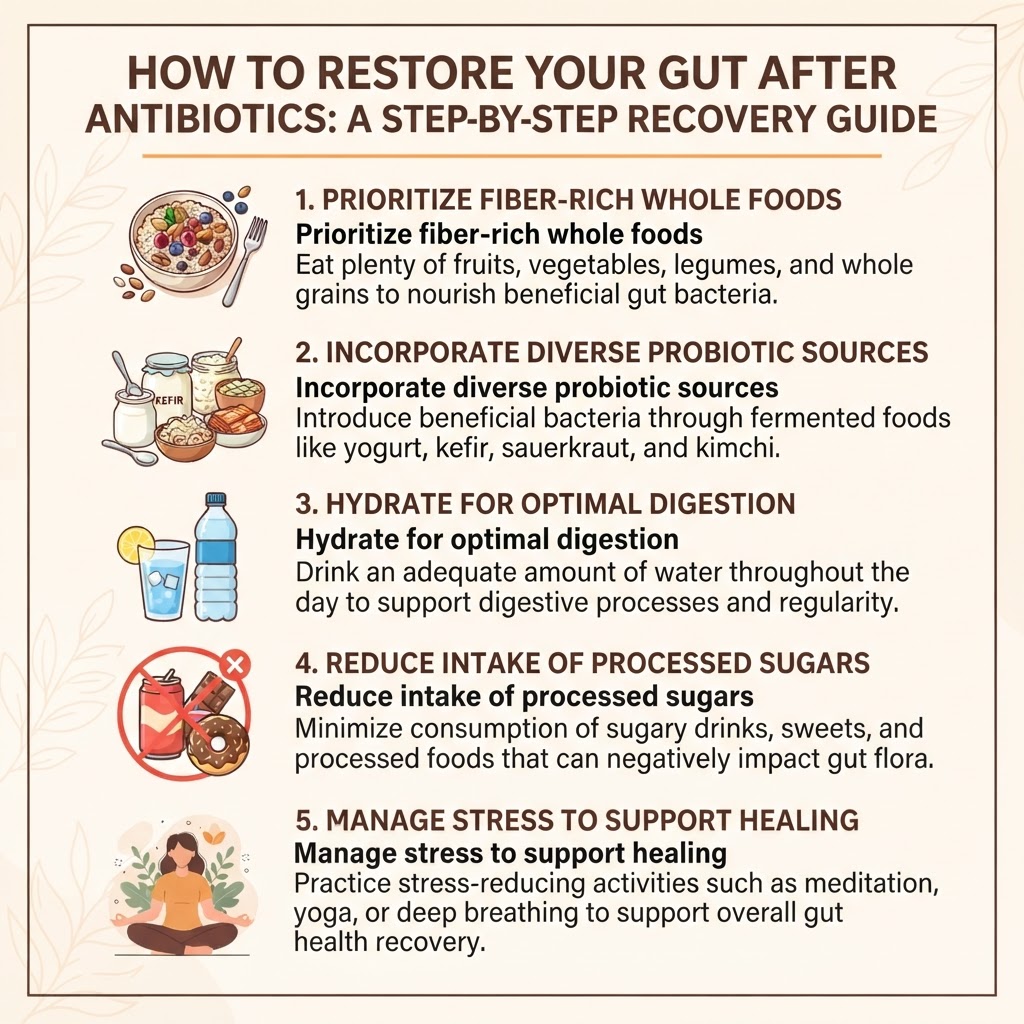
Prebiotics are specific types of fiber that your beneficial gut bacteria feed on. Without them, even a probiotic supplement has little to work with.
Helpful prebiotic-rich foods include:
- Garlic, onions, and leeks
- Oats and barley
- Bananas (especially slightly underripe ones)
- Asparagus and artichokes
- Legumes like lentils and chickpeas
Introduce these gradually, especially if your digestion is still sensitive, since a sudden increase in fiber can temporarily increase bloating.
Add Fermented Foods for Live Cultures
Fermented foods naturally contain live beneficial bacteria that can help repopulate your gut. Options like plain yogurt, kefir, sauerkraut, kimchi, and miso are gentle, food-based ways to introduce diversity back into your microbiome.
Don't Neglect Protein and Overall Calories
Gut repair, like wound healing, requires building materials. Adequate protein supports the repair of intestinal lining cells, which can be irritated during antibiotic treatment. This is especially important if your appetite has dipped during illness — a concern we address in depth in our guide on recovery nutrition after surgery, where similar principles apply to any period of physical stress on the body.
If you've lost weight or lost your appetite during illness, rebuilding gut health and rebuilding healthy body weight often go hand in hand. Our guide on gaining weight healthily when underweight offers a practical framework for this exact situation.
Step 2: Consider Probiotic Supplementation Strategically
Food-based strategies are foundational, but many people find that targeted probiotic supplementation offers meaningful additional support, especially in the first few weeks after finishing antibiotics.
Timing Matters
A common question is whether to take probiotics during antibiotics or wait until after. Current evidence suggests both approaches have merit, but timing and strain selection matter.
- If taking probiotics alongside antibiotics, spacing doses by at least two to three hours may help reduce the chance of the antibiotic immediately killing the probiotic organisms.
- After finishing antibiotics, probiotic supplementation is generally easier to use consistently and may support faster rebuilding of microbial diversity.
Not All Probiotics Are Created Equal
One frustration I regularly hear from patients is that they tried "a probiotic" and didn't notice much difference. Strain specificity matters enormously here. Many over-the-counter products use strains that don't survive stomach acid in meaningful numbers, meaning most of the dose never reaches the intestines alive.
"The clinical effects of probiotics are strain-specific; findings for one strain cannot be generalized to other strains, even within the same species." — National Institutes of Health, Office of Dietary Supplements, Probiotics Fact Sheet for Health Professionals
This is precisely why we formulated BioGain™ using microencapsulation technology designed to protect live cultures through the harsh acidic environment of the stomach. If you want to understand which specific strains matter most for post-antibiotic recovery and why, our detailed breakdown in The Complete Guide to Probiotic Strains is a useful next read.
For those also managing low appetite or unintentional weight loss during illness, the BioGain™ probiotic meal replacement was specifically designed to combine calorie-dense, easy-to-digest nutrition with targeted probiotic strains — addressing both sides of the recovery equation at once.
Step 3: Support Digestion and Appetite During Recovery
Restoring gut health isn't only about bacteria — it's also about giving your digestive system the gentlest possible conditions to function well while it heals.
Eat Smaller, More Frequent Meals
Large meals can be harder to digest when your gut lining and motility are still recovering. Smaller, more frequent meals reduce digestive burden while still supplying steady energy and nutrients throughout the day.
Stay Well Hydrated
Water supports healthy motility and helps prevent the constipation that sometimes follows a bout of antibiotic-related diarrhea once symptoms shift. Herbal teas like ginger or peppermint may also offer gentle digestive comfort for some people.
Minimize Gut Irritants Temporarily
During active recovery, it's reasonable to go easy on:
- Excess alcohol
- Highly processed, sugar-dense foods
- Very spicy or heavily fried meals
These don't need to be eliminated forever, but reducing them for a few weeks gives your gut lining and microbial community a calmer environment to rebuild in.
Movement Supports Digestion Too
Gentle physical activity, even short daily walks, has been associated with healthier gut motility and microbial diversity. If you're recovering from a hospital stay or surgery in addition to antibiotics, our article on gentle exercise protocols for post-operative patients offers safe, graded movement strategies that support gut healing without overtaxing your body.
Special Considerations for Seniors and Caregivers
Older adults face a uniquely challenging combination of risk factors when it comes to antibiotic-related gut disruption. Age-related changes already tend to reduce microbial diversity, and seniors are statistically more likely to be prescribed antibiotics for infections like UTIs or respiratory illness.
Why This Population Needs Extra Attention
- Reduced stomach acid production in older adults can alter how probiotics survive digestion.
- Appetite naturally declines with age, making calorie and protein intake harder to maintain during recovery.
- The risk of C. difficile infection rises significantly with age, particularly after repeated antibiotic courses.
The World Health Organization has specifically flagged antibiotic-related complications and resistance as a growing global health concern, particularly in vulnerable populations such as older adults and those in long-term care settings.
"Antibiotic resistance is one of the biggest threats to global health, food security, and development today." — World Health Organization, Antibiotic Resistance Fact Sheet
What Caregivers Can Do
If you're supporting a senior loved one through antibiotic recovery, focus on:
- Offering small, nutrient-dense meals rather than expecting three large ones
- Encouraging simple fermented foods like yogurt if well tolerated
- Discussing probiotic strain selection with their physician or pharmacist, since medication interactions and health conditions vary
- Monitoring for any signs of worsening digestive symptoms, which should always be reported to a healthcare provider promptly
Weight loss during illness recovery is a particular concern in this age group, and our piece on the microbiome's role in body composition offers helpful context on why gut health and healthy weight maintenance are so closely linked, especially later in life.
Common Mistakes That Slow Gut Recovery
Even well-intentioned recovery efforts can backfire if a few common mistakes creep in. Watching for these can save weeks of unnecessary digestive discomfort.
Mistake 1: Going too aggressive with fiber too fast. A sudden jump from a low-fiber "sick diet" to a high-fiber recovery diet can cause bloating and gas that mimic ongoing dysbiosis. Build up gradually over one to two weeks.
Mistake 2: Stopping probiotic support too early. Many people take a probiotic for a few days, feel slightly better, and stop. Microbial rebuilding is a gradual process that generally benefits from several weeks of consistent support.
Mistake 3: Ignoring overall calorie and protein needs. Gut lining repair, like any tissue repair, requires adequate building blocks. Under-eating during recovery — common when appetite is suppressed from illness — can slow the whole process down.
Mistake 4: Assuming all probiotic products are interchangeable. As noted earlier, strain survivability and specificity matter. A product that doesn't survive stomach acid provides little practical benefit, regardless of the label claims.
Mistake 5: Neglecting sleep and stress management. Chronic stress and poor sleep are both associated with reduced microbial diversity, independent of diet. Recovery is a whole-body process, not just a dietary checklist.
If inflammation seems to be part of your lingering symptoms — persistent fatigue, joint discomfort, or slow healing — our deeper dive into inflammation, gut health, and healing explains how food choices can help modulate this process over time.
Your Simplest First Step Toward Gut Recovery
If all of this feels like a lot to manage while you're still recovering, here's my advice as a physician: start small, and start today. You don't need to overhaul your entire diet overnight.
The simplest, most effective first step is this: add one fermented or prebiotic-rich food to your next meal, and consider whether a quality, strain-specific probiotic could support your rebuilding process over the coming weeks. For many people juggling low appetite and the need for concentrated nutrition, a BioGain™ probiotic meal replacement offers a practical way to combine both needs in one simple step, without adding complexity to an already demanding recovery period.
Gut recovery after antibiotics isn't instant, but it is achievable with consistent, informed support — and you don't have to figure it out alone. If you'd like ongoing guidance, recovery tips, and the latest science delivered straight to your inbox, I'd invite you to subscribe to the BioGain newsletter for continued support on your recovery journey.
Get gut-smart, one email at a time
Science made simple, practical tips and member-only offers from BioGain. No spam, unsubscribe anytime.
By subscribing you agree to receive emails from BioGain (Velobiotics). Unsubscribe in one click.