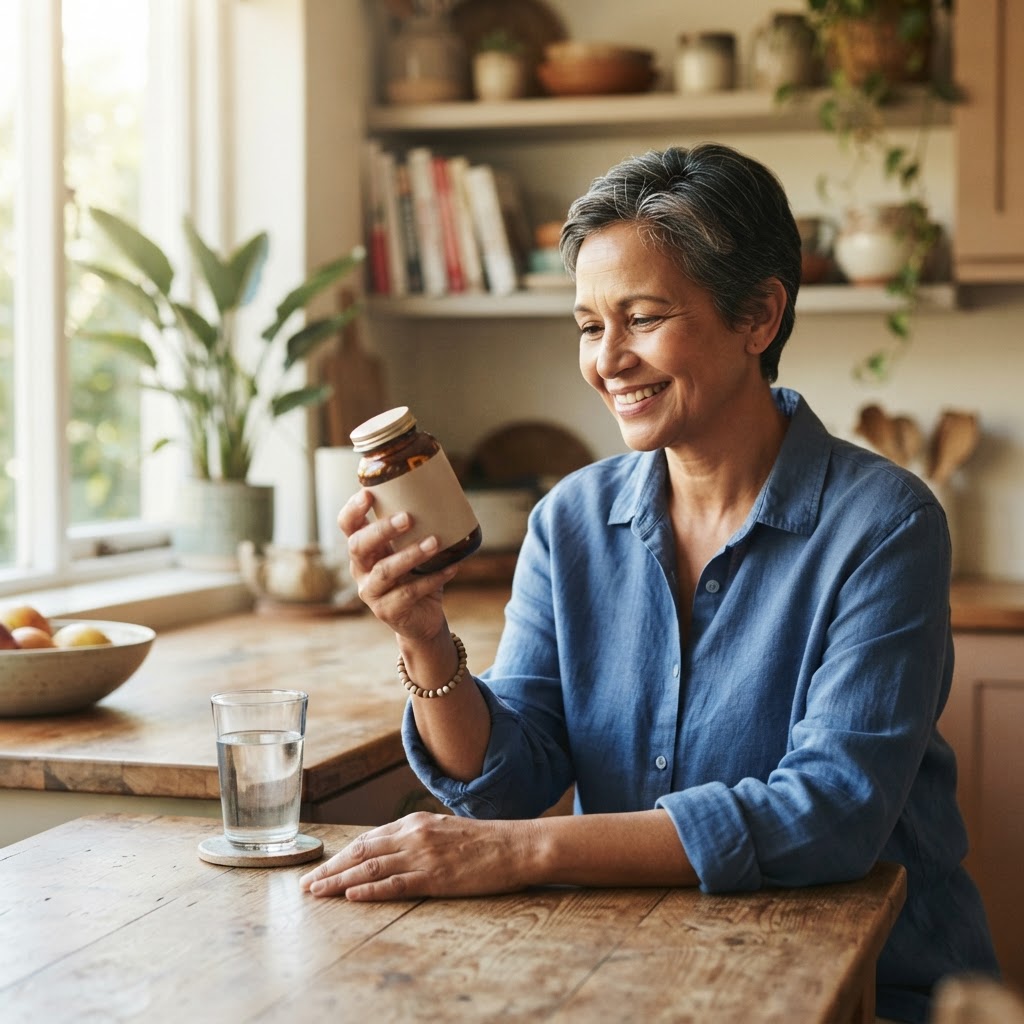
Best Probiotic After Antibiotics in South Africa: A Doctor's Buying Guide
If you have just finished a course of antibiotics, there is a good chance your stomach feels "off." Maybe you're bloated, your appetite has vanished, or you've noticed irregular bowel movements for the first time in years. You are not imagining it, and you are also not alone — this is one of the most common questions we get at BioGain™: which probiotic should I actually buy in South Africa to help my gut recover?
This guide is written specifically for South African readers navigating local pharmacy shelves, online stores, and conflicting advice from well-meaning friends. I'll walk you through what the science actually says, what to look for on a label, and how to choose a probiotic that matches your specific recovery situation — whether that's a mild course of antibiotics for a sinus infection or a longer, more depleting hospital stay.
Why Your Gut Needs Extra Support After Antibiotics
Antibiotics are remarkable medicines. They clear dangerous infections, and in many cases they save lives. But they are not precision tools — they cannot distinguish between the harmful bacteria causing your infection and the trillions of helpful bacteria living in your gut.
What Antibiotics Actually Do to Your Microbiome
A typical course of antibiotics can reduce the diversity of your gut bacteria within just a few days. Some bacterial species disappear almost entirely, while others that were previously kept in check can multiply unchecked. This imbalance is often called dysbiosis, and it's the reason so many people feel digestively "wrong" during and after treatment.
Research published in the journal Cell found that this disruption isn't always brief or harmless. Our article on how long does gut take to recover after antibiotics breaks down the realistic timeline, which for some people extends well beyond a few weeks.
Common Symptoms South Africans Report After a Course of Antibiotics
In our consultations and reader messages, the same complaints come up again and again:
- Bloating, gas, or a heavy feeling after meals
- Loose stools or, conversely, constipation
- A noticeable drop in appetite
- Fatigue that doesn't match the original illness
- Oral or vaginal thrush, especially after repeated antibiotic use
If several of these sound familiar, your gut is likely signalling that it needs structured support rather than just "time."
"Antibiotic exposure can rapidly and substantially reduce the diversity and abundance of gut microbial populations, with effects that may persist for months in some individuals." — Suez et al., Cell, 2018
What Makes a Probiotic "Best" After Antibiotics (Not Just Marketing)
Walk into any South African pharmacy and you'll see dozens of probiotic boxes, many using similar buzzwords. "Best" isn't about the flashiest packaging — it's about three measurable factors: strain evidence, survivability, and timing.
Strain Diversity and Clinical Evidence
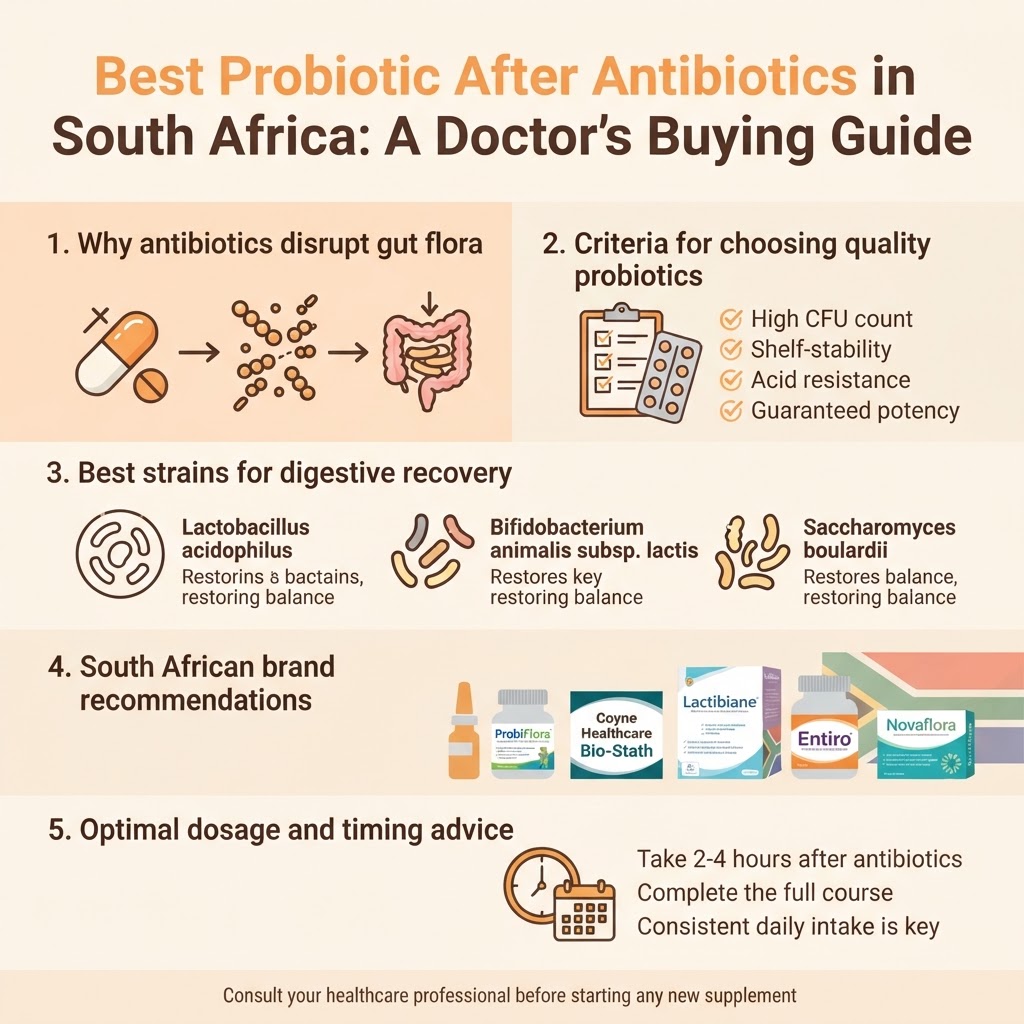
Not all probiotics are created equal, and this matters more after antibiotics than at almost any other time. Look specifically for strains with published research in post-antibiotic recovery, such as certain Lactobacillus rhamnosus, Lactobacillus acidophilus, Bifidobacterium lactis, and Saccharomyces boulardii strains.
A product listing "probiotic blend" with no named strains or colony-forming unit (CFU) count tells you very little. The strain name and number (for example, Lactobacillus rhamnosus GG) is what connects a product to actual clinical research, not the genus alone. If a label can't tell you the exact strain, it likely hasn't been tested in the way you'd hope.
Survival Through Stomach Acid (Delivery Technology)
This is the part most shoppers never think about, and it's arguably the most important. Stomach acid is extremely effective at destroying bacteria — which is partly its job — and many standard probiotic capsules lose the vast majority of their live organisms before they ever reach the intestine where they're needed.
Microencapsulation technology addresses this directly by coating the probiotic in a protective layer that only breaks down once it reaches the gut. Our article on the complete guide to probiotic strains explains why delivery technology can matter as much as the strain itself. Without it, you may be paying for CFU counts on a label that never actually reach your intestine alive.
Timing: When to Start and How Long to Continue
One detail that surprises a lot of people is that starting probiotics during antibiotic treatment, not just after, is generally considered helpful, provided you space the two doses a few hours apart. Most clinical protocols suggest continuing probiotic support for several weeks after finishing the antibiotic course, not just a few days.
Our step-by-step piece on how to restore your gut after antibiotics gives a practical week-by-week approach if you want more detail on sequencing.
"Clinicians and consumers should favour probiotic products with strain-specific evidence for the intended use, taken for a duration that reflects the clinical studies supporting them — typically several weeks, not several days." — World Gastroenterology Organisation, Global Guideline on Probiotics and Prebiotics
Key Features to Check Before You Buy in South Africa
Once you understand strains, survivability, and timing, the next step is translating that into a smart purchasing decision locally. South Africa's retail and online landscape has its own quirks worth knowing about.
Local Availability, Registration and Storage
Many imported probiotics sit in hot delivery vans or non-climate-controlled pharmacy shelves for extended periods, which can degrade live organisms before you even open the box. Where possible, choose brands that either use heat-stable, microencapsulated strains or are distributed through cold-chain-aware local channels. If you're specifically looking for BioGain™, we've put together a dedicated guide on where to buy BioGain in South Africa safely, including how to avoid counterfeit or expired stock sold through informal online marketplaces.
Red Flags to Avoid
Before adding any probiotic to your basket, run through this quick checklist:
- No named strains, only vague terms like "proprietary blend"
- No CFU count, or a CFU count without an expiry-date guarantee
- Claims that sound like it will "cure" digestive issues overnight
- No information about delivery technology or acid resistance
- Sold only through unverified third-party sellers with no brand traceability
A trustworthy product will be transparent on all five points, usually directly on the packaging or the brand's own website.
Probiotics vs Probiotic Meal Replacements: Which Suits Your Recovery?
This is a question we get constantly, and the honest answer is: it depends on how antibiotics have affected your appetite and energy, not just your digestion.
When a Capsule Is Enough
If your appetite has stayed relatively normal and your main issue is mild bloating or irregular stools, a standard probiotic capsule combined with fibre-rich foods and fermented foods may be sufficient. This is often the case after a short, single course of antibiotics for something like a minor skin infection or urinary tract infection. In these situations, consistency matters more than intensity — take it daily, at the same time, for the full recommended duration.
When You Need More Than a Capsule
Some people come out of antibiotic treatment — especially after hospitalisation, repeated courses, or illness that suppressed appetite for days — not just with an unbalanced gut, but with real nutritional ground to make up. In these cases, a capsule alone doesn't address the calorie and protein deficit that's slowing recovery. This is precisely the gap the BioGain™ probiotic meal replacement was formulated to close — combining microencapsulated probiotics with balanced nutrition designed to support appetite recovery and healthy weight gain, not just gut flora.
Our detailed breakdown on the best weight gain supplement with probiotics goes further into why pairing gut support with nutrition tends to outperform probiotics alone for people who have lost noticeable weight or muscle during illness.
"Nutritional status and gut microbial recovery are closely linked; addressing one in isolation often produces slower or incomplete recovery outcomes." — Mayo Clinic, Digestive Health Division
Who Needs Extra Care: Seniors, Post-Surgical Patients, and Underweight Recoverers
Not everyone recovers from antibiotics at the same pace, and age or underlying health status changes the picture considerably. Three groups deserve particular attention in South African households.
Seniors often have naturally less diverse gut flora even before antibiotics are introduced, and they are more prone to appetite suppression afterward. If you're caring for an older parent who has recently finished a course of antibiotics, our guide on nutrition for elderly parents at home offers practical, day-to-day strategies beyond just supplementation. Unexplained weight loss in this age group should never simply be assumed to be "normal aging" — our piece on weight loss in elderly explains what else to watch for.
Post-surgical patients frequently receive antibiotics as a precaution around their procedure, on top of whatever physical stress the surgery itself placed on the body. Gut recovery in this group often needs to run in parallel with wound healing and mobility recovery, which is why nutrition timing becomes so important immediately afterward.
Underweight individuals or those who've lost weight during illness face a double burden — their microbiome needs rebuilding at the same time their body needs extra calories and protein to recover lost mass. For this group specifically, a probiotic alone rarely moves the needle quickly enough, and a more complete nutritional approach tends to be necessary.
A Simple Daily Plan to Rebuild Your Gut After Antibiotics
Theory is useful, but most readers want to know what to actually do, starting today. Here is a straightforward framework we recommend to patients and readers alike.
Morning:
- Take your chosen probiotic with or shortly after breakfast
- Include a source of soluble fibre, such as oats or a ripe banana
Midday:
- Add a small portion of fermented food if tolerated — plain yoghurt, kefir, or sauerkraut
- Prioritise protein at lunch to support both muscle and immune recovery
Evening:
- Keep meals light but nutrient-dense if appetite is still low
- Avoid late, heavy, or very fatty meals that can aggravate a sensitive gut
Throughout the week:
- Stay consistent — most probiotic benefits are cumulative, not immediate
- Track energy, appetite, and bowel regularity so you notice genuine improvement
- Reintroduce a wider variety of vegetables gradually rather than all at once
For a deeper, week-by-week version of this plan, our full guide on understanding antibiotic recovery and restoring your microbiome covers each stage in more detail, including what to expect in weeks two through six. According to the NIH's National Center for Complementary and Integrative Health, consistency and strain-specific selection remain the two most evidence-backed factors in probiotic effectiveness, which lines up closely with what we see clinically.
If you're also trying to rebuild strength and stamina during this period, pairing gentle movement with your nutrition plan can support recovery further — something we explore in our post-operative movement guides elsewhere on the site.
Your Simplest Next Step
You don't need to overhaul your entire diet overnight or buy five different supplements to start recovering well. The single most useful first step is choosing one well-evidenced, properly delivered probiotic and committing to it consistently for several weeks.
If your situation involves more than just digestive discomfort — low appetite, noticeable weight loss, or general depletion after illness or surgery — it may be worth looking at a combined approach. The BioGain™ probiotic meal replacement was built around exactly this scenario, pairing microencapsulated probiotic strains with balanced, easy-to-digest nutrition in one daily step.
Before you buy anything, read our practical guide on BioGain weight gain reviews to see how real users describe their own recovery timelines — it may help set realistic expectations for your own journey.
And if you'd like ongoing, practical guidance on gut and recovery nutrition sent straight to your inbox, consider subscribing to the BioGain™ newsletter — it's a simple way to stay informed without having to search for answers every time something changes in your recovery.
This article is for general educational purposes and does not replace personalised medical advice. Please consult your doctor or pharmacist about probiotic use alongside your specific antibiotic treatment, especially if you are immunocompromised, pregnant, or caring for a young child or frail elderly person.
Get gut-smart, one email at a time
Science made simple, practical tips and member-only offers from BioGain. No spam, unsubscribe anytime.
By subscribing you agree to receive emails from BioGain (Velobiotics). Unsubscribe in one click.