
How to Gain Weight Healthily When You're Underweight: A Complete Recovery-Focused Guide
If you've spent years hearing weight-loss advice everywhere you look, being told to "just eat more" can feel oddly isolating. Underweight bodies have unique needs, and gaining weight the wrong way can leave you heavier on the scale but no healthier underneath. As a physician who works with recovery nutrition every day, I want to walk you through what actually works — and why the gut plays a bigger role in this process than most people realize.
This guide is written for anyone who is underweight due to illness, surgery, antibiotic use, aging, or simply a fast metabolism and low appetite. The goal isn't just more pounds. It's more strength, energy, and resilience.
Why Being Underweight Matters More Than You Think
Being underweight is usually defined as having a body mass index (BMI) under 18.5, though BMI alone doesn't tell the whole story. What matters more is whether your body has enough reserves — muscle, fat, and micronutrients — to support healing, immunity, and daily function. Chronic underweight status is associated with weaker immune defenses, slower wound healing, and reduced muscle strength.
For some people, being underweight is a lifelong trait with no complications. For others, especially those recovering from illness, surgery, or a course of antibiotics, unintentional weight loss is a warning sign. The World Health Organization notes that malnutrition — including being underweight — increases vulnerability to infection and complicates recovery from medical treatment.
"Malnutrition weakens the immune system... increasing the frequency, severity, and duration of illness." — World Health Organization, Malnutrition Fact Sheet
This is why healthy weight gain isn't a cosmetic goal for many people. It's a functional one, tied directly to how well your body can defend and repair itself.
The Difference Between "Gaining Weight" and "Gaining Health"
It's entirely possible to gain weight through ultra-processed, calorie-dense foods and end up with more body fat but less muscle, more inflammation, and a sluggish gut. That's not the outcome we're after here. Healthy weight gain means building lean tissue, replenishing energy stores, and supporting the digestive system that has to process all this new nutrition.
Common Reasons People Struggle to Gain Weight
Before building a plan, it helps to understand why weight gain feels so difficult in the first place. The causes vary widely, and the right approach depends heavily on the underlying reason.
Common contributors include:
- Reduced appetite following illness, surgery, or hospitalization
- Digestive disruption after a course of antibiotics
- Age-related appetite decline and reduced sense of taste or smell in seniors
- Chronic inflammation that increases calorie needs while suppressing hunger signals
- High metabolic rate or thyroid-related conditions
- Anxiety, depression, or grief affecting eating habits
- Difficulty chewing or swallowing after certain medical treatments
If any of these sound familiar, you're not alone, and the good news is that most of these causes respond well to a structured, gut-friendly nutrition approach rather than sheer calorie force-feeding.
Why "Just Eat More" Rarely Works
Telling someone with low appetite to simply eat bigger meals often backfires. It can trigger nausea, bloating, or early satiety — the feeling of being full after just a few bites. This is especially common after illness or surgery, when digestive capacity is temporarily reduced. A gentler, more strategic approach almost always produces better long-term results.
The Gut-Weight Connection: Why Digestion Comes First
Here's something rarely discussed in mainstream weight-gain advice: your gut microbiome directly influences how well you absorb, use, and store the nutrients you eat. Two people can eat identical meals and gain very different amounts of usable nutrition, partly because of differences in their gut bacteria.
Research has shown that gut microbes influence energy harvest from food, nutrient absorption, and even appetite-regulating hormones. This is particularly relevant for people recovering from illness or antibiotics, since both can significantly disrupt the microbiome. If you've recently finished a course of antibiotics, our guide on restoring your microbiome after treatment explains this process in more depth.
"The gut microbiota plays a critical role in energy harvest and metabolic regulation, influencing weight and nutritional status beyond calorie intake alone." — Turnbaugh et al., Nature, Human Microbiome Research
This is one reason many people find that simply "eating more" doesn't move the scale — their gut isn't absorbing what they're taking in. Supporting gut health alongside calorie intake is often the missing piece. Our related article on gut bacteria's influence on body composition explores this connection in detail.
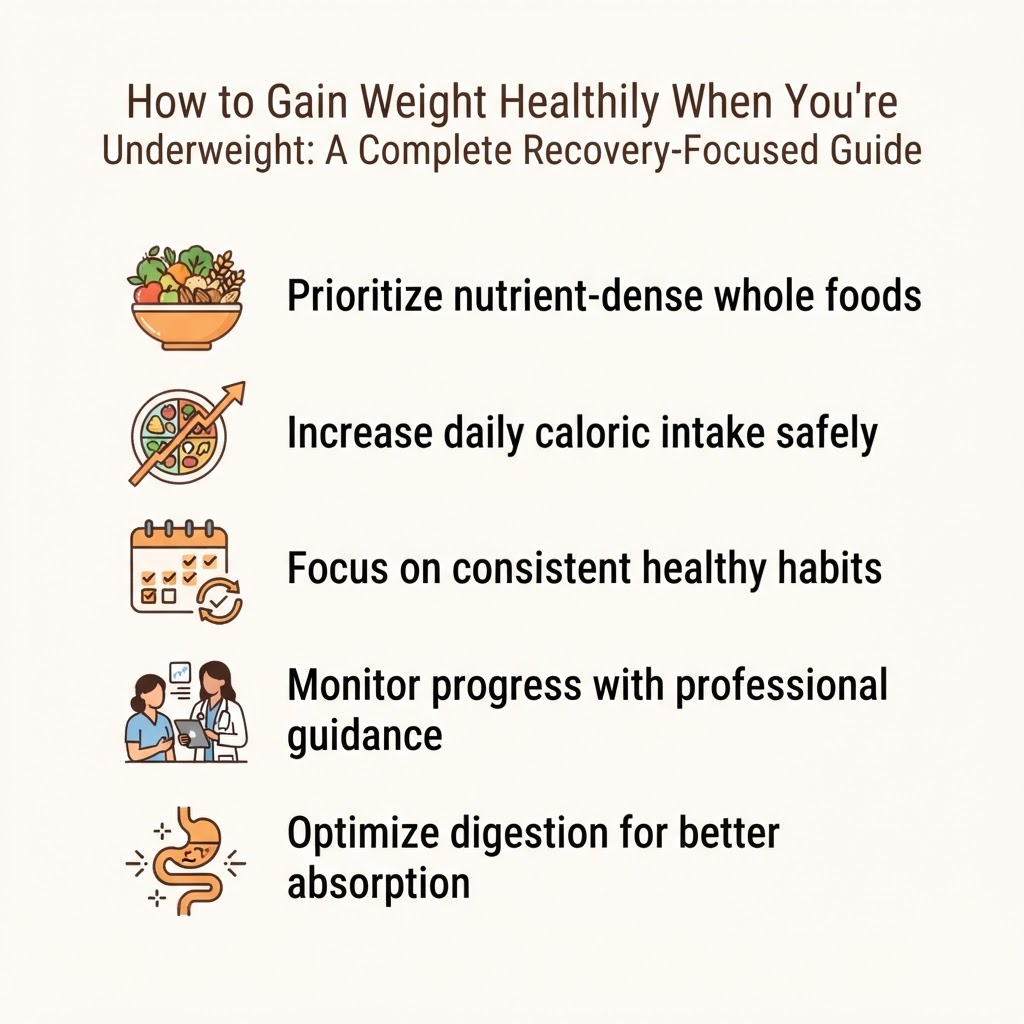
Building a Healthy Weight-Gain Plan: Food First
Once you understand why your appetite and digestion behave the way they do, you can build a food strategy that works with your body instead of against it.
Calorie-Dense, Nutrient-Rich Foods
The goal is to get more nutrition into smaller volumes of food, especially if your appetite is limited. Focus on foods that pack calories and nutrients together, rather than empty calories.
Good options include:
- Nut butters, avocados, and olive oil
- Whole milk, yogurt, and cheese (fermented dairy also supports gut flora)
- Oats, whole grains, and starchy vegetables
- Eggs, fatty fish, and lean meats
- Dried fruits and trail mixes for snacking
These foods deliver meaningful calories without requiring you to eat huge portions, which matters enormously if you're dealing with a reduced appetite.
Protein: The Building Block You Can't Skip
Weight gained without adequate protein tends to be mostly fat, with little improvement in strength or muscle mass. Protein needs are often higher during recovery, illness, or older age than most people assume.
"Older adults need more dietary protein than younger adults to support good health, promote recovery from illness, and maintain functionality." — Bauer et al., PROT-AGE Study Group, Journal of the American Medical Directors Association
Aim to include a source of protein at every meal and snack — eggs, dairy, poultry, fish, legumes, or a quality protein shake. If eating enough whole-food protein feels overwhelming, a BioGain™ probiotic meal replacement can offer a convenient way to combine calories, protein, and gut-supportive probiotics in one sitting, especially on days when appetite is low.
Frequency Over Portion Size
Rather than forcing three large meals, many people do better with five to six smaller meals and snacks spread throughout the day. This approach reduces the digestive burden of any single sitting while steadily increasing total daily intake.
A sample day might look like:
- Breakfast: Greek yogurt with granola and berries
- Mid-morning: A handful of nuts and a piece of fruit
- Lunch: Whole grain sandwich with turkey, avocado, and cheese
- Afternoon: A probiotic-rich smoothie or shake
- Dinner: Salmon, rice, and roasted vegetables with olive oil
- Evening: Cottage cheese with honey
Small, frequent meals also tend to be gentler on a digestive system that's still recovering from illness, surgery, or antibiotics.
Special Considerations for Recovery, Antibiotics & Seniors
Not everyone underweight is starting from the same place. Here's how the approach shifts depending on your specific situation.
Post-Illness or Post-Surgery Recovery
After illness or surgery, your body enters a heightened repair state that requires extra energy and protein — often 25–30% more than baseline needs, depending on the severity of the event. At the same time, appetite is frequently at its lowest. This mismatch is exactly why structured nutrition plans matter so much during recovery.
Gentle movement can also help stimulate appetite and support digestion during this period. Our detailed gentle exercise protocols for post-operative patients explain how light activity supports both gut health and appetite as you heal.
After Antibiotics
Antibiotics, while necessary, can significantly disrupt gut bacteria, sometimes leading to bloating, changed appetite, or digestive discomfort that makes eating enough feel difficult. Rebuilding your microbiome alongside your calorie intake can support both digestion and long-term nutrient absorption.
Helpful steps after antibiotics include:
- Introducing fermented foods gradually (yogurt, kefir, sauerkraut)
- Considering a targeted probiotic to help restore microbial balance
- Prioritizing fiber-rich foods once digestion stabilizes
- Being patient — microbiome recovery can take weeks
Seniors & Caregivers
For older adults, unintentional weight loss deserves particular attention, since it's associated with increased frailty, falls, and hospitalization risk. Appetite naturally declines with age due to hormonal shifts, medication side effects, and reduced taste sensitivity.
Caregivers can help by offering smaller, more frequent meals; enhancing flavor with herbs and spices instead of excess salt; and making mealtimes social and pressure-free. According to the Mayo Clinic's guidance on healthy weight gain, combining resistance-based movement with adequate protein intake is one of the most reliable ways to convert extra calories into functional muscle rather than just fat.
Gentle Movement to Support Appetite and Muscle Gain
It might seem counterintuitive to exercise when you're trying to gain weight, but light physical activity plays an important supporting role. Movement can stimulate appetite, improve digestion, and — most importantly — direct extra calories toward muscle rather than fat storage.
Appropriate movement for underweight or recovering individuals includes:
- Short daily walks
- Light resistance band exercises
- Gentle stretching or restorative yoga
- Bodyweight exercises like wall push-ups or seated leg lifts
The key is consistency over intensity. Even 10–15 minutes of gentle movement most days can make a measurable difference over several weeks. If you're recovering from a medical procedure, it's worth reviewing our gut-health-focused exercise protocols for post-surgical patients before starting any new routine.
Tracking Progress Without Obsessing
Healthy weight gain is slow, and it's easy to feel discouraged if you're only watching the bathroom scale. A more complete picture includes energy levels, sleep quality, mood, and how your clothes fit — not just numbers.
Consider tracking:
- Weekly weight (not daily, which can fluctuate misleadingly)
- Energy levels and fatigue throughout the day
- Sleep quality and duration
- Mood and appetite changes
- Strength or stamina improvements
Our guide on daily wellness tracking offers a simple framework for monitoring these factors without becoming obsessive about any single metric. Small, steady trends over four to six weeks matter far more than day-to-day noise.
It's also worth remembering that gut health directly influences mood and energy, which is part of why the gut-brain connection matters even in a weight-gain context — feeling better mentally often supports better appetite and eating consistency.
Your Simplest First Step
If all of this feels like a lot, start small. Pick one meal today and add a source of protein and a source of healthy fat to it — that's it. Consistency in small habits beats a perfect plan you can't sustain.
For days when appetite is low or cooking feels like too much, a BioGain™ probiotic meal replacement can serve as a reliable, gut-friendly way to get calories, protein, and probiotic support in one glass. It's designed specifically for people navigating recovery, low appetite, or the extra nutritional demands of healthy weight gain.
Healthy weight gain isn't about rushing the scale upward. It's about rebuilding your body's foundation — one steady, well-supported meal at a time.
Want more guidance like this delivered straight to your inbox? Subscribe to the BioGain™ newsletter for practical recovery nutrition tips, gut-health insights, and gentle strategies for sustainable weight gain.
Get gut-smart, one email at a time
Science made simple, practical tips and member-only offers from BioGain. No spam, unsubscribe anytime.
By subscribing you agree to receive emails from BioGain (Velobiotics). Unsubscribe in one click.