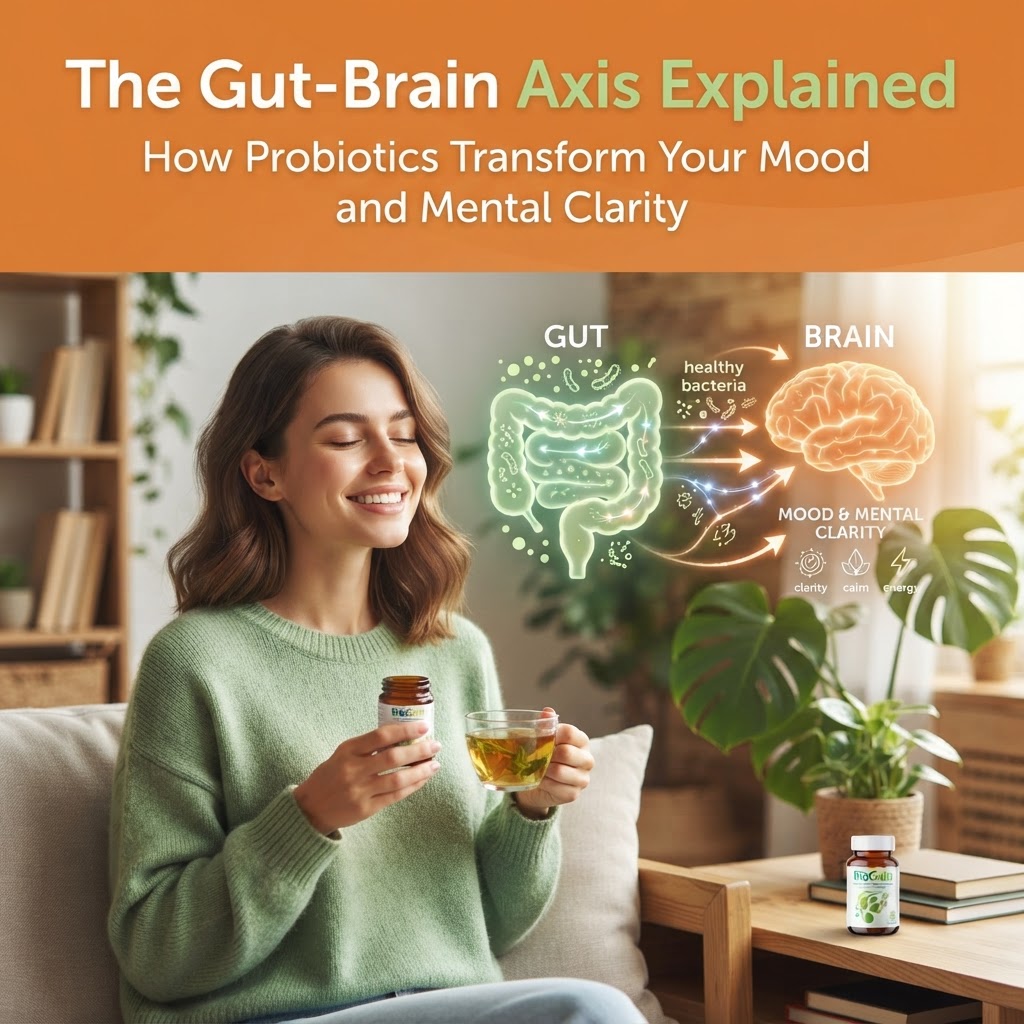
The Gut-Brain Axis Explained: How Probiotics Transform Your Mood and Mental Clarity
If you've ever had a "gut feeling" about something, or noticed your stomach tighten before a stressful presentation, you've experienced the gut-brain axis in action. This bidirectional communication highway between your gastrointestinal tract and your central nervous system is one of the most exciting frontiers in modern medicine — and it's fundamentally changing how we think about mental health, cognitive performance, and overall wellbeing.
As a physician and founder of Velobiotics™, I've spent years studying how the trillions of microorganisms living in your gut influence not just digestion, but your emotions, focus, resilience under stress, and long-term brain health. The science is compelling, the clinical evidence is growing, and the practical implications are profound.
In this article, I'll walk you through exactly how the gut-brain axis works, what the research tells us about probiotics mental health outcomes, and what you can do — starting today — to harness this connection for better mood and mental clarity.
What Is the Gut-Brain Axis?
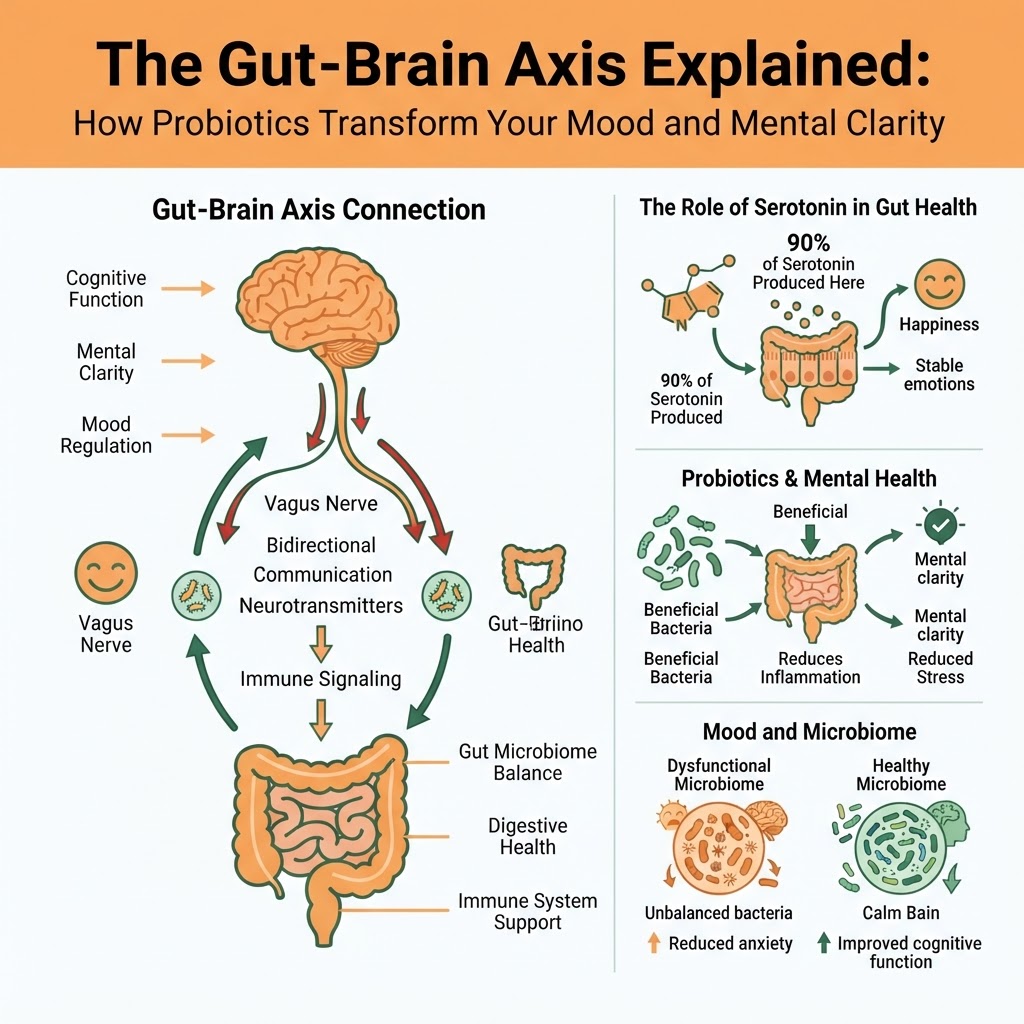
The gut-brain axis refers to the complex, two-way biochemical signalling network connecting your enteric nervous system (ENS) — sometimes called the "second brain" — with your central nervous system (CNS), which includes the brain and spinal cord.
Your gut contains over 500 million neurons, more than the spinal cord itself. These neurons communicate with your brain primarily through the vagus nerve, a long cranial nerve that runs from the brainstem all the way down to your abdomen. But the vagus nerve is just one channel. The gut-brain axis also operates through:
- Hormonal signals (including cortisol, ghrelin, and peptide YY)
- Immune pathways (roughly 70% of your immune system lives in the gut)
- Neurotransmitter production (your gut microbiome manufactures or influences the majority of your body's chemical messengers)
What makes this system truly remarkable is that communication is bidirectional. Your brain affects gut function — think stress-induced nausea or anxiety before an exam — but your gut equally shapes your brain's activity, emotional state, and cognitive performance.
The Microbiome: The Hidden Player
At the heart of the gut-brain axis is your gut microbiome: a dynamic ecosystem of bacteria, fungi, viruses, and other microorganisms. A healthy microbiome is diverse, resilient, and densely populated with beneficial bacterial species. When this ecosystem is disrupted — through poor diet, antibiotics, chronic stress, or illness — a condition called dysbiosis occurs, and the effects ripple far beyond the gut.
Research published in Nature Reviews Neuroscience has demonstrated that microbiome disruption in animal models produces measurable changes in anxiety-like behaviour, stress responses, and cognitive function. Increasingly, similar associations are being confirmed in human studies.
Serotonin, Gut Health, and the Chemistry of Mood
Perhaps the most striking fact about the gut-brain axis is this: approximately 90–95% of your body's serotonin is produced in the gut, not the brain.
Serotonin is the neurotransmitter most commonly associated with mood regulation, emotional stability, and feelings of wellbeing. It also plays a crucial role in sleep quality, appetite regulation, and memory consolidation. Yet the vast majority of it originates in the enterochromaffin cells of your intestinal lining — and its production is heavily influenced by the bacteria living alongside those cells.
Specific bacterial strains — particularly from the Lactobacillus and Bifidobacterium families — stimulate the gut lining to produce more serotonin precursors. They also produce short-chain fatty acids (SCFAs) like butyrate, which nourish gut cells, reduce intestinal inflammation, and support the blood-brain barrier.
When serotonin gut health is optimised through a thriving microbiome, you're not just supporting digestion. You're actively supporting your emotional regulation, stress tolerance, and cognitive sharpness.
GABA, Dopamine, and Beyond
Serotonin isn't the only neurotransmitter influenced by your microbiome. Gut bacteria also play a role in:
- GABA production: Lactobacillus rhamnosus has been shown in animal studies to modulate GABA receptors, producing anti-anxiety effects comparable to some pharmaceutical interventions
- Dopamine metabolism: Gut microbes influence the conversion of L-DOPA and other dopamine precursors
- BDNF (Brain-Derived Neurotrophic Factor): A protein critical for neuron growth and cognitive function, whose levels are influenced by microbial metabolites
Understanding these pathways illuminates why mood and microbiome are so deeply intertwined — and why restoring microbial balance can have genuine, measurable effects on how you feel and think.
Gut Health Anxiety: What the Research Actually Shows
The relationship between gut health anxiety and mental wellbeing is no longer speculative. A growing body of peer-reviewed research is establishing clear, mechanistic links.
A landmark meta-analysis published in General Psychiatry (2019) analysed 34 controlled trials and found that modifying gut microbiota through dietary intervention reduced anxiety symptoms in the majority of studies. The authors concluded that regulating the intestinal microbiota is a promising strategy for anxiety and stress-related conditions.
Similarly, research from the NIH National Center for Complementary and Integrative Health acknowledges the emerging role of probiotics in supporting mental wellness, while noting that more large-scale human trials are needed to establish definitive clinical protocols.
What we do know from the existing evidence:
- Individuals with irritable bowel syndrome (IBS) — a condition strongly associated with dysbiosis — report significantly higher rates of anxiety and depression than the general population
- Leaky gut syndrome (increased intestinal permeability) allows bacterial endotoxins to enter the bloodstream, triggering systemic inflammation that directly affects brain function and mood
- Probiotic supplementation in clinical trials has demonstrated reductions in perceived stress, improved emotional processing, and reduced cortisol levels in healthy volunteers
The gut is not merely responding to your emotional state. In many cases, it may be generating it.
Probiotics Mental Health: Strains That Make a Difference
Not all probiotics are created equal. When it comes to probiotics mental health outcomes, strain specificity matters enormously. The term "psychobiotics" — coined by researchers Ted Dinan and John Cryan at University College Cork — describes specific probiotic strains with demonstrable effects on brain function and mental health.
Key Psychobiotic Strains
- Lactobacillus helveticus R0052 + Bifidobacterium longum R0175: This combination is one of the most studied in human psychobiotic trials. A randomised controlled trial published in the British Journal of Nutrition found this combination significantly reduced psychological distress, anxiety, and depression scores compared to placebo
- Lactobacillus rhamnosus JB-1: Shown in preclinical studies to reduce stress-induced corticosterone (the animal equivalent of cortisol) and GABA receptor expression changes associated with anxiety
- Bifidobacterium longum 1714™: In a human trial, supplementation reduced stress and improved memory performance under cognitive challenge conditions
- Lactobacillus acidophilus: Supports overall mucosal immunity and serotonin precursor availability
The challenge with most commercially available probiotics is survival. The vast majority of probiotic bacteria die before they ever reach the large intestine, destroyed by stomach acid and bile salts. This is precisely why Velobiotics™ developed the microencapsulation technology used in BioGain™ — to ensure that 1000x more live bacteria survive the journey to your gut, where they can actually exert their beneficial effects.
Probiotic Cognition: Sharper Thinking Through a Healthier Gut
Beyond mood, the science of probiotic cognition is revealing that your gut microbiome may influence memory, focus, processing speed, and even long-term neurological health.
A 2021 study published in Frontiers in Aging Neuroscience found that probiotic supplementation in older adults improved scores on cognitive assessments, including memory recall and executive function, over a 12-week period. The researchers proposed that reduced neuroinflammation and improved BDNF levels mediated these effects.
The gut-brain axis inflammation pathway is particularly significant here. Chronic low-grade inflammation — often driven by dysbiosis and leaky gut — is increasingly recognised as a contributing factor in:
- Brain fog and cognitive fatigue
- Age-related cognitive decline
- Neurodegenerative conditions including Alzheimer's disease
- Depressive episodes with cognitive symptoms
By restoring microbial diversity and reducing intestinal inflammation, probiotic interventions may help protect cognitive function and support mental clarity at every stage of life.
The Gut-Brain Axis in Recovery
This connection is especially important for individuals recovering from surgery, illness, or significant physical trauma. Hospitalisation, antibiotics, and surgical stress all devastate the gut microbiome. Patients frequently report persistent brain fog, low mood, and fatigue long after physical healing is complete — symptoms that may be rooted in post-treatment dysbiosis.
Our free Recovery App was designed with this in mind, helping post-surgery patients track their daily wellness, nutrition, and probiotic intake as part of a comprehensive recovery protocol. Rebuilding the gut-brain axis after medical intervention is a critical — and often overlooked — component of full recovery.
The Mood and Microbiome Connection: Lifestyle Factors That Matter
Understanding the gut-brain axis isn't just about taking supplements. Your microbiome is profoundly shaped by the totality of your lifestyle. Here's what the evidence tells us about the key drivers:
Diet
- Fibre-rich foods (legumes, oats, vegetables) feed beneficial bacteria and promote SCFA production
- Fermented foods (kefir, kimchi, sauerkraut, yoghurt) introduce live cultures and support microbial diversity
- Ultra-processed foods high in artificial additives disrupt microbial balance and increase intestinal permeability
- Polyphenols found in berries, olive oil, green tea, and dark chocolate act as prebiotics, selectively feeding beneficial microbes
Exercise
Regular moderate exercise increases microbial diversity, promotes BDNF production, and reduces cortisol. Even a 20-minute walk has been shown to positively shift gut microbiome composition over time.
Sleep
The gut microbiome follows circadian rhythms — and disrupted sleep disrupts microbial balance. Aim for consistent sleep-wake cycles and 7–9 hours of quality sleep nightly.
Stress Management
Chronic psychological stress directly alters gut permeability and microbiome composition through the HPA axis (hypothalamic-pituitary-adrenal axis). Mindfulness, breathwork, and adequate social connection are legitimate gut health interventions.
Practical Tips: How to Support Your Gut-Brain Axis Daily
Here's an actionable framework for nourishing the gut-brain connection, drawn from both the published science and my clinical experience:
- Prioritise a diverse, plant-rich diet — aim for 30+ different plant foods per week to maximise microbial diversity
- Add fermented foods daily — even a small serving of kefir or kimchi supports microbial diversity
- Choose high-quality, evidence-backed probiotics — look for microencapsulated formulations with clinically studied strains; BioGain™ uses Velobiotics™ microencapsulation technology to deliver live bacteria that actually survive to the gut
- Eat prebiotic foods — garlic, onions, leeks, asparagus, and bananas feed the beneficial bacteria you're trying to cultivate
- Limit alcohol and processed food — both are potent disruptors of microbial balance
- Exercise consistently — at least 150 minutes of moderate activity per week
- Manage stress actively — schedule recovery time as deliberately as you schedule work
- Consider a structured gut-health nutrition plan — our Bulk-Up Plan integrates gut health principles into a 30-day AI-powered meal plan designed to support both physical performance and microbiome diversity
- Track your wellbeing — using tools like the Recovery App can help you identify patterns between gut symptoms, mood shifts, and lifestyle factors
- Be patient and consistent — meaningful microbiome change takes 4–8 weeks of sustained effort; this is a long game
What Makes BioGain™ Different
I want to speak briefly and honestly about why I developed BioGain™ through Velobiotics™, and why I believe the delivery mechanism matters as much as the strains themselves.
The most common question I receive from patients and followers is: "I'm already taking a probiotic — why isn't it working?"
The answer, in most cases, is survival. Standard probiotic capsules and powders expose bacteria to stomach acid, bile salts, and mechanical processing before they can colonise the gut. Studies suggest that fewer than 1% of bacteria in standard formulations reach the large intestine alive.
Velobiotics™ microencapsulation technology wraps each bacterium in a protective coating that resists stomach acid and releases bacteria precisely where they're needed — in the lower intestinal tract. Independent testing has validated 1000x greater survival rates compared to non-encapsulated equivalents.
This isn't a marketing claim — it's a delivery science distinction that determines whether the bacteria you consume actually reach the gut-brain axis in functional numbers. You can explore the science behind Velobiotics™ technology in detail on our website.
Conclusion: Your Gut Is Your Second Brain — Treat It That Way
The gut-brain axis is not a metaphor. It is a concrete, biochemical reality — a communication system that influences your mood, memory, stress resilience, and cognitive clarity every single day. The good news is that you have more influence over this system than you might think.
Through dietary choices, consistent probiotic support, stress management, adequate sleep, and regular movement, you can meaningfully shift your microbiome — and in doing so, shift how you feel and think. The science of serotonin gut health, probiotic cognition, and mood and microbiome is moving rapidly, and it is increasingly pointing in the same direction: a healthy gut is foundational to a healthy mind.
Whether you're struggling with gut health anxiety, dealing with persistent brain fog, recovering from illness, or simply seeking to optimise your cognitive performance, the gut-brain axis offers a powerful lever — one that is underutilised by conventional medicine and underappreciated by most people managing their own health.
Ready to take the next step?
- 🔬 Try BioGain™ — the microencapsulated probiotic meal replacement designed to actually reach your gut and support the gut-brain connection you've read about in this article
- 📱 Download the free Recovery App to track your gut health, mood, and wellness metrics daily
- 🥗 Explore the Bulk-Up Plan for a 30-day, gut-health-focused nutrition strategy built around your goals
Your second brain is waiting. Give it what it needs.
Dr. Chomba Chuma, MD, is the Founder of BioGain™ and Velobiotics™. He specialises in integrative medicine, microbiome science, and evidence-based approaches to recovery and performance nutrition.
Get gut-smart, one email at a time
Science made simple, practical tips and member-only offers from BioGain. No spam, unsubscribe anytime.
By subscribing you agree to receive emails from BioGain (Velobiotics). Unsubscribe in one click.