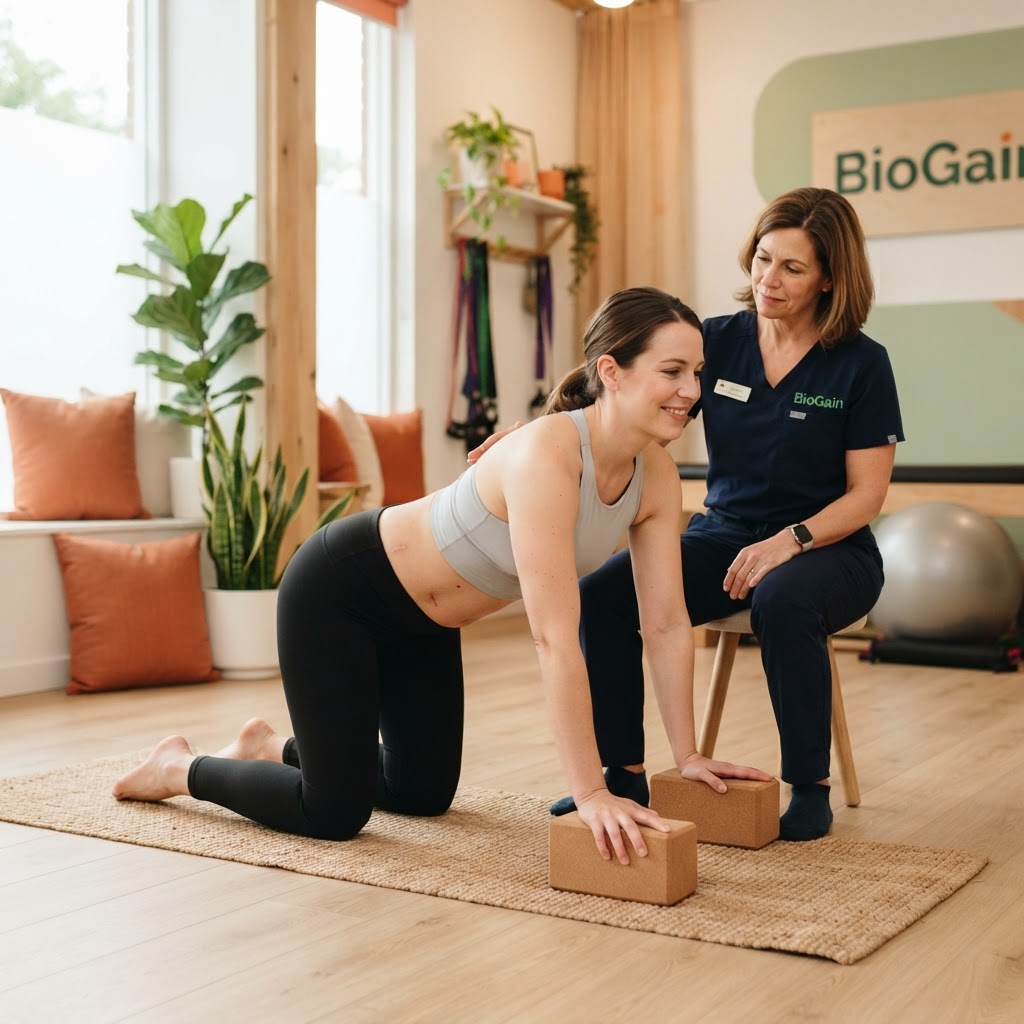
Gentle Exercise Protocols for Post-Operative Patients: A Gut-Health Perspective
Recovery after surgery is rarely a straight line. As a physician and researcher who has spent years studying the intersection of gut microbiome health and physical rehabilitation, I can tell you with confidence that two of the most overlooked pillars of surgical recovery are gentle movement and gut health. Individually, each plays a vital role. Together, they create a recovery environment that is dramatically more effective than either could achieve alone.
In this article, I want to walk you through evidence-based, practical protocols for post-operative exercise — with a particular emphasis on what is happening inside your gut during recovery, and how you can use that knowledge to heal faster, stronger, and more comfortably.
Whether you are recovering from abdominal surgery, orthopaedic procedures, cardiac operations, or elective cosmetic surgery, the principles outlined here are broadly applicable. As always, please consult your own surgical team before beginning any post-operative movement programme.
Why Movement Matters After Surgery
The instinct after surgery is to rest completely. And while rest is absolutely essential in the acute phase, prolonged immobility is one of the most clinically dangerous things a post-surgical patient can do.
Research published in the Journal of Rehabilitation Medicine has consistently demonstrated that early mobilisation following surgery reduces the risk of deep vein thrombosis (DVT), hospital-acquired pneumonia, pressure injuries, and ileus — a condition where the bowel temporarily stops functioning.
Beyond these immediate risks, immobility drives muscle atrophy at a rate of approximately 1–3% of muscle mass per day during the first week of bedrest. For elderly patients, or those already nutritionally depleted before surgery, this loss can have cascading consequences for long-term function and independence.
Gentle movement recovery is not optional. It is medicine.
The Gut-Surgery Connection: What Most Doctors Don't Tell You
Here is where things get genuinely fascinating — and where my work with Velobiotics™ has informed my clinical thinking considerably.
Surgery triggers a systemic inflammatory response. Anaesthetic agents, opioid pain medications, physiological stress, and changes in diet all converge to disrupt the gut microbiome in the days and weeks following an operation. This is sometimes called post-surgical dysbiosis, and its effects ripple outward in ways patients rarely anticipate:
- Impaired nutrient absorption, meaning that even a good diet may not be delivering its full nutritional benefit
- Increased intestinal permeability ("leaky gut"), which can amplify systemic inflammation
- Altered motility, contributing to constipation, bloating, and discomfort
- Suppressed immune function, since approximately 70% of the immune system is housed in gut-associated lymphoid tissue (GALT)
- Mood disturbances, linked to the gut-brain axis and reduced serotonin precursor production
A landmark study published in Nature Reviews Gastroenterology & Hepatology found that microbial diversity in surgical patients can take weeks to months to return to baseline without targeted intervention. During this window, rehabilitation gut health should be an active focus — not an afterthought.
This is why I frequently recommend that post-operative patients support their gut microbiome nutritionally during recovery. BioGain™, our microencapsulated probiotic meal replacement supplement developed using Velobiotics™ technology, delivers probiotics that are up to 1000x more likely to survive stomach acid and reach the gut alive — compared to standard probiotic formats. This matters enormously in a post-surgical gut environment where microbial populations are under significant stress.
Phase-Based Exercise Protocols for Post-Operative Patients
One of the most important principles in post-operative exercise is phased progression. What is appropriate on day two after surgery is very different from what is appropriate at week six. Below, I have outlined a general framework applicable to most surgical recoveries, with specific movement suggestions for each phase.
Phase 1: Days 1–7 — Micro-Movements and Circulation
In the immediate post-operative period, the goal is not fitness. The goal is circulation, lymphatic drainage, and bowel stimulation.
Recommended movements:
- Ankle pumps and circles: While lying in bed, flex and point the feet, and rotate the ankles in circles. This activates the calf muscle pump, reducing DVT risk. Aim for 2–3 minutes every waking hour.
- Diaphragmatic breathing: Deep belly breathing expands lung capacity, reduces atelectasis risk, and gently massages the abdominal organs — stimulating gut motility. Inhale slowly for 4 counts, hold for 2, exhale for 6.
- Gentle limb elevation: Elevating the legs slightly (where not contraindicated) encourages venous return.
- Seated or assisted standing: With clearance from your nursing team, simply sitting upright at the edge of the bed, or standing briefly with support, has profound effects on gut motility and respiratory function.
Key gut-health note: Diaphragmatic movement during breathing is one of the most underrated tools for combating post-surgical ileus. It physically stimulates the vagus nerve, which plays a central role in gut motility.
Phase 2: Weeks 2–4 — Functional Mobility Recovery
As wound healing progresses and acute inflammation subsides, patients can begin mobility recovery in a more deliberate sense. This phase focuses on re-establishing basic functional movement patterns.
Recommended movements:
- Short, slow walks: Begin with 5–10 minutes at a comfortable pace, twice daily. Gradually increase duration by 2–3 minutes every few days, guided by fatigue and pain levels.
- Seated chair exercises: Leg raises, gentle marching in place, and seated torso rotations (if abdominally cleared) all support cardiovascular function without excessive strain.
- Wall-supported standing balance work: Stand facing a wall with hands lightly touching for support. Shift weight slowly side to side, then practice single-leg stands for 5–10 seconds each side.
- Gentle neck and shoulder rolls: Particularly important for patients who experienced prolonged positioning during surgery, these movements address tension patterns and improve lymphatic drainage from the head and neck.
Walking pace guidance: A comfortable conversational pace is your benchmark. If you cannot speak in full sentences while walking, slow down. Exercise after surgery should feel manageable — never exhausting.
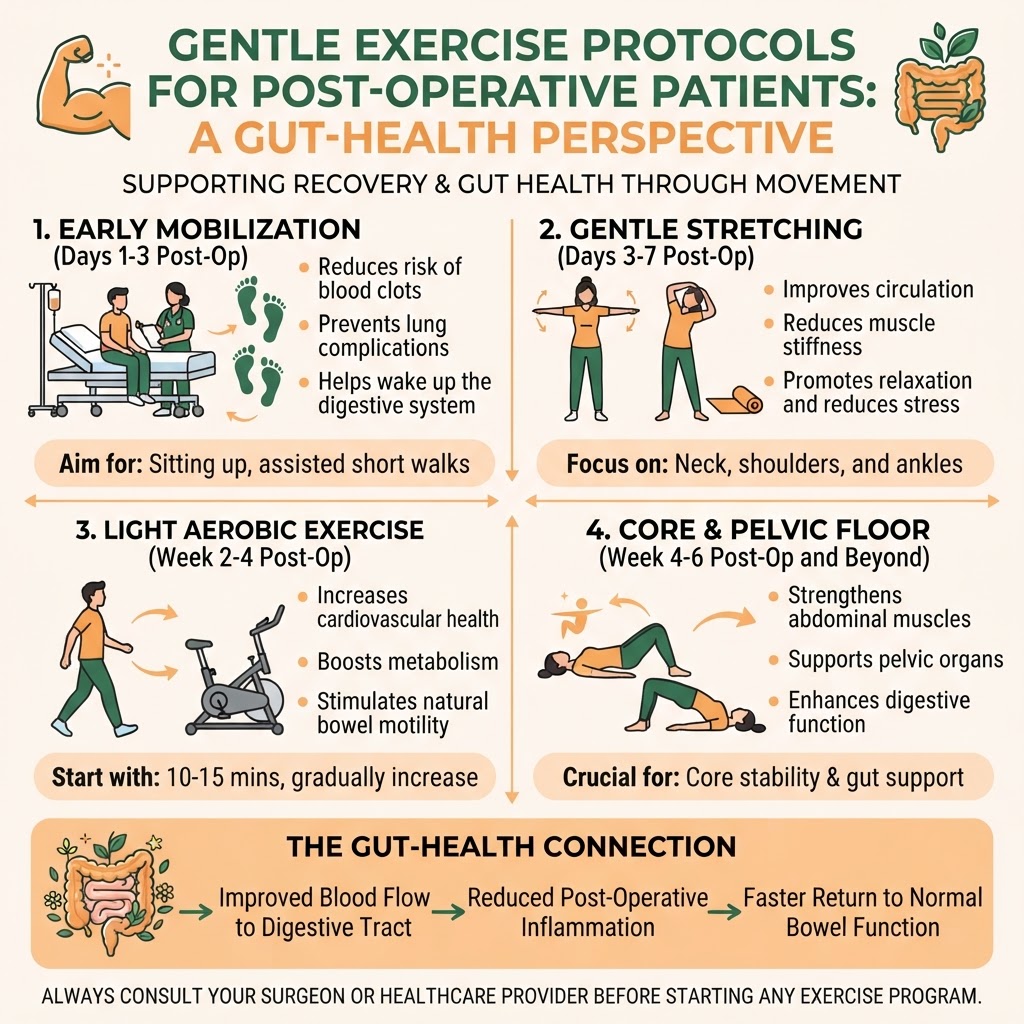
Phase 3: Weeks 4–8 — Progressive Rehabilitation
With your surgeon's clearance, this phase introduces more purposeful rehabilitation exercise targeting muscular endurance, flexibility, and core stability — particularly important for gut function and posture.
Recommended movements:
- Guided resistance bands work: Particularly for upper and lower limb strength without loading incision sites or abdominal regions prematurely.
- Supine core breathing with pelvic floor engagement: Lying on your back with knees bent, engage the pelvic floor gently while exhaling. This is the foundation of safe core rehabilitation and directly supports abdominal organ health.
- Yoga-inspired stretching: Cat-cow stretches (when abdominal surgery sites are healed), gentle spinal twists, and hip flexor stretches all support both musculoskeletal recovery and intestinal motility.
- Hydro-therapy or pool walking: Where available, water-based exercise after surgery reduces joint load while providing gentle resistance — an excellent option for orthopaedic patients.
This is also the phase where nutritional support becomes increasingly critical. Muscle protein synthesis requires both amino acids and a healthy gut to absorb them efficiently. Supporting your microbiome during this phase can meaningfully accelerate strength gains. Explore our science on probiotic exercise recovery to understand the mechanisms in depth.
The Role of Gut Health in Probiotic Exercise Recovery
The term probiotic exercise recovery might sound novel, but the research base is growing rapidly. A systematic review published on PubMed examining probiotic supplementation in athletes found that specific probiotic strains reduced markers of exercise-induced gut permeability, lowered systemic inflammation, and improved protein absorption — all directly relevant to the post-surgical patient.
Here is why this matters clinically:
-
Inflammation management: A balanced microbiome produces short-chain fatty acids (SCFAs) such as butyrate, which directly regulate intestinal inflammation and barrier integrity. Post-surgical inflammation is unavoidable, but its duration and severity can be modulated.
-
Nutrient bioavailability: Surgical patients are often protein-deficient due to poor appetite, altered digestion, and increased catabolic demands. A healthy microbiome enhances the absorption of amino acids, vitamins (particularly B12, K2, and folate), and minerals critical for tissue repair.
-
Immune priming: As rehabilitation progresses, the immune system must shift from acute-phase inflammatory response to a reparative, anti-inflammatory mode. The gut microbiome is the primary conductor of this transition.
-
Mental resilience: Post-operative depression and anxiety are clinically significant and underreported. The gut-brain axis, mediated by the vagus nerve and microbial metabolites, plays a central role in mood regulation. Supporting the microbiome is, in a very real sense, supporting mental health during recovery.
Practical Tips: Making Gentle Movement Work for You
The best exercise protocol in the world is useless if it doesn't fit into the reality of recovery. Here are actionable strategies I recommend to my patients:
Consistency Over Intensity
Do a little, often. Five minutes of ankle pumps and deep breathing every hour is more beneficial than one thirty-minute session. Your post-operative body responds better to frequent, gentle stimulation than to occasional bursts of effort.
Use a Tracking Tool
Tracking daily movement, symptoms, and gut health markers during recovery gives you — and your clinical team — invaluable data. Our free Recovery App was designed specifically for post-surgical and recovery patients to log daily wellness, movement milestones, and nutritional intake in one place. It is a simple, structured way to stay accountable and informed throughout your rehabilitation.
Prioritise Gut-Supportive Nutrition Alongside Movement
- Eat small, frequent meals to support gut motility without overwhelming a recovering digestive system
- Prioritise easily digestible proteins: eggs, fish, well-cooked legumes, and probiotic-rich foods like natural yoghurt
- Hydrate consistently — dehydration significantly impairs gut motility and wound healing
- Consider a clinically formulated probiotic supplement, particularly one designed to survive the hostile post-surgical gut environment
Listen to the Warning Signs
Stop movement and contact your healthcare provider if you experience:
- Sudden increase in pain, swelling, or redness around the wound site
- Shortness of breath or chest pain during activity
- Dizziness, fainting, or visual disturbances
- Fever above 38°C (100.4°F)
Rehabilitation Gut Health: Nutritional Support That Complements Exercise
No conversation about post-operative rehabilitation gut health is complete without addressing nutrition. The two are inseparable.
Post-surgical patients face unique nutritional challenges: reduced appetite, altered taste, medication-induced nausea, and sometimes physical restrictions on what they can chew or swallow. Yet the body's demand for protein, micronutrients, and beneficial gut bacteria is higher than normal during this period.
This is the gap that BioGain™ was designed to address. As a microencapsulated probiotic meal replacement, it delivers both macronutritional support and live probiotic cultures in a form that survives the journey to the lower gut — where they are needed most. For patients who cannot eat substantial meals, or who need a reliable, easy-to-digest nutritional foundation, it has become a meaningful part of our recommended post-surgical nutritional protocol.
For those moving into the later stages of recovery and looking to rebuild lean muscle mass more deliberately, our Bulk-Up Plan offers a 30-day AI-powered muscle gain meal plan with gut-health at its core — ideal for patients transitioning from rehabilitation back to active life.
A Note on Exercise After Specific Surgical Categories
While the phase-based approach above applies broadly, a few surgical categories warrant specific mention:
Abdominal and Colorectal Surgery: Avoid any exercise that increases intra-abdominal pressure (heavy lifting, Valsalva manoeuvre, vigorous core work) until full wound healing is confirmed — typically 6–8 weeks minimum. Walking and breathing exercises are paramount.
Cardiac Surgery: Cardiac rehabilitation is a highly specialised field. Always follow a supervised cardiac rehab programme. Gentle walking remains the cornerstone.
Orthopaedic Surgery (hip/knee replacement): Early weight-bearing is now standard of care for most joint replacements. Follow your physiotherapist's protocol precisely, as it is weight and range-of-motion specific to your implant design.
Laparoscopic/Minimally Invasive Surgery: Recovery is typically faster, but the internal healing timeline is similar to open surgery. Do not mistake the absence of a large external wound for absence of internal tissue repair.
Conclusion: Move Gently, Heal Deeply
Post-operative exercise does not have to be complicated, intense, or intimidating. At its most fundamental, it is about giving your body the gentle, consistent signals it needs to restore circulation, stimulate the gut, rebuild strength, and return to life.
The gut-health perspective adds a powerful dimension to this picture. By recognising that surgery disrupts the microbiome — and that a disrupted microbiome impairs inflammation resolution, nutrient absorption, immune function, and even mood — we open a new avenue of rehabilitation that most conventional programmes still ignore.
Gentle movement and gut health are not separate concerns. They are two sides of the same recovery coin.
I encourage every post-operative patient to begin where they are, move within their current capacity, and support their gut microbiome intelligently throughout the process.
Ready to take charge of your recovery?
👉 Download the free Recovery App to start tracking your daily movement, nutrition, and gut health milestones today.
👉 Explore how BioGain™ — Velobiotics™' flagship microencapsulated probiotic meal replacement — can support your gut and nutritional recovery from the inside out.
👉 Read the science behind probiotic exercise recovery to understand why the gut-rehabilitation connection is changing post-operative care.
Recovery is not passive. With the right tools, the right movement, and the right gut support — you heal faster than you think.
Dr. Chomba Chuma, MD, is the Founder of BioGain™ and Velobiotics™, and a practising physician specialising in gut microbiome health, sports medicine, and post-surgical rehabilitation nutrition. The information in this article is for educational purposes and does not substitute personalised medical advice from your treating physician.
Get gut-smart, one email at a time
Science made simple, practical tips and member-only offers from BioGain. No spam, unsubscribe anytime.
By subscribing you agree to receive emails from BioGain (Velobiotics). Unsubscribe in one click.