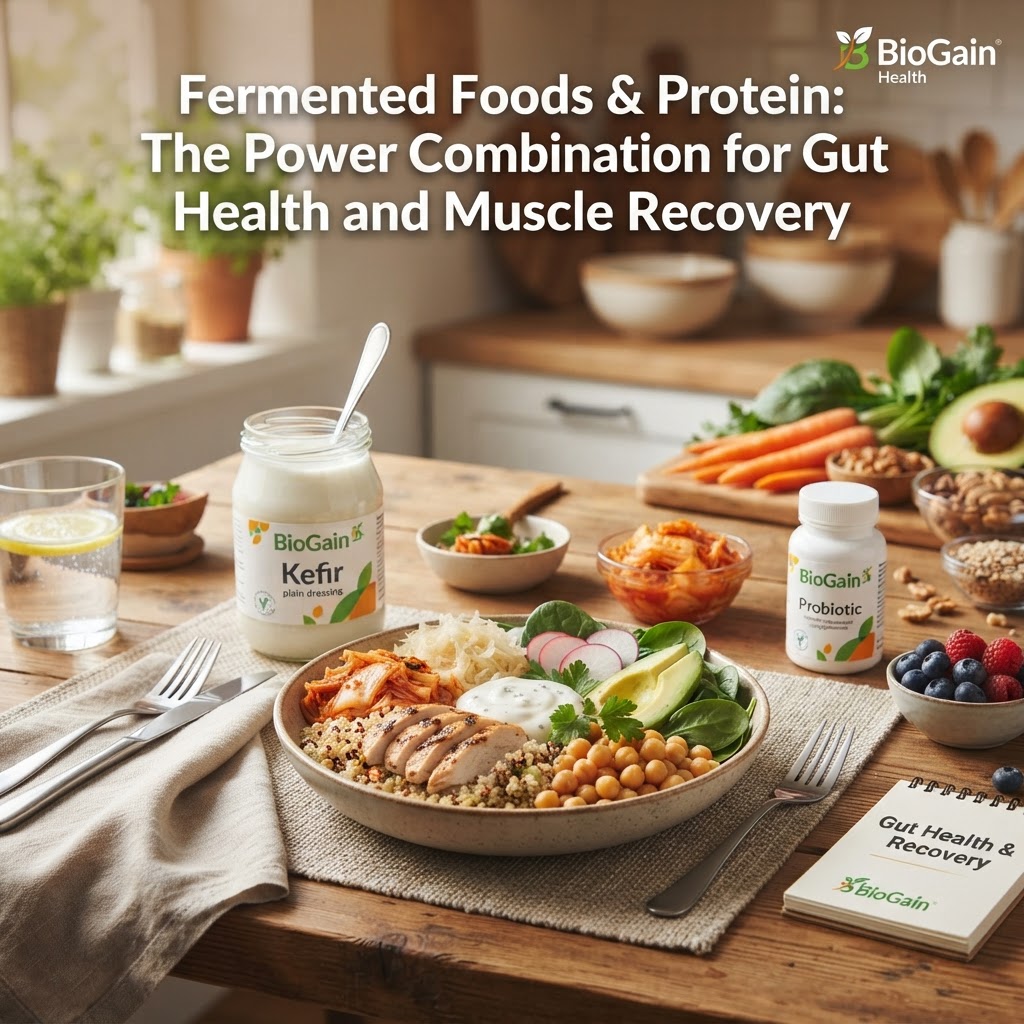
Fermented Foods & Protein: The Power Combination for Gut Health and Muscle Recovery
Dr. Chomba Chuma, MD & Founder
Founder, Velobiotics™
Unlock the synergy between fermented foods and protein to supercharge your gut microbiome while accelerating muscle repair. Discover how this nutritional power couple can transform your fitness recovery and overall digestive vitality.
If you have spent any time in the fitness or nutrition world, you have likely heard two buzzwords circling every conversation: gut health and protein. But what happens when you bring these two worlds together? The answer, backed by a growing body of science, is genuinely exciting. The combination of fermented foods and protein is not just a trending dietary approach — it is a physiologically powerful strategy that can transform how your body absorbs nutrients, recovers from exercise, and builds lean muscle tissue.
As a physician and the founder of BioGain™ and Velobiotics™, I have spent years researching the relationship between the gut microbiome, dietary protein, and physical performance. What I have observed in both clinical settings and peer-reviewed literature is clear: your gut is the gateway to every gain you want to make. Feed it poorly, and even the most meticulously planned training programme will underdeliver. Feed it intelligently — with fermented foods, quality protein, and smart supplementation — and you unlock a level of recovery and muscle adaptation that most people never experience.
In this article, we will explore the science behind the fermented foods protein combination, break down how your gut flora and exercise outcomes are deeply intertwined, and give you practical, actionable steps to start building your fermented diet gains today.
Why Your Gut Microbiome Is the Unsung Hero of Athletic Performance
Before we dive into fermented foods and protein specifically, it is worth understanding the broader landscape. Your gut is home to approximately 38 trillion microbial organisms — bacteria, fungi, and viruses that collectively form your microbiome. These microorganisms are not passive passengers. They are active participants in digestion, immune regulation, hormone signalling, and even mood.
When it comes to fitness, the microbiome muscle connection is one of the most exciting frontiers in sports science. Research published in Nature Medicine has demonstrated that elite endurance athletes harbour distinct gut microbial profiles compared to sedentary individuals, with a notably higher abundance of Veillonella atypica — a bacterium capable of converting lactate (a by-product of exercise) into propionate, a short-chain fatty acid that fuels further performance.
What this tells us is that the relationship between your gut and your muscles is bidirectional:
- Exercise shapes your microbiome — regular physical activity promotes diversity and beneficial bacterial growth
- Your microbiome shapes your exercise outcomes — the bacterial communities in your gut influence energy availability, inflammation, and protein metabolism
Understanding this relationship is the foundation for why combining fermented foods with protein is such a potent strategy for anyone serious about their health and performance goals. You can explore more of the underlying research on our science hub.
What Happens to Protein in the Gut — And Why It Matters
Protein is the most discussed macronutrient in fitness, and rightly so. It is essential for muscle protein synthesis (MPS), enzyme production, immune function, and cellular repair. But here is the problem: not all protein you eat becomes protein your muscles can use.
Protein bioavailability depends on several factors:
- Digestive enzyme activity — proteases secreted in the stomach and small intestine break protein into amino acids
- Gut permeability — a compromised gut lining reduces absorption efficiency
- Microbial activity — specific gut bacteria assist in fermenting and metabolising dietary proteins
- Transit time — how quickly food moves through your digestive tract affects how much is absorbed
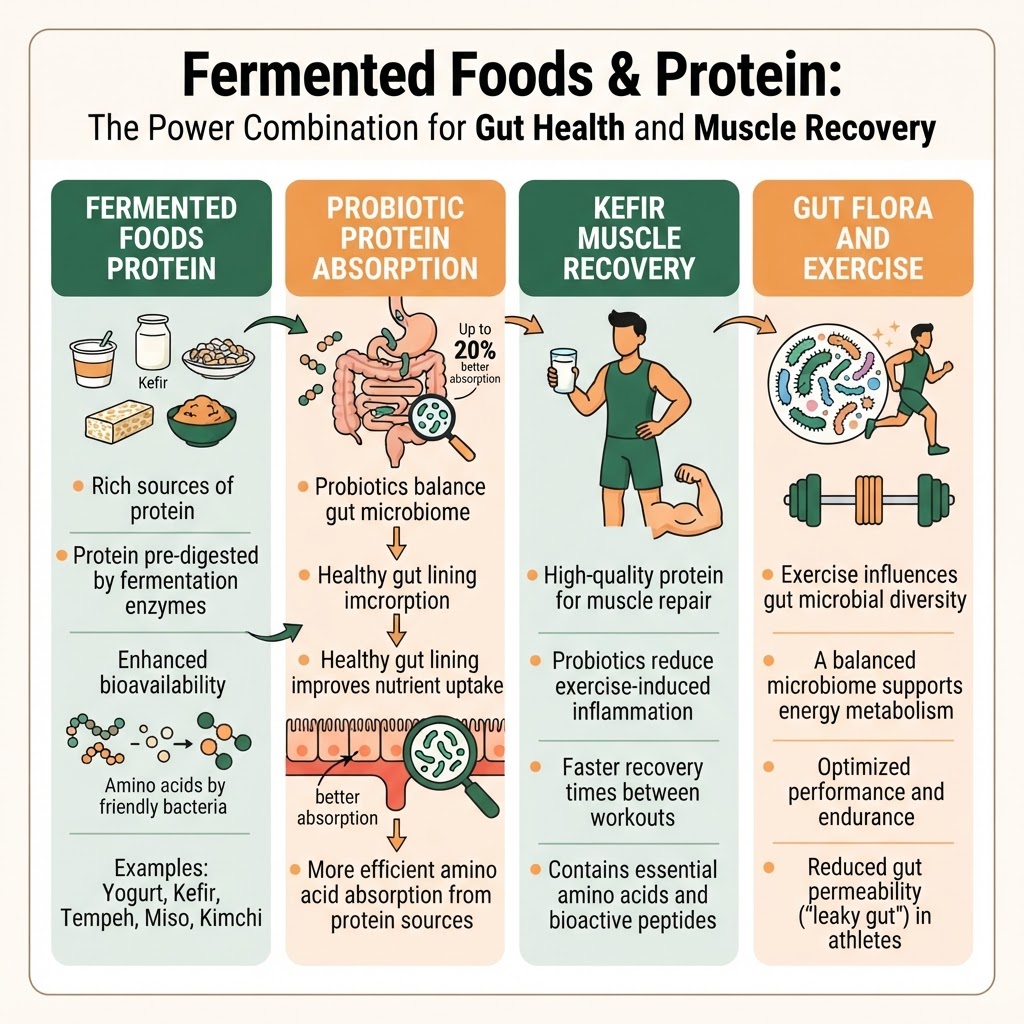
This is where probiotic protein absorption becomes critically important. Studies published on PubMed have shown that certain probiotic strains — particularly Lactobacillus acidophilus and Bacillus coagulans — significantly enhance the digestion and absorption of dietary protein, leading to improved nitrogen retention and greater amino acid availability in the bloodstream.
In simple terms: a healthier gut means more protein actually reaches your muscles.
The Science of Fermented Foods: More Than Just Good Bacteria
Fermented foods have been consumed by virtually every human civilisation for thousands of years. Yoghurt, kefir, kimchi, sauerkraut, miso, tempeh, and kombucha are not dietary trends — they are ancient, time-tested foods that modern science is finally catching up to understand.
What Makes Fermented Foods Special?
During fermentation, microorganisms (bacteria, yeast, or fungi) break down sugars and proteins in food through enzymatic activity. This process:
- Pre-digests proteins and carbohydrates, making them easier for your body to absorb
- Increases bioavailability of micronutrients such as B vitamins, zinc, iron, and magnesium
- Introduces live probiotic cultures that colonise and support your gut microbiome
- Produces beneficial metabolites including short-chain fatty acids (SCFAs), enzymes, and bioactive peptides
A landmark study from Stanford University, published in Cell (2021), found that a high-fermented food diet significantly increased microbiome diversity and reduced inflammatory markers in human participants — even more effectively than a high-fibre diet alone. Given that chronic low-grade inflammation is one of the primary barriers to effective muscle recovery, this finding has enormous implications for athletes and active individuals.
Fermented Foods and Protein: A Natural Partnership
When you consume fermented foods alongside protein, you create a compounding effect. The live cultures and enzymes in fermented foods enhance your digestive capacity, meaning more of the protein you eat is broken down into absorbable amino acids. Additionally, fermented proteins — such as those found in tempeh, fermented whey, and miso — arrive partially pre-digested, reducing the digestive burden and accelerating delivery to muscle tissue.
Kefir and Muscle Recovery: A Case Study in Fermented Protein Power
Among all fermented foods, kefir deserves special attention for anyone focused on performance and recovery. Kefir is a fermented milk drink produced by kefir grain cultures, containing a diverse array of Lactobacillus, Bifidobacterium, and yeast strains. It is also a respectable source of protein, delivering approximately 8–10 grams per 250ml serving.
The evidence around kefir muscle recovery is compelling:
- A study published in the Journal of the International Society of Sports Nutrition found that probiotic supplementation reduced markers of exercise-induced muscle damage (EIMD), including creatine kinase and lactate dehydrogenase, following resistance exercise
- Kefir's whey protein fraction contains branched-chain amino acids (BCAAs) — particularly leucine — which are the primary drivers of muscle protein synthesis
- The probiotic cultures in kefir support the gut-immune axis, reducing systemic inflammation that would otherwise slow recovery
For post-exercise recovery specifically, kefir represents one of the most intelligently designed natural foods available. Pair it with an additional protein source — a quality meal replacement, for example — and you have a recovery combination that hits virtually every physiological requirement simultaneously.
If you are tracking your recovery, the free Recovery App offers a convenient way to log your daily nutrition, monitor gut health symptoms, and stay consistent with your post-exercise protocol.
The Gut-Muscle Axis: How Inflammation Sabotages Your Gains
One of the most important — and most overlooked — mechanisms connecting gut health to muscle recovery is the gut-muscle axis. This refers to the bidirectional communication between intestinal microbiota and skeletal muscle tissue, mediated primarily through:
- Short-chain fatty acids (SCFAs) — produced when gut bacteria ferment dietary fibre; SCFAs like butyrate regulate inflammation and support muscle glycogen storage
- Lipopolysaccharides (LPS) — toxic compounds released by gram-negative bacteria; a leaky gut allows LPS into the bloodstream, triggering systemic inflammation and impaired MPS
- Amino acid metabolism — gut bacteria process glutamine, arginine, and tryptophan, influencing protein availability and neurotransmitter production
When your gut is dysbiotic (imbalanced), LPS permeation increases, inflammatory cytokines rise, and your muscle recovery is compromised at a biochemical level — regardless of how well you train or how much protein you consume. This is why gut flora and exercise performance are inseparable variables in any serious recovery or muscle-building programme.
Fermented foods directly address this problem by:
- Replenishing beneficial bacteria that maintain gut barrier integrity
- Suppressing pathogenic bacteria through competitive exclusion and bacteriocin production
- Producing anti-inflammatory SCFAs through microbial fermentation
Building a Fermented Diet for Gains: What to Eat and When
Understanding the science is one thing — implementing it practically is another. Here is how to structure a fermented diet gains approach that supports both gut health and muscle growth:
High-Value Fermented Foods to Include
- Kefir — post-workout recovery drink, source of protein and probiotics
- Greek yoghurt with live cultures — rich in casein protein (slow-release), ideal before bed
- Tempeh — fermented soy product delivering 18–19g of complete protein per 100g; excellent for plant-based athletes
- Kimchi and sauerkraut — fermented vegetables rich in Lactobacillus strains; add to meals as a side
- Miso — fermented soybean paste; use in soups, dressings, or marinades
- Kombucha — fermented tea; lower in protein but rich in diverse probiotic cultures and organic acids
Timing Your Fermented Foods for Maximum Effect
- Pre-workout (60–90 mins before): A small serving of yoghurt or kefir provides easily digestible protein and primes the gut before exercise-induced stress
- Post-workout (within 30 mins): Kefir combined with a complete protein source (whey, BioGain™, or plant protein) supports both immediate MPS and gut microbiome recovery
- Evening meal: Tempeh or fermented cheese alongside a whole-food meal supports overnight muscle repair through slow-release amino acids and prebiotic substrate for your microbiome
- Daily consistency: Incorporate small amounts of fermented vegetables (kimchi, sauerkraut) across multiple meals to maintain consistent probiotic exposure
The Role of BioGain™ in a Fermented, Protein-First Lifestyle
While whole fermented foods should form the foundation of your diet, practical gaps in nutrition — particularly around protein targets and consistent probiotic delivery — are where intelligent supplementation makes a meaningful difference.
BioGain™, developed using Velobiotics™ microencapsulation technology, is specifically designed to address two of the biggest challenges in sports nutrition simultaneously: adequate protein delivery and effective probiotic survival. Standard probiotic supplements lose the vast majority of their bacterial load in stomach acid before reaching the colon. Velobiotics™ microencapsulation technology solves this by protecting probiotic cultures through gastric transit, delivering 1000x more live bacteria to the gut compared to conventional supplementation.
As a meal replacement, BioGain™ is positioned not as a shortcut, but as a nutritionally complete, gut-intelligent foundation for people who want to support their microbiome muscle connection daily — particularly those with high training loads or those recovering from surgery or injury.
You can learn more about the formulation philosophy behind BioGain™ and how microencapsulation works by visiting our science hub.
For those ready to commit to a structured approach to muscle-building with a gut-health focus, the Bulk-Up Plan offers a 30-day AI-powered meal plan that integrates fermented foods, protein timing, and microbiome support into a cohesive, personalised programme.
Practical Tips: Starting Your Fermented Foods + Protein Protocol Today
You do not need to overhaul your entire diet overnight. Here are actionable steps to begin today:
Week 1: Foundation Building
- Add one fermented food daily — start with kefir in a morning smoothie or sauerkraut alongside lunch
- Audit your protein intake — aim for 1.6–2.2g per kg of bodyweight, distributed across 3–5 meals
- Reduce ultra-processed foods — these disrupt microbial diversity and create a hostile environment for probiotic cultures
Week 2: Optimise Timing
- Consume your fermented food with your post-workout protein at least 3–4 times per week
- Begin tracking how you feel — energy levels, bloating, recovery soreness — to notice correlations. The free Recovery App is ideal for this purpose
Week 3: Expand Your Fermented Portfolio
- Introduce tempeh as a protein source twice weekly
- Add miso soup before evening meals to stimulate digestive enzyme activity
- Experiment with homemade kefir if you have the appetite for it — the probiotic diversity in homemade kefir often exceeds commercial varieties
Week 4: Consolidation and Assessment
- Review your progress: muscle soreness duration, energy consistency, digestive comfort
- Consider whether targeted supplementation — such as BioGain™ — could address remaining gaps in probiotic delivery and protein quality
- Explore structured guidance through the Bulk-Up Plan if muscle gain is a primary goal
Common Mistakes to Avoid
Even with the best intentions, many people undermine their fermented diet gains through predictable errors:
- Heat-killing probiotics — adding fermented foods to hot dishes destroys live cultures; always add kimchi, kefir, or miso after cooking
- Inconsistency — probiotic benefits require regular, sustained intake; occasional consumption has limited lasting effect
- Over-relying on pasteurised products — many commercial fermented products are pasteurised, which kills live cultures; always look for "contains live and active cultures" on labels
- Neglecting prebiotics — probiotics need prebiotic fibre (onion, garlic, oats, bananas) to thrive; without prebiotics, newly introduced bacteria struggle to colonise effectively
- Excessive antibiotic use without microbiome repair — if you have recently completed a course of antibiotics, your microbiome needs deliberate rebuilding; this is precisely the scenario where consistent fermented food intake and targeted probiotic support become critical
Conclusion: Feed Your Gut, Build Your Body
The fermented foods protein combination is not a gimmick or a trend. It is a scientifically validated, evolutionarily coherent approach to nutrition that optimises one of the most fundamental yet neglected aspects of physical performance: the health of your gut.
By incorporating fermented foods into your daily diet alongside adequate protein, you are simultaneously:
- Enhancing the bioavailability of every gram of protein you consume
- Reducing exercise-induced inflammation at the gut-muscle axis
- Supporting immune function and systemic recovery
- Building a microbial ecosystem that actively contributes to your performance goals
The evidence is clear. Your microbiome muscle connection is not a peripheral concern — it is central to everything from how well you recover after a hard session to how effectively your body responds to training adaptations over time.
Whether you are an elite athlete, a recreational gym-goer, or someone recovering from surgery or illness, the principles here are universally applicable. Start with food. Build the habit. Then consider where intelligent, science-backed supplementation can bridge the gaps.
Ready to take the next step? Try BioGain™ — the world's first microencapsulated probiotic meal replacement, powered by Velobiotics™ technology — and experience the difference that 1000x more probiotics reaching your gut can make. Visit velobiotics.com to learn more, or download the free Recovery App today to begin tracking your gut health and recovery journey. Your microbiome is waiting.
Get gut-smart, one email at a time
Science made simple, practical tips and member-only offers from BioGain. No spam, unsubscribe anytime.
By subscribing you agree to receive emails from BioGain (Velobiotics). Unsubscribe in one click.
Dr. Chomba Chuma, MD & Founder
Dr. Chomba Chuma is a medical doctor and the founder of Velobiotics™ and BioGain™. With a passion for gut health, recovery medicine and evidence-based nutrition, he created BioGain™ to bring clinically effective probiotic science to people who need it most — those healing, rebuilding, and performing at their peak.
Ready to Start Your Journey?
BioGain™ delivers 1000x more live probiotics to your gut with Velobiotics™ microencapsulation technology.