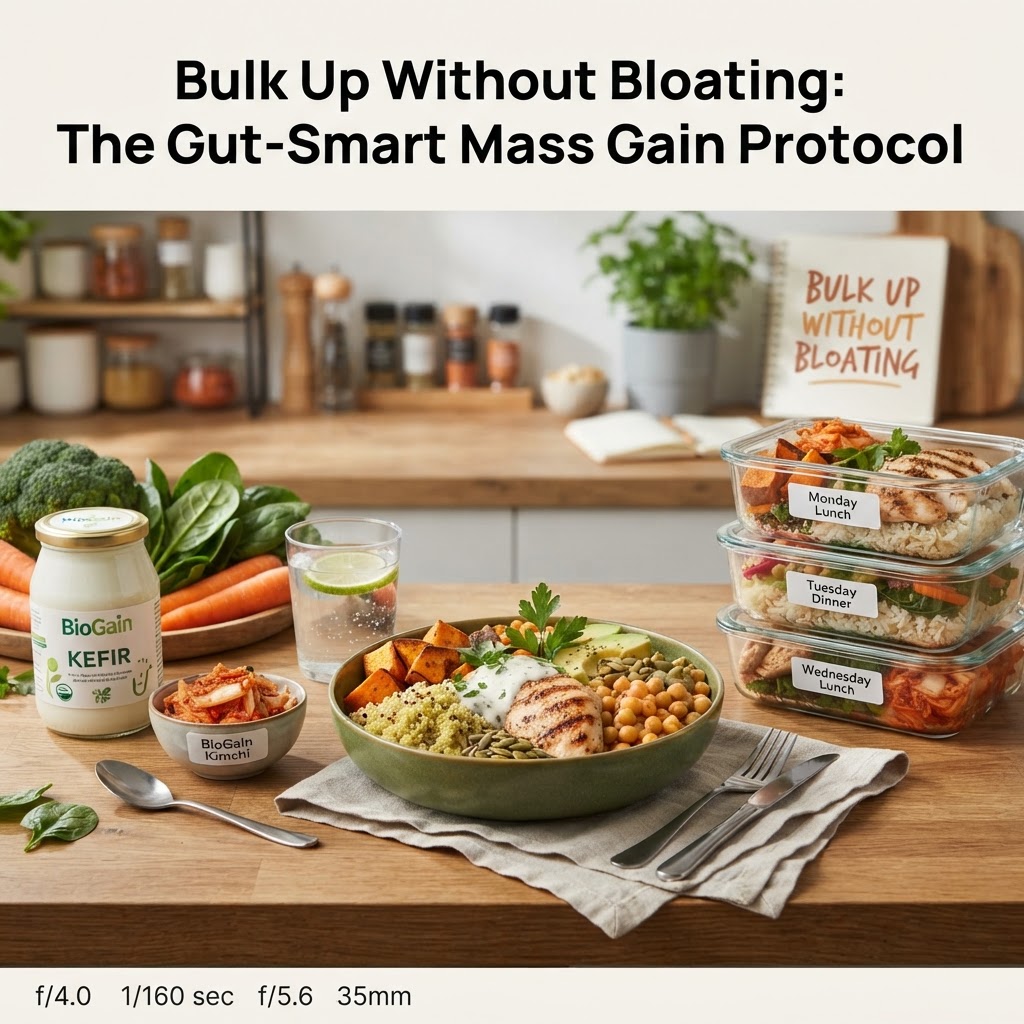
Bulk Up Without Bloating: The Gut-Smart Mass Gain Protocol
Dr. Chomba Chuma, MD & Founder
Founder, Velobiotics™
Ditch the sluggish, bloated feeling of traditional bulking and unlock sustainable muscle growth with a science-backed protocol that prioritizes gut health. Discover how to fuel your gains while keeping your digestion smooth and your energy levels soaring.
If you've ever tried to gain serious muscle mass, you've probably experienced the dark side of bulking: the uncomfortable fullness, the relentless gas, the distended stomach that makes you look more pregnant than jacked. For decades, athletes and fitness enthusiasts have accepted digestive discomfort as an unavoidable tax on muscle growth. I'm here to tell you that this is not only unnecessary — it's actually counterproductive.
As both a physician and the founder of Velobiotics™, I've spent years studying the intersection of sports performance and gut health. The evidence is now compelling: your microbiome is not a bystander in your muscle-building journey — it's an active participant. When we optimise the gut environment alongside our training and nutrition, the result is cleaner, leaner gains with far less of the bloating that derails so many bulking phases.
This article lays out the complete gut-smart approach to lean bulking, explaining the science, the practical strategy, and how to implement it starting today.
Why Your Gut Holds the Key to Clean Muscle Gain
The human digestive system is home to approximately 38 trillion microorganisms, a complex ecosystem that influences everything from immune function to hormonal balance. When it comes to muscle gain gut health, the relationship is bidirectional and profoundly important.
A disrupted microbiome — also known as dysbiosis — directly impairs the very processes you depend on when bulking:
- Protein absorption efficiency drops, meaning even your expensive whey protein may be poorly utilised
- Systemic inflammation increases, slowing recovery and blunting anabolic signalling
- Short-chain fatty acid (SCFA) production decreases, reducing the energy available to muscle cells
- Appetite regulation becomes erratic, making caloric control during a lean bulk incredibly difficult
A landmark study published in Cell Host & Microbe demonstrated that elite endurance athletes harbour a significantly different microbial composition compared to sedentary individuals — particularly higher abundances of Veillonella atypica, a bacterium that converts lactate into propionate, a performance-enhancing SCFA. The microbiome doesn't just respond to training; it actively enables it.
For those pursuing mass gain without bloating, the priority must be establishing a robust, diverse gut environment before and during any calorie surplus phase.
The Bloating Problem: Why Traditional Bulking Destroys Your Gut
Traditional "dirty bulking" — cramming in thousands of extra calories regardless of food quality — creates a perfect storm for digestive misery. Here's exactly what happens:
High-Calorie Chaos
When you suddenly increase your caloric intake by 500–1000 calories per day, your digestive system struggles to keep pace. Gastric emptying slows, fermentation of undigested carbohydrates intensifies, and gas production skyrockets. The result? That classic "dirty bulk belly" that has nothing to do with muscle.
Protein Overload Without Infrastructure
Most bulking protocols lean heavily on protein — often 200–300g per day. Without adequate proteolytic bacteria in the gut, excess protein undergoes putrefaction in the colon, producing ammonia, hydrogen sulphide, and other gases that cause significant bloating and discomfort. Research from the National Institutes of Health confirms that gut microbiota composition directly affects protein fermentation patterns and their metabolic consequences.
Disrupted Sleep and Cortisol
Bloating and gut discomfort disrupt sleep quality. Poor sleep elevates cortisol. Elevated cortisol is catabolic — it actively breaks down the muscle tissue you've worked so hard to build. The gut-muscle axis isn't theoretical; it's playing out in real time every night you go to bed uncomfortably full.
The Gut-Smart Mass Gain Protocol: A Step-by-Step Approach
This is the framework I recommend to my patients and athletes who want to add quality mass without the digestive carnage. Think of it as building your gut infrastructure first, then layering the calorie surplus on top of a prepared, resilient system.
Phase 1: Gut Priming (Weeks 1–2)
Before you increase calories, optimise your gut environment. This phase focuses on diversity, inflammation reduction, and establishing the microbial populations you'll need to handle a higher food volume.
Key actions:
- Introduce fermented foods (kefir, sauerkraut, kimchi, natural yoghurt) daily — at least one serving per meal
- Remove gut irritants: ultra-processed foods, excessive alcohol, artificial sweeteners like sucralose and aspartame
- Begin a high-quality probiotic protocol — more on strain selection below
- Prioritise prebiotic fibre: Jerusalem artichoke, leeks, garlic, unripe bananas, oats
The connection between fermented foods muscle performance and recovery has growing research support. A 2021 study in Cell from Stanford University found that a diet high in fermented foods significantly increased microbiome diversity and reduced inflammatory markers — exactly the environment you want before entering a caloric surplus.
Phase 2: Lean Calorie Surplus Introduction (Weeks 3–4)
Once gut priming is underway, introduce your caloric surplus gradually. Rather than jumping to 500+ calories above maintenance immediately, I recommend:
- Week 3: Add 200–250 calories above maintenance, prioritising whole food sources
- Week 4: Increase to 300–400 calories, assess digestive tolerance daily
- Ongoing: Adjust upward only when digestion remains comfortable
This graduated approach allows your gut microbiome to adapt enzymatically to the increased food volume, dramatically reducing the bloating that accompanies sudden calorie spikes.
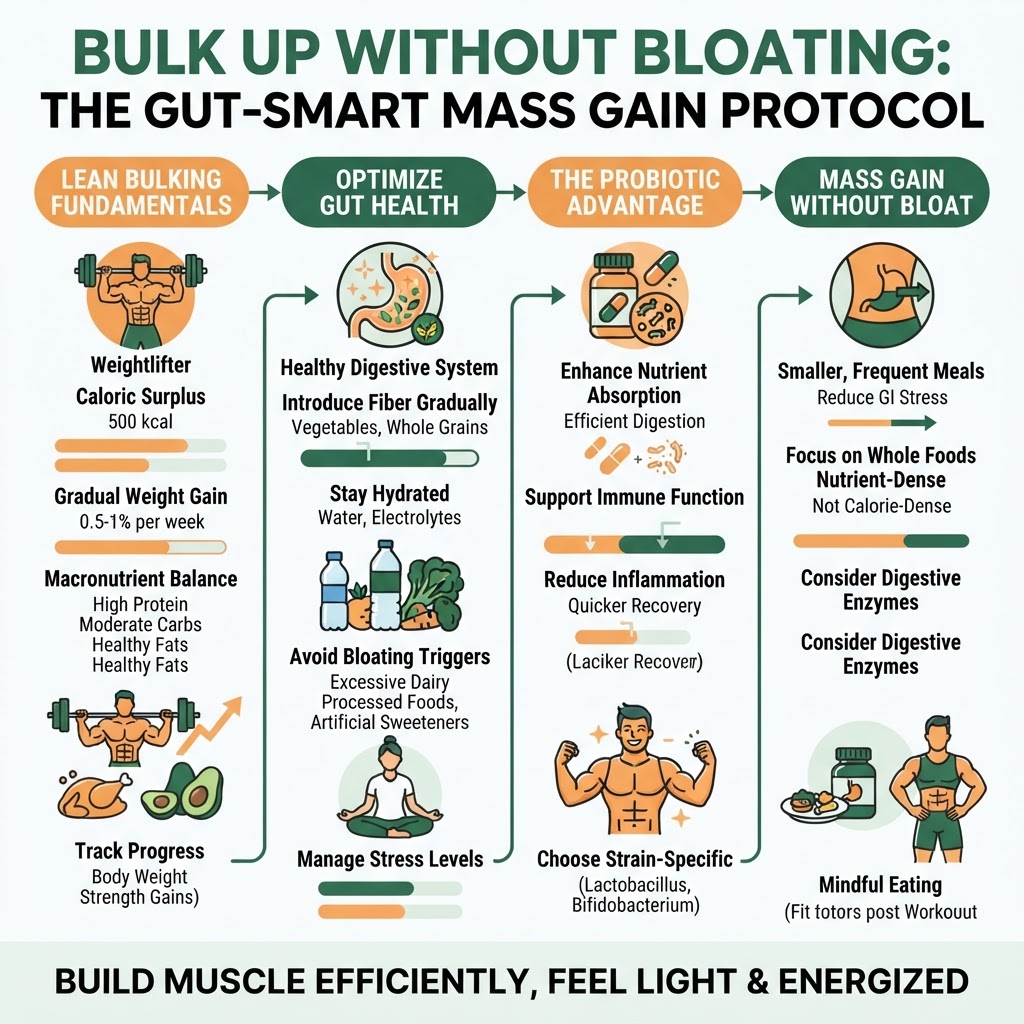
Phase 3: Microbiome Fitness Maintenance (Ongoing)
The concept of microbiome fitness — maintaining a resilient, high-diversity gut ecosystem throughout a training cycle — is central to sustainable lean bulking. Here's how to maintain it under the stress of heavy training and elevated food intake:
Daily non-negotiables:
- Diversity of plant foods: Aim for 30+ different plant-based foods per week. Each variety feeds different bacterial species.
- Consistent fermented food intake: Don't let this slip when bulking calories crowd out nutrient-dense options
- Adequate hydration: Minimum 35ml per kg bodyweight, more on training days
- Sleep hygiene: 7–9 hours; the gut-brain axis resets during sleep
- Probiotic supplementation: Particularly important during high-volume training phases when gut permeability increases
For athletes serious about the BioGain bulk plan, I always recommend using our 30-day AI-powered meal plan as a structural framework. It's specifically designed around gut health principles, ensuring that your macros are delivered in a gut-friendly sequence that minimises fermentation-related discomfort.
Probiotics for Athletes: Strain Selection Matters
Not all probiotics are created equal. This is perhaps the most misunderstood aspect of gut health supplementation in the fitness community. Walking into a pharmacy and grabbing any probiotic bottle is largely a waste of money — here's why.
The Survivability Problem
Most commercial probiotics are killed before they reach your large intestine. Stomach acid, bile salts, and digestive enzymes destroy the vast majority of live cultures in standard capsule or powder formats. Studies suggest that fewer than 1% of bacteria in conventional probiotic supplements survive to the colon, where they're actually needed.
This is precisely why Velobiotics™ developed microencapsulation technology. BioGain™ uses a patented microencapsulation process that protects probiotic cultures through the harsh upper GI environment, delivering up to 1000x more live bacteria to the gut compared to standard supplements. For athletes in a caloric surplus — where digestive stress is already elevated — this survivability difference is not a minor detail. It's the difference between functional support and an expensive placebo.
Best-Evidence Strains for Muscle Gain and Bloating Reduction
Based on current research, the following strains have the strongest evidence for athletic performance and digestive comfort:
- Lactobacillus acidophilus NCFM — reduces intestinal permeability ("leaky gut") associated with intense exercise
- Bifidobacterium longum BB536 — shown to reduce inflammatory markers and improve protein metabolism
- Lactobacillus plantarum TWK10 — direct evidence for improved exercise performance and body composition in multiple RCTs
- Bifidobacterium lactis HN019 — supports gut transit time and reduces bloating symptoms
- Saccharomyces boulardii — protects gut integrity during high-stress training phases
The science behind microbiome fitness and performance is evolving rapidly, and strain-specific research is now robust enough to move beyond generic multi-strain recommendations.
Practical Nutrition Strategies: Mass Gain Without Bloating
Let's get specific. Here are the most actionable dietary strategies for achieving mass gain without bloating:
Protein Distribution: Spread It Out
Rather than front-loading protein in two or three massive meals, distribute your intake across 4–5 smaller meals. Research consistently shows that protein synthesis is maximised at approximately 0.4g/kg per meal, and exceeding this doesn't produce additional muscle — it just burdens your gut.
Example for an 80kg individual targeting 200g protein:
- Meal 1: 40g protein (breakfast)
- Meal 2: 35g protein (mid-morning)
- Meal 3: 45g protein (lunch + post-training)
- Meal 4: 40g protein (dinner)
- Meal 5: 40g protein (evening — slower digesting sources like casein or whole food)
Choose Gut-Friendly Protein Sources
Some protein sources are significantly better tolerated than others:
- High tolerance: Eggs, white fish, chicken breast, Greek yoghurt, rice protein
- Moderate tolerance: Whey isolate (lower lactose than concentrate), legumes (when properly prepared), tofu
- Lower tolerance for many: Casein concentrate, red meat in large quantities, casein-heavy mass gainers
Carbohydrate Cycling for Gut Health
During a lean bulk, cycling carbohydrate sources prevents overexposure to any single fermentable substrate. Rotate between:
- Oats, white rice, sweet potato, quinoa, sourdough bread (the fermentation process reduces FODMAPs significantly)
Avoid relying heavily on high-FODMAP carbohydrates like certain legumes, apples, and wheat-based products when in a caloric surplus — the cumulative fermentation load can be significant.
Strategic Use of BioGain™
One of the most practical applications of BioGain™ during a bulking phase is as a gut-supportive meal replacement on days when hitting your calorie targets through whole foods alone becomes difficult. Rather than reaching for a conventional mass gainer loaded with sugars and poor-quality protein, BioGain™ provides both the nutritional density you need and an active probiotic payload to support gut integrity simultaneously. It turns what's typically a nutritional compromise into a gut-health opportunity.
Training, Recovery, and the Gut-Muscle Axis
Hard training — particularly high-volume resistance work — transiently increases gut permeability. This is a well-documented phenomenon sometimes called exercise-induced leaky gut, where tight junctions in the intestinal wall loosen temporarily, allowing bacterial endotoxins (lipopolysaccharides or LPS) to enter the bloodstream.
In moderate amounts, this is manageable and may even serve an adaptive function. In chronically elevated amounts — common in athletes who neglect gut health — it produces a low-grade systemic inflammation that:
- Slows muscle protein synthesis
- Increases DOMS severity and duration
- Impairs sleep quality
- Reduces training motivation via the gut-brain axis
Managing exercise-induced gut permeability:
- Take probiotics within 30 minutes post-training when gut permeability is highest
- Consume glutamine-rich foods (bone broth, eggs, cabbage) around training sessions
- Avoid NSAIDs like ibuprofen habitually — they significantly worsen intestinal permeability
- Use our free recovery tracking app to monitor daily gut comfort scores alongside your training data, enabling you to identify patterns and adjust before problems escalate
Common Bulking Mistakes That Wreck Your Gut
Even well-intentioned athletes make these errors repeatedly:
- Using high-sugar mass gainers: The rapid glucose spike alters gut microbiota composition within days, favouring inflammatory species
- Neglecting fibre during a protein-heavy bulk: Proteolytic fermentation worsens dramatically without adequate fermentable fibre
- Eating too close to training: Blood is redirected away from the gut during exercise; large pre-workout meals sit undigested and ferment
- Ignoring stress: Psychological stress directly alters gut motility and microbiome composition via the gut-brain axis
- Inconsistent meal timing: The gut microbiome operates on a circadian rhythm; erratic meal timing disrupts microbial activity patterns
Tracking Your Gut-Smart Bulk: What to Monitor
Objective tracking removes guesswork and allows real-time protocol adjustment:
| Metric | Target | Monitoring Method | |---|---|---| | Daily bloating score | ≤2/10 | Recovery App diary | | Bowel transit consistency | Daily, Bristol Type 4 | Self-monitoring | | Strength progression | +1–3% weekly | Training log | | Lean mass gain rate | 0.5–1kg/month | DEXA or calipers | | Inflammatory markers | Trending down | Quarterly blood work |
The gut-health hub on our site includes detailed guidance on tracking these metrics and interpreting your results in the context of your training phase.
Conclusion: Build the Gut, Then Build the Muscle
The era of "eat everything, feel terrible, hope for the best" bulking is over. The science is unambiguous: your microbiome is a performance organ, and treating it as such will yield cleaner gains, faster recovery, and a genuinely more sustainable path to the physique you're working toward.
The gut-smart mass gain protocol isn't a compromise — it's an upgrade. You're not eating less to bulk; you're eating smarter, with a gut environment calibrated to extract maximum value from every gram of protein and every calorie you consume.
Here's your action plan:
- Start the two-week gut priming phase today — add one fermented food to each meal
- Introduce your calorie surplus gradually, in 200-calorie increments
- Prioritise strain-specific, high-survivability probiotic supplementation
- Download the free recovery app to track daily digestive comfort alongside your training metrics
- Use the 30-day BioGain bulk plan for a fully structured, gut-health-first approach to your next mass phase
If you're ready to experience what lean bulking should feel like — energetic, comfortable, and genuinely progressive — I encourage you to explore BioGain™ and the complete Velobiotics™ ecosystem. Your gut is the foundation. Build it right, and everything else follows.
Dr. Chomba Chuma, MD, is the founder of BioGain™ and Velobiotics™, specialising in sports medicine, gut microbiome science, and performance nutrition. The information in this article is for educational purposes and does not constitute individual medical advice.
Get gut-smart, one email at a time
Science made simple, practical tips and member-only offers from BioGain. No spam, unsubscribe anytime.
By subscribing you agree to receive emails from BioGain (Velobiotics). Unsubscribe in one click.
Dr. Chomba Chuma, MD & Founder
Dr. Chomba Chuma is a medical doctor and the founder of Velobiotics™ and BioGain™. With a passion for gut health, recovery medicine and evidence-based nutrition, he created BioGain™ to bring clinically effective probiotic science to people who need it most — those healing, rebuilding, and performing at their peak.
Ready to Start Your Journey?
BioGain™ delivers 1000x more live probiotics to your gut with Velobiotics™ microencapsulation technology.