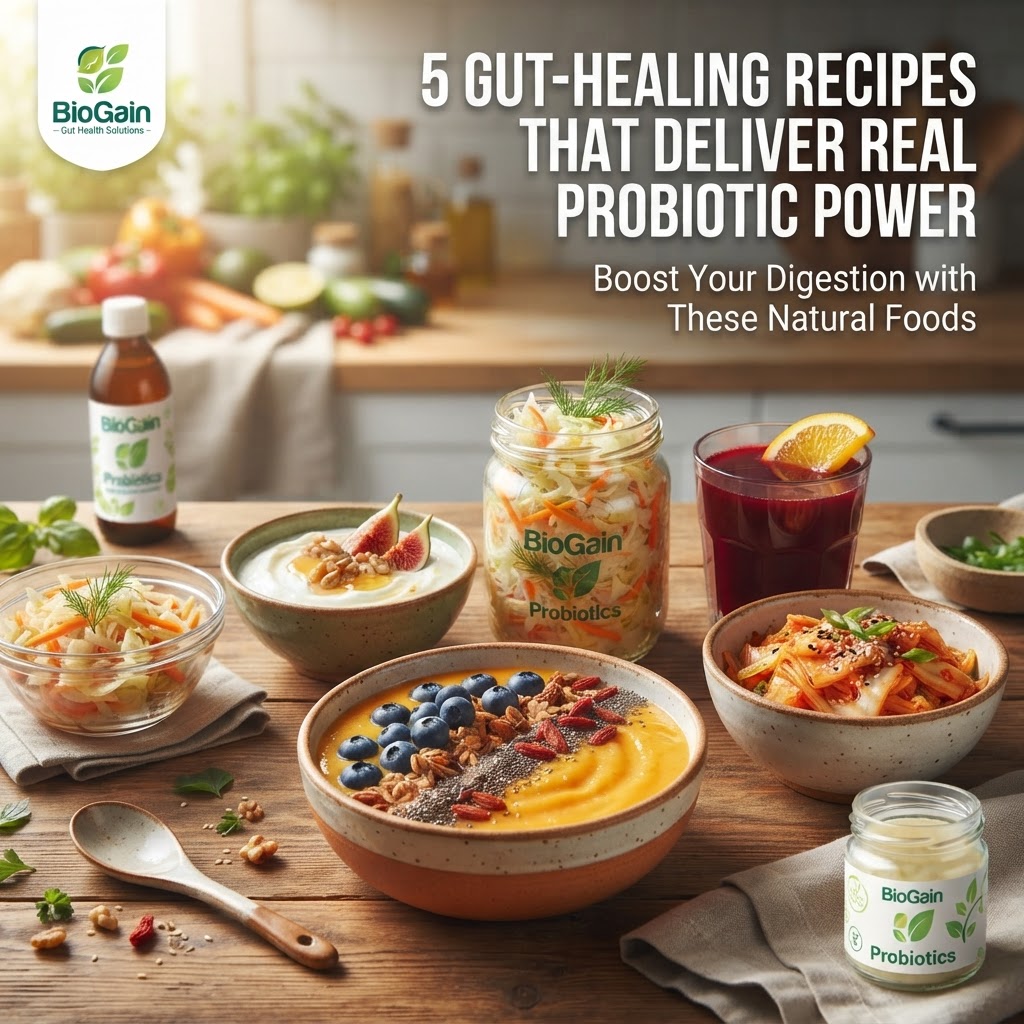
5 Gut-Healing Recipes That Deliver Real Probiotic Power
Dr. Chomba Chuma, MD & Founder
Founder, Velobiotics™
Transform your digestive health from the inside out with these five delicious, science-backed recipes packed with potent, gut-loving probiotics. Discover how simple, flavorful ingredients can restore your microbiome and leave you feeling energized every single day.
If you've been searching for gut healing recipes that actually work — not just trend-worthy food photography dressed up as wellness — you're in the right place. As a physician and founder of Velobiotics™, I spend a great deal of time bridging the gap between clinical science and practical, everyday nutrition. And one of the most powerful things I've come to appreciate? The food on your plate is one of the most direct tools you have for reshaping your gut microbiome.
The gut microbiome — that vast, dynamic community of trillions of bacteria, fungi, and other microorganisms living in your digestive tract — influences everything from immune function and mental health to metabolic performance and recovery from illness or surgery. Research published in Nature Reviews Microbiology confirms that diet is the single most influential variable shaping microbial diversity in the gut. That means what you cook and eat today is actively rewriting your microbial landscape.
In this article, I'm sharing five of my favourite fermented food recipes and probiotic meal ideas — each one grounded in the science of gut health cooking and designed to be genuinely delicious. I'll also walk you through practical tips for maximising probiotic survival and absorption, because getting beneficial bacteria into your gut is only half the challenge. Keeping them alive long enough to matter is the other half.
Let's get into it.
Why Fermented Foods Are a Cornerstone of Gut Health
Before we dive into the recipes, let's quickly establish why fermented foods deserve a regular place at your table.
Fermentation is a metabolic process in which bacteria, yeasts, or other microorganisms convert sugars and starches into acids, gases, or alcohol. This process not only preserves food but generates live cultures of beneficial microorganisms — what we call probiotics. When consumed regularly, these live cultures help:
- Diversify the gut microbiome, which is consistently associated with better long-term health outcomes
- Restore microbial balance after disruption from antibiotics, stress, illness, or poor diet
- Strengthen the intestinal barrier, reducing so-called "leaky gut" permeability
- Modulate the immune system, with approximately 70% of immune tissue residing in the gut
A landmark clinical trial published in Cell demonstrated that a diet high in fermented foods significantly increased microbiome diversity and decreased inflammatory markers compared to a high-fibre diet alone. This was a pivotal finding — it tells us that adding fermented food to your diet has measurable, relatively rapid effects on your internal ecosystem.
The five recipes below combine traditional fermentation wisdom with modern nutritional understanding. Whether you're supporting post-surgical recovery, optimising athletic performance, or simply trying to feel better from the inside out, these probiotic meal ideas offer a practical starting point.
Recipe 1: Classic Kefir Smoothie With Banana, Ginger & Flaxseed
This kefir smoothie recipe is one I recommend regularly to patients and athletes alike. Kefir is a fermented milk drink containing up to 61 different strains of bacteria and yeasts — far more diverse than most commercial yoghurts. It's also well-tolerated by many people with lactose sensitivity, because the fermentation process significantly breaks down lactose.
Ingredients
- 250ml full-fat kefir (plain, unsweetened)
- 1 ripe banana (frozen works beautifully)
- 1 tsp fresh ginger, grated
- 1 tbsp ground flaxseed
- 1 tsp raw honey
- A pinch of cinnamon
Method
- Add all ingredients to a blender.
- Blitz on high for 45–60 seconds until smooth.
- Pour into a chilled glass and consume immediately for maximum probiotic viability.
Why It Works
The banana provides inulin, a prebiotic fibre that feeds the beneficial bacteria delivered by the kefir. Ginger adds anti-inflammatory gingerols, and flaxseed contributes omega-3 fatty acids and additional fibre. This is gut health cooking at its most efficient — every ingredient earns its place.
Tip: If you're looking for a clinical-grade probiotic boost alongside this smoothie, BioGain™ uses Velobiotics™ microencapsulation technology to deliver probiotics at 1000x the survival rate of standard supplements — meaning far more live cultures reach the colon where they're actually needed.
Recipe 2: Quick Kimchi Fried Cauliflower Rice
Traditional kimchi is one of the most studied fermented food recipes in the world. This Korean staple — made from lacto-fermented vegetables, typically cabbage, ginger, garlic, and chilli — is rich in Lactobacillus kimchii and other beneficial lactic acid bacteria. Using it in a cooked dish requires some care (high heat kills probiotics), which is why this recipe keeps the kimchi raw and stirs it in at the very end.
Ingredients
- 1 head of cauliflower, riced (or 300g pre-riced cauliflower)
- 150g kimchi (unpasteurised, from the refrigerated section)
- 2 eggs
- 1 tbsp sesame oil
- 2 spring onions, sliced
- 1 tbsp tamari (or low-sodium soy sauce)
- 1 tsp gochujang (optional, for heat)
- Sesame seeds to garnish
Method
- Heat sesame oil in a wok or large frying pan over medium-high heat.
- Add the cauliflower rice and stir-fry for 5–6 minutes until slightly golden.
- Push to one side, crack in the eggs, and scramble.
- Add tamari and gochujang, mix everything together.
- Remove from heat completely, then stir in the kimchi.
- Serve topped with spring onions and sesame seeds.
Why It Works
By adding kimchi off the heat, you preserve the live cultures that make it genuinely probiotic rather than simply flavoursome. Cauliflower provides sulforaphane and fibre; the eggs supply complete protein. This is one of my favourite BioGain meal ideas for athletes managing gut health during a muscle-building phase — pair it with the Bulk-Up Plan for a full 30-day gut-health-focused strategy.
Recipe 3: Gut-Healing Miso Soup With Wakame & Tofu
Miso is a fermented paste made from soybeans, salt, and a koji mould (Aspergillus oryzae). It has been a staple of Japanese cuisine for centuries and carries a compelling body of research behind it. Studies from the National Institutes of Health have linked regular miso consumption to reduced gastrointestinal inflammation, improved gut barrier function, and even a lower incidence of gastric cancer in population studies.
This is one of the simplest fermented food recipes you can make, and it takes under ten minutes.
Ingredients
- 750ml filtered water
- 2–3 tbsp unpasteurised white or yellow miso paste
- 100g firm silken tofu, cubed
- 10g dried wakame seaweed, rehydrated
- 2 spring onions, finely sliced
- Optional: a 10cm strip of kombu (for additional prebiotic benefit)
Method
- Bring water (and kombu if using) to a gentle simmer — not a rolling boil.
- Remove kombu. Add tofu and rehydrated wakame, simmer for 2 minutes.
- Reduce heat to very low. Dissolve miso paste in a small cup of the hot broth, then stir back into the pot.
- Do not boil after adding miso — heat above 70°C will kill the beneficial bacteria.
- Serve immediately, topped with spring onions.
Why It Works
The key principle here is temperature control. Miso is only probiotic if it's never boiled. Wakame adds prebiotic fibre and iodine; tofu provides isoflavones and plant protein. This soup is an ideal choice for post-surgical recovery patients who need gentle, gut-supportive nutrition — and it pairs well with the guidance available on our Recovery App.
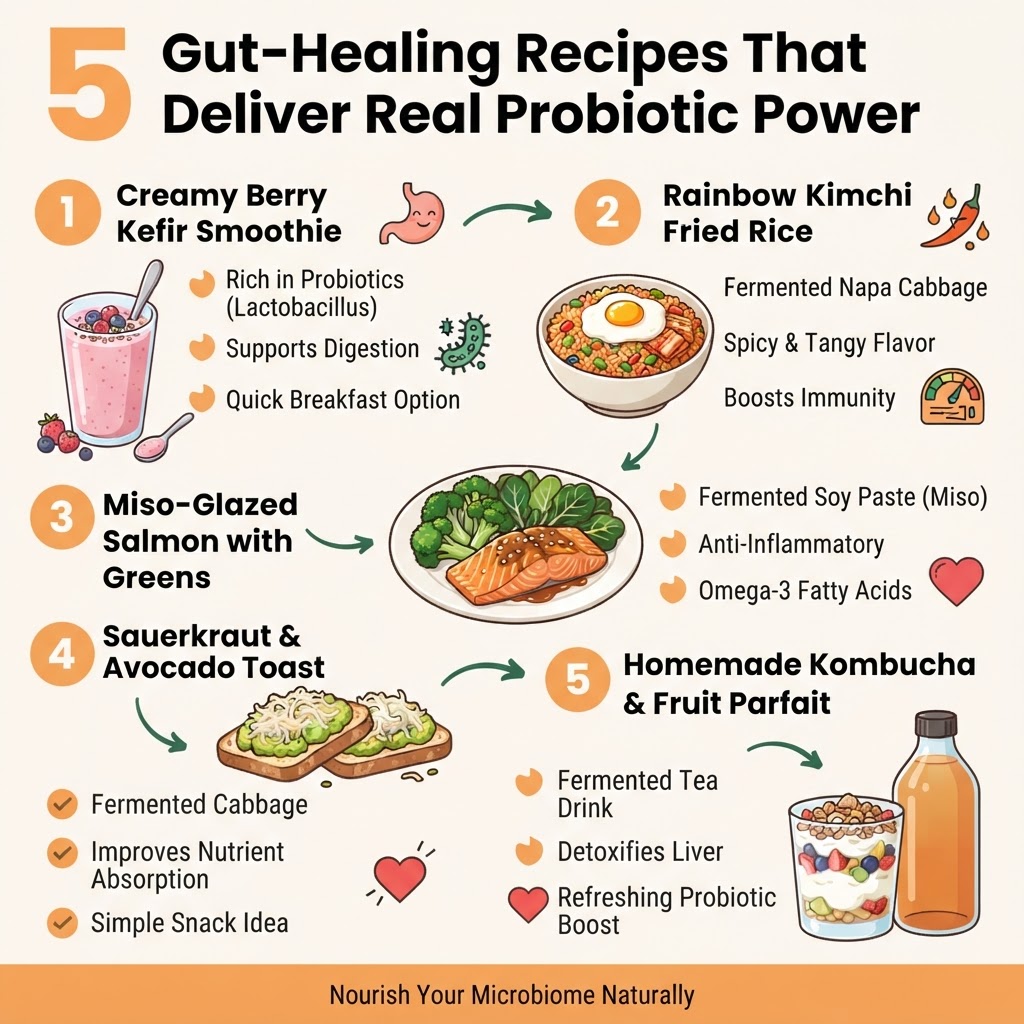
Recipe 4: Overnight Fermented Oats With Live Yoghurt & Berries
This might be the most accessible gut healing recipe on this list. While overnight oats are mainstream, fermented overnight oats take it a step further. By adding a spoonful of live yoghurt or a splash of whey (the liquid from strained yoghurt) to your oats before soaking, you initiate a mild lacto-fermentation process over 8–12 hours. This partially breaks down the phytic acid in the oats — an antinutrient that can interfere with mineral absorption — and introduces beneficial bacteria into your breakfast.
Ingredients
- 80g rolled oats (not instant)
- 200ml whole milk or oat milk
- 2 tbsp live, full-fat natural yoghurt (with active cultures)
- 1 tsp apple cider vinegar (raw, with the mother)
- 1 tbsp chia seeds
- Handful of mixed berries
- 1 tsp raw honey or maple syrup
- Optional: 1 scoop BioGain™ for an additional probiotic boost (stir in the morning, not during soaking)
Method
- Combine oats, milk, yoghurt, apple cider vinegar, and chia seeds in a jar or container.
- Stir well, cover, and refrigerate overnight (at least 8 hours, up to 12).
- In the morning, stir well. Add honey and top with berries.
- If adding BioGain™, stir it in now — its microencapsulated probiotics are designed to survive the journey to your gut regardless of when they're consumed.
Why It Works
The fermentation process increases digestibility and bioavailability of key nutrients. Berries provide polyphenols, which act as postbiotics — fuel for the short-chain fatty acid-producing bacteria already living in your colon. The apple cider vinegar's acetic acid adds mild antimicrobial properties without disrupting beneficial strains. This is practical gut health cooking designed for real mornings with real time constraints.
Recipe 5: Tempeh Stir-Fry With Broccoli, Garlic & Lemon Tahini Dressing
Tempeh is arguably the most underrated fermented food in Western kitchens. Made from whole fermented soybeans bound together by Rhizopus oligosporus mould, tempeh is a complete protein, a probiotic food, and a prebiotic source — all in one. Unlike tofu, tempeh's fermentation process makes its nutrients substantially more bioavailable, including iron, zinc, and B vitamins.
Ingredients
For the stir-fry:
- 250g tempeh, sliced into 1cm strips
- 1 head of broccoli, cut into florets
- 3 garlic cloves, minced
- 1 tbsp coconut oil
- 1 tbsp tamari
- 1 tsp smoked paprika
For the lemon tahini dressing:
- 3 tbsp raw tahini
- Juice of 1 lemon
- 1 garlic clove, minced
- 2–4 tbsp warm water (to thin)
- Salt and pepper to taste
Method
- Heat coconut oil in a large pan over medium-high heat.
- Fry tempeh strips for 3–4 minutes per side until golden and crisp.
- Add broccoli florets, garlic, tamari, and paprika. Stir-fry for 5–6 minutes.
- Whisk together all dressing ingredients until smooth.
- Serve the stir-fry drizzled generously with lemon tahini dressing.
Why It Works
Tempeh's fermentation makes it fundamentally different from raw soy — the fermenting organisms pre-digest much of the soy protein, reducing compounds that can cause bloating and improving gut tolerance. Broccoli delivers sulforaphane and cruciferous fibre; garlic is one of nature's most potent prebiotics. This is one of my go-to BioGain meal ideas for patients rebuilding gut health following antibiotic courses or gastrointestinal illness. For anyone on a structured muscle-gain programme, this dish integrates beautifully into the Bulk-Up Plan framework.
Practical Tips for Maximising Probiotic Power in Your Cooking
Cooking with fermented foods is as much about technique as it is about ingredients. Here are the evidence-based principles I follow — and teach — in gut health cooking:
1. Never Boil Your Probiotics
Most beneficial bacteria are killed above 60–70°C. Miso, kimchi, sauerkraut, and similar foods should always be added after heat is removed, or served as cold toppings.
2. Feed Your Probiotics With Prebiotics
Probiotics without prebiotics are like planting seeds without watering them. Pair fermented foods with prebiotic-rich ingredients: garlic, onion, leek, asparagus, oats, green bananas, and chicory root. This combination — known as a synbiotic approach — has significantly better outcomes than either approach alone.
3. Prioritise Unpasteurised, Refrigerated Products
Shelf-stable kimchi, sauerkraut, or miso are pasteurised — the heat treatment that extends shelf life also kills the live cultures. Always buy from the refrigerated section and look for "live cultures" or "unpasteurised" on the label.
4. Consistency Beats Quantity
A small amount of fermented food daily is more effective than a large amount once weekly. Research consistently shows that diversity and regularity of probiotic exposure matters more than dose alone.
5. Consider Microencapsulated Probiotic Support
Even the best fermented food diet can benefit from supplemental support, particularly during recovery, high-stress periods, or post-antibiotic restoration. Standard probiotic supplements often lose 90–99% of their cultures to stomach acid before reaching the colon. BioGain™ addresses this directly using Velobiotics™ microencapsulation technology — a delivery system that physically protects live cultures through the acidic gastric environment, resulting in 1000x greater survival to the gut. You can explore the science behind Velobiotics™ for a deeper look at how this works.
A Note on Personalised Gut Health
It's worth acknowledging that gut microbiome responses are deeply individual. What transforms one person's digestion may cause another to bloat. If you're new to fermented foods, start small — a tablespoon of sauerkraut or a small portion of kefir daily — and increase gradually over two to four weeks. Those with immune compromising conditions, small intestinal bacterial overgrowth (SIBO), or recent gastrointestinal surgery should consult a physician before significantly increasing fermented food intake.
For post-surgical patients in particular, our free Recovery App offers a personalised, medically informed pathway for reintroducing gut-supportive nutrition safely and at the right pace.
Conclusion: Your Gut Health Journey Starts in the Kitchen
The gut microbiome isn't a fixed entity — it's a dynamic, responsive ecosystem that shifts with every meal you eat. The five gut healing recipes I've shared here aren't about perfection or complicated technique. They're about consistently introducing live, beneficial microorganisms into your diet alongside the prebiotic fibre they need to thrive.
Whether you begin with a morning kefir smoothie recipe, fold kimchi into your lunch, or simmer a bowl of miso soup in the evening, each small, deliberate choice is reshaping your internal environment in measurable ways. Evidence from Stanford University demonstrates that these dietary shifts show meaningful microbiome changes within just a few weeks.
Combine consistent gut health cooking with high-quality supplemental support, targeted prebiotic pairing, and — where relevant — personalised recovery or performance programmes, and you have a genuinely powerful, evidence-based strategy for long-term digestive wellness.
Ready to take your gut health further?
👉 Try BioGain™ — Velobiotics™ microencapsulated probiotic meal replacement, designed to deliver real probiotic power where it counts.
👉 Download the free Recovery App if you're navigating post-surgical or illness recovery and want structured, medically-informed gut health support.
👉 Explore the Bulk-Up Plan if you're building muscle and want a 30-day AI-powered meal plan with gut health at its core.
Your gut is the foundation of everything. Start building it today.
Dr. Chomba Chuma, MD, is the founder of BioGain™ and Velobiotics™, and a practising physician specialising in nutritional medicine, microbiome science, and recovery optimisation.
Get gut-smart, one email at a time
Science made simple, practical tips and member-only offers from BioGain. No spam, unsubscribe anytime.
By subscribing you agree to receive emails from BioGain (Velobiotics). Unsubscribe in one click.
Dr. Chomba Chuma, MD & Founder
Dr. Chomba Chuma is a medical doctor and the founder of Velobiotics™ and BioGain™. With a passion for gut health, recovery medicine and evidence-based nutrition, he created BioGain™ to bring clinically effective probiotic science to people who need it most — those healing, rebuilding, and performing at their peak.
Ready to Start Your Journey?
BioGain™ delivers 1000x more live probiotics to your gut with Velobiotics™ microencapsulation technology.